
A Wpc Board Extrusion Line is a coordinated production system for making wood-plastic composite boards. It blends wood fiber, polymer, additives, and colorants into a stable compound. The compound then passes through a heated extruder and shaped die. Cooling, calibration, cutting, and stacking complete the process.
In practical production, each section affects the final board. A controlled feeding system helps maintain a consistent material ratio. The mixer must distribute wood particles without creating excessive heat. Inside the extruder, screw design, barrel temperature, and pressure require careful adjustment. The die forms the board profile, while calibration equipment controls thickness and surface accuracy. Cooling should be steady. Sudden temperature changes can cause warping, weak edges, or uneven textures.
It is not magic.
Experienced operators inspect the board as it leaves the line. They check color, width, density, moisture, and surface finish. Small errors matter. A slightly wet fiber blend may produce bubbles or poor bonding. A worn die can leave marks that appear repeatedly on every board. Reliable manufacturers therefore combine equipment testing, process records, maintenance plans, and product inspections. Technical specifications should also match the intended application, such as decking, wall cladding, or outdoor furniture components.
The term Wpc Board Extrusion Line describes more than a single machine. It represents a complete workflow that converts mixed raw materials into a usable, repeatable board product. However, line performance depends on material quality, operator experience, and local production conditions. No design performs perfectly without adjustment. Careful testing remains essential before large-scale manufacturing begins.
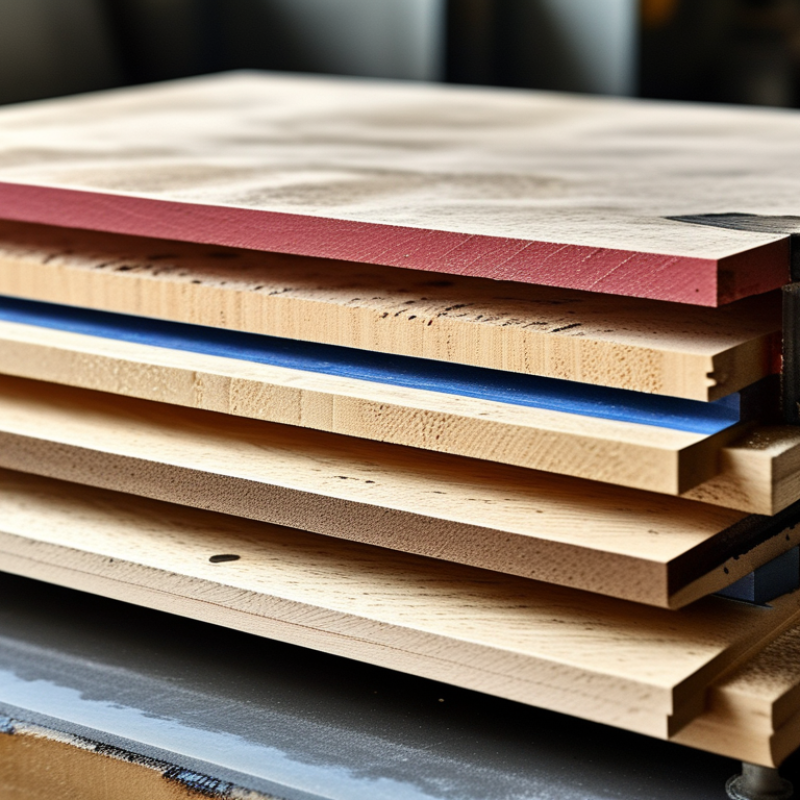
A WPC board extrusion line is a continuous production system for making wood-plastic composite boards. It blends wood flour, polymer, additives, and colorants. A feeder meters the ingredients into a twin-screw extruder. Inside, heat and shear create a uniform melt. The mixture then passes through a board die, calibration table, cooling section, haul-off unit, cutting saw, and stacker.
Moisture control matters. Wood flour often needs moisture below 1–2% before processing. Excess water can create bubbles, rough surfaces, and weak edges. Processing temperatures commonly stay around 160–190°C, because excessive heat may damage the wood fibers. Operators also adjust screw speed and pressure for each board thickness. Small changes matter.
According to Grand View Research, the global wood-plastic composites market was valued at about USD 7.19 billion in 2023. The report forecasts approximately 7.2% compound annual growth from 2024 to 2030. The Freedonia Group also identifies construction and outdoor products as important demand areas. These figures support continued investment in extrusion equipment. However, market growth does not guarantee stable production. A fast line can still produce warped boards. A detailed setup can still waste material. In practice, cooling balance and feeding consistency often decide quality more than headline output.
A WPC board extrusion line converts wood fiber and thermoplastic resin into continuous boards. Grand View Research estimated the global wood-plastic composites market at about USD 7 billion in 2023, with strong growth through 2030. That demand reflects construction, outdoor flooring, and landscaping applications.
The material recipe usually combines wood flour or fiber with polyethylene, polypropylene, or PVC. Coupling agents improve bonding between wood and plastic. Lubricants reduce friction, while pigments and stabilizers control appearance and weather resistance. Moisture matters greatly. Wood content should be dried carefully, often below 1% moisture before extrusion. Otherwise, steam can create bubbles, weak surfaces, or uneven density.
Typical equipment includes a high-speed mixer, dryer, feeder, conical or parallel twin-screw extruder, board die, calibration table, cooling section, haul-off unit, saw, and stacker. The extruder melts the polymer and disperses the fibers. The die shapes the hot profile. Calibration tools then control thickness and surface texture. ASTM D7031 identifies important performance considerations for wood-plastic composite products, including moisture, dimensional stability, and mechanical behavior. The process is not perfectly forgiving. Small feed-rate changes can alter color and strength.
Tips: Keep fiber moisture records for every batch. Check die temperature across zones, not only at the control panel. A practical trial should measure density, thickness, water absorption, and flexural strength. Some production teams overlook cooling speed, but it can quietly affect warping. Personally, I would test a new formulation longer than expected. Early samples can look excellent and still fail after outdoor exposure.
A WPC board extrusion line transforms wood fiber, plastic resin, and additives into stable, usable boards. The process begins with drying and mixing. Wood flour must contain controlled moisture, or steam pockets may appear during extrusion. The blended material enters a heated twin-screw extruder, where rotating screws melt the plastic and distribute the wood particles evenly.
Temperature zones increase gradually. Exact settings depend on the resin, wood content, and board thickness. Inside the barrel, pressure builds before the compound passes through a flat die. The die shapes the hot material into a continuous board. Calibration plates then control thickness and surface profile. Cooling water removes heat, while a haul-off unit pulls the board forward at a steady speed. A cutting machine produces fixed lengths.
The process looks orderly, but it rarely behaves perfectly. Slight moisture changes can affect color, strength, and surface smoothness. Experienced operators check screw load, melt pressure, cooling temperature, and board dimensions throughout production. A board may look acceptable while hiding weak bonding inside. That is why samples should be tested for density, flexural strength, water absorption, and dimensional stability.
Tips: Keep wood flour particle size consistent. Clean the die regularly. Do not copy temperature settings blindly. Record each production adjustment, even when the change seems minor. Small records often explain larger defects later.
A WPC board extrusion line combines wood flour or fiber with a thermoplastic polymer and additives. The materials are fed, melted, mixed, homogenized, shaped through a flat die, calibrated, cooled, and cut into boards.
The chart shows representative temperature setpoints commonly used for a wood-plastic composite extrusion process. Actual settings depend on the polymer, wood content, moisture level, additives, board thickness, and line design.
A WPC board extrusion line converts wood fiber, polymer, additives, and pigments into continuous boards. Quality starts before the material reaches the die. Wood fiber moisture is critical. Wet fiber can create bubbles, weak bonding, and rough surfaces. A stable drying process usually keeps moisture near 1–2%, depending on the formulation. The polymer-to-fiber ratio also changes stiffness, weight, and water resistance. Too much fiber may improve rigidity but reduce impact strength.
Temperature control matters throughout the barrel. Excessive heat can darken wood particles and release unwanted odors. Low heat may leave unmelted polymer inside the board. Screw design, feeding stability, die pressure, calibration accuracy, and cooling speed affect thickness and flatness. ASTM D7031 identifies flexural performance, water absorption, and dimensional stability as important evaluation areas. These tests should support production decisions, not replace them. Grand View Research reported a global WPC market value of about USD 7.12 billion in 2022, with strong projected growth through 2030. More demand also means less tolerance for inconsistent boards.
Tips: Measure fiber moisture every batch. Record melt temperature and die pressure continuously. Inspect the board edge, not only its surface. A glossy face can hide internal voids. In practice, even a carefully designed line may need slower output during seasonal humidity changes. That is easy to overlook. Sometimes, the “best” formula is only the most forgiving one.
A WPC board extrusion line blends wood fiber, polymer, additives, and colorants. A heated screw then pushes the compound through a shaped die. The profile cools, calibrates, cuts, and stacks. In practical terms, it converts mixed raw materials into decking, wall cladding, fencing, furniture panels, and transport components. Grand View Research reported that the global wood plastic composites market was valued at approximately USD 7.97 billion in 2023. Construction remains a major demand area.
Applications depend heavily on moisture resistance and dimensional stability. Outdoor boards can replace some traditional timber in balconies, walkways, and garden structures. Interior panels can provide a wood-like surface with more consistent sizing. Automotive and logistics sectors also use molded composite parts. However, WPC is not maintenance-free. Poor formulation can cause swelling, color fading, or brittle edges.
Maintenance starts with moisture control. Operators should check fiber moisture before blending, because wet fiber can create bubbles and uneven surfaces. The screw, barrel, and die need routine inspection for wear and deposits. Die buildup leaves visible lines on the board. Cooling calibrators must remain clean and correctly aligned. Small deviations matter. A 2023 report from MarketsandMarkets identified construction as a leading application segment for WPC products, increasing the need for stable, repeatable output. In plant audits, temperature logs and melt-pressure trends often reveal problems earlier than visual checks. Still, records are sometimes incomplete. That weakness deserves attention. Filters, bearings, heaters, cutters, and emergency controls also require scheduled checks, not occasional repairs.
: It is a continuous system for producing wood-plastic composite boards. Wood flour, polymer, additives, and colorants enter a feeder. A twin-screw extruder melts and mixes them. The hot material then passes through a die, calibrator, cooler, haul-off, saw, and stacker.
Common materials include wood flour, wood fiber, and thermoplastic resin. Resins may include polyethylene, polypropylene, or PVC. Coupling agents improve bonding. Lubricants reduce friction. Pigments and stabilizers affect color and weather resistance.
Wet fiber can create steam inside the board. This may cause bubbles, rough surfaces, weak edges, and uneven density. Many formulations require moisture near 1–2%. Some require levels below 1%. Drying records should be kept for every batch.
Processing temperatures often remain around 160–190°C. Excessive heat can darken wood particles or damage fibers. Low heat may leave unmelted polymer. Small temperature changes matter. Check every barrel zone.
A typical line includes a mixer, dryer, feeder, and twin-screw extruder. It also needs a board die, calibration table, cooling section, and haul-off unit. A cutting saw and stacker complete the system. Each unit affects the final board.
Moisture, material ratios, temperature, screw speed, and feeding stability matter. Die pressure also affects thickness and density. Cooling speed influences flatness. Inspect the board edge, not only the surface. A glossy face can hide internal voids.
Keep feeding steady and monitor die pressure continuously. Balance cooling across the board width. Check calibration tools for wear. Seasonal humidity may require slower output. That detail is easy to miss.
Measure thickness, density, water absorption, and flexural strength. Check dimensional stability after moisture exposure. Inspect surfaces, edges, and internal sections. Early samples may look excellent but fail outdoors later. Longer testing is wiser.
A Wpc Board Extrusion Line is an integrated production system designed to manufacture boards from a blend of wood fibers, plastic polymers, additives, and colorants. Its main equipment typically includes material mixers, dryers, feeders, an extrusion unit, molds, cooling devices, haul-off machines, cutting equipment, and surface treatment systems. During production, raw materials are prepared and evenly blended before being heated and pushed through a shaped die. The emerging board is then calibrated, cooled, trimmed, cut, and inspected to achieve consistent dimensions and appearance.
WPC board quality depends on material proportions, moisture control, temperature stability, pressure, extrusion speed, mold design, and cooling efficiency. Proper process control helps improve strength, surface smoothness, dimensional accuracy, and resistance to moisture and outdoor conditions. These boards are commonly used for decking, wall panels, fencing, landscaping structures, furniture components, and decorative construction. Regular maintenance, including cleaning the die, checking heaters and sensors, lubricating moving parts, inspecting cutting tools, and replacing worn components, helps maintain reliable operation and stable product quality.
