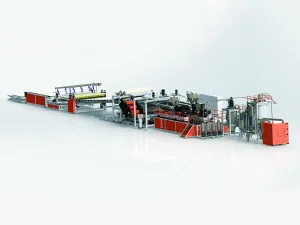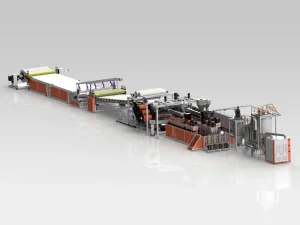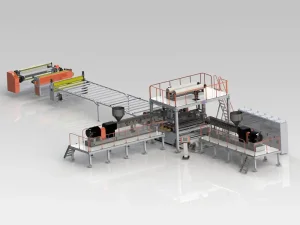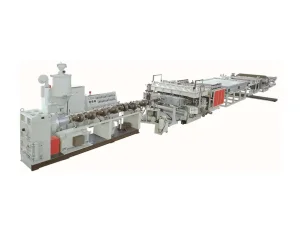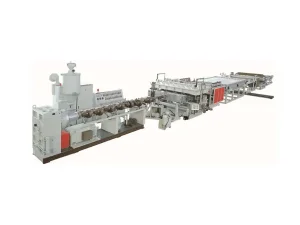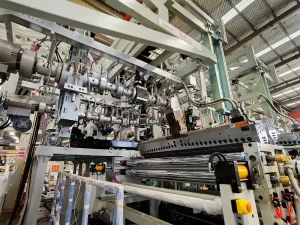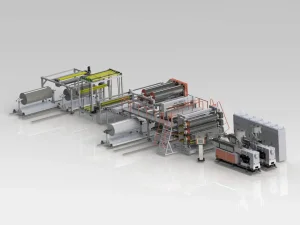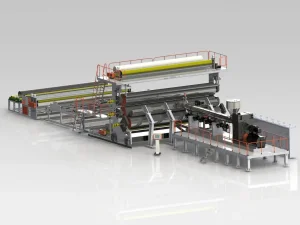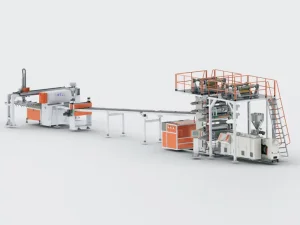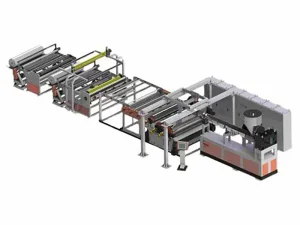
Highly customized polymer processing lines engineered for resilience, optimal energy efficiency, and precise output under high-altitude African manufacturing conditions.
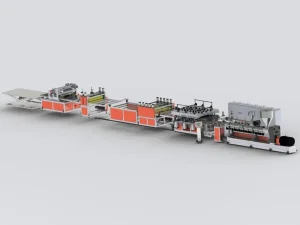
Ethiopia is rapidly positioning itself as the manufacturing powerhouse of Sub-Saharan Africa. Guided by the Homegrown Economic Reform Agenda and the expansion of state-of-the-art industrial parks—such as Hawassa, Bole Lemi, Adama, and Kilinto—the country is transitioning from an import-dependent economy to a domestic production hub. This macroeconomic shift has created an exponential demand for raw materials and industrial equipment, specifically in the packaging, building construction, and agricultural sectors.
Historically, Ethiopian enterprises imported finished plastic goods, facing severe foreign currency constraints and high transport costs from Djibouti port. Today, the deployment of Hollow Extrusion Lines enables local enterprises to import raw polymer resins and produce high-value components locally. This substitution model yields up to 40% cost reduction, helping builders and packaging companies scale rapidly while utilizing locally recycled polymer blends.
By producing these materials domestically on Gwell's extrusion lines, manufacturers ensure steady supply chains independent of global freight disruptions.
Understanding and solving the unique atmospheric and thermal challenges of extrusion in the Ethiopian Highlands.
Addis Ababa's altitude (2,355m) reduces atmospheric pressure to approximately 76 kPa. This impacts traditional vacuum sizing chambers. Gwell utilizes custom high-capacity vacuum pumps and elongated sizing templates to achieve stable structural tolerances for hollow cross-sections.
Lower air density lowers the natural heat convection rate. Our lines integration features pressurized, closed-loop water circulation cooling tanks. This ensures that the extruded polymer (especially thick-walled PP and PC hollow boards) undergoes uniform cooling, preventing warpage.
Industrial zones in developing regions can face voltage drops. Gwell machinery integrates heavy-duty line reactors, Siemens PLC microprocessors with fail-safe memory states, and variable frequency drives (VFD) from ABB to safeguard the extrusion motors from mechanical strain.
Modern plastic processing plants require extreme versatility to remain profitable. Our technical roadmap focuses on co-extrusion technology, which enables manufacturers to produce structured hollow boards with multi-layer properties. For example, in agricultural shipping, a three-layer sheet (A-B-A structure) can use recycled PP regrind in the center layer (B), sealed between outer layers of pristine virgin PP (A) mixed with anti-static and UV additives. This maximizes structural integrity while maintaining a lower cost per square meter.
| Technical Parameters | PC Hollow Sun Board Line | PP Hollow Board Line | HDPE Board Line |
|---|---|---|---|
| Common Board Widths (mm) | 1200 - 2100 mm | 1200 - 2600 mm | 1000 - 3000 mm |
| Board Thickness Range (mm) | 4 - 16 mm (Double/Multi-wall) | 2 - 12 mm (Lattice/Corrugated) | 2 - 30 mm (Solid/Structured) |
| Extruder L/D Ratio | 33:1 or 35:1 High Shear | 30:1 vented structure | 33:1 barrier type |
| Maximum Output Capacity | 350 - 550 kg/h | 400 - 800 kg/h | 500 - 1000 kg/h |
| Co-extrusion Layers | A-B-A / A-B (UV Co-ex) | Single / Multi-layer option | Monolayer / 3-layer co-ex |
We provide comprehensive, start-to-finish production plants. This includes not only the primary extruder and sizing table but also complete upstream material handling and downstream processing equipment. In Ethiopia, where foreign exchange resources are carefully managed, investing in a robust recycling system to process post-industrial waste is critical.
Our downstream integration options include inline die-cutting, box folding, and ultrasonic welding stations. This transforms the extruded hollow lattice sheet directly into finished agricultural boxes in a single, continuous automation line, reducing manual labor costs and preventing transit damage to fragile horticultural goods.
Consult Our EngineersOur extrusion lines serve broad national initiatives across East Africa. For instance, the PC Hollow Sun Board Line supports regional green building standards, producing lightweight glazing panels that reduce solar thermal load in buildings while transmitting high levels of natural light. This reduces the energy needed for air conditioning in offices and commercial structures across Ethiopia's rapidly expanding metropolitan areas.
In geotechnical and environmental engineering, our custom water stop extrusion lines produce high-quality PVC and PE water barriers used in the construction of subways, tunnels, municipal wastewater treatment plants, and grand water dam projects. The stability of our extrusion profile ensures these elements function flawlessly under extreme hydrostatic pressure.
Combining world-class production capacity, state-of-the-art engineering, and robust global supply chain logistics.
China Gwell Machinery is a premier high-tech enterprise dedicated to the design and manufacture of high-end plastic extrusion lines for film, sheet, and profile applications. Our operation is anchored by three major manufacturing bases in China with an annual output capacity of over 1,000 advanced extrusion lines. Equipped with precision CNC machining centers and advanced quality control protocols, we ensure that every machine element matches global technical standards before leaving our facilities.
Our supply chain is optimized for reliable delivery to East Africa. By utilizing the modern Ethio-Djibouti Railway corridor, we route cargo securely from Chinese shipping ports directly to industrial hubs in Addis Ababa, Hawassa, and Adama. This integrated logistics strategy reduces transit times by up to 15 days compared to traditional road transport routes, getting your production line online faster.
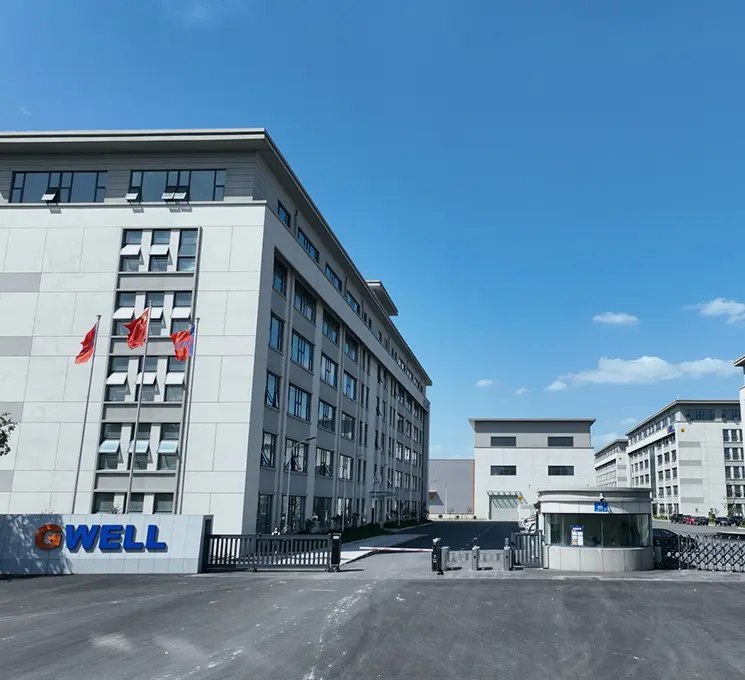
Purchasing heavy machinery requires robust local support. Gwell addresses this through specialized engineering teams ready to travel to your production site for setup, fine-tuning, and operator training. We verify that local operators are thoroughly trained in process controls, thermal safety, and preventative maintenance protocols.
Additionally, we assist our customers in securing compliance certifications for local regional markets, including the COMESA area and regional quality marks issued by the Ethiopian Standards Agency (ESA). This ensures that your final products, whether they are PC roof panels or agricultural packaging sheets, meet the structural requirements for key regional contracts.
Expert answers regarding operations, imports, raw materials, and utility requirements for extrusion lines in Ethiopia.
Explore our complete range of high-performance polymer extrusion machinery designed for global export markets.