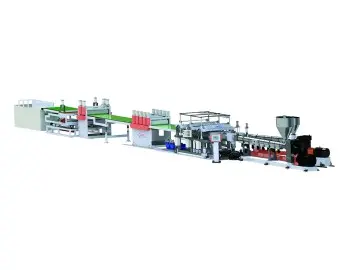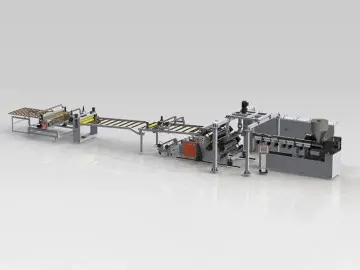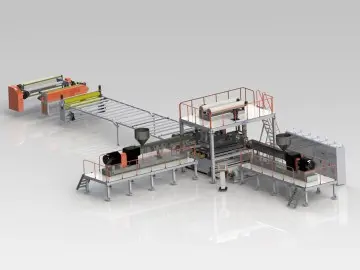
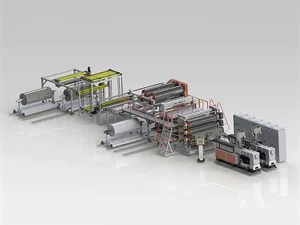
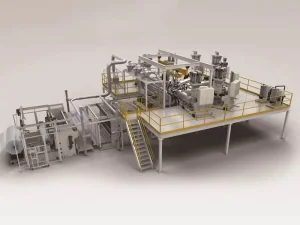
Executive Whitepaper: Technical Architecture of TPU Paint Protection Film (PPF) Extrusion Systems
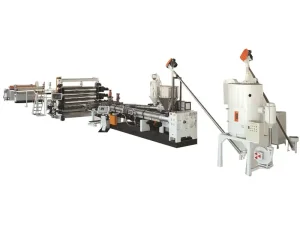
Thermoplastic Polyurethane (TPU) Paint Protection Film (PPF), colloquially referred to as "invisible car film," represents the pinnacle of surface shield engineering for high-value automotive exterior protection. For luxury car customization factories and global exporters, sourcing high-grade TPU film with flawless optical clarity, robust self-healing characteristics, and non-yellowing durability requires specialized manufacturing machinery. The extrusion process forms the structural backbone of this material. The stability of the mechanical design, accuracy of the temperature control algorithms, and configuration of the barrier screw determine the final yield and quality metrics of the film.
“In the luxury car market, visual quality is paramount. A film deviation of just 2 microns or a single gel point larger than 100 microns can result in complete roll rejection. Our extrusion lines are engineered to mitigate these defects through precision melt control.”
1. Raw Material Complexity: Processing Aliphatic TPU
Standard industrial TPU grades utilizing aromatic diisocyanates exhibit rapid degradation and yellowing when exposed to solar radiation. Consequently, the luxury automotive customization sector mandates the use of aliphatic TPU. Aliphatic TPU contains linear hydrocarbon groups that resist UV absorption, ensuring long-term transparency. However, aliphatic TPU is highly hydroscopic and exhibits a narrow thermal processing window with high shear sensitivity.
The processing architecture must incorporate a closed-loop desiccant dryer capable of reducing raw material moisture content to less than 0.02% by weight. If moisture exceeds this threshold, the water acts as a blowing agent at high melt temperatures, inducing micro-voids, bubbles, and polymer chain hydrolysis. Hydrolysis leads to molecular weight reduction, compromising the film's tensile strength and elongation metrics.
2. Extruder Configuration: High-Performance Barrier Screw Design
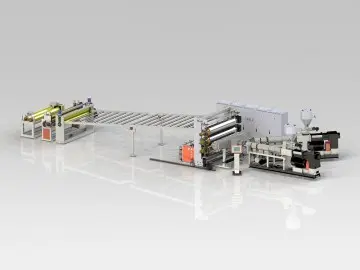
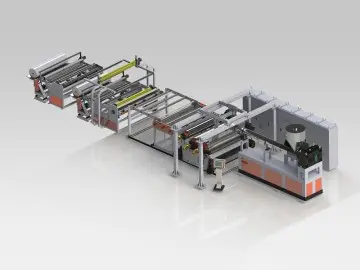
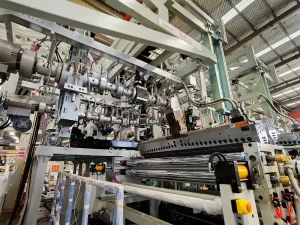
The extrusion process requires a single-screw or co-rotating twin-screw system with a high length-to-diameter (L/D) ratio, typically 30:1 or 32:1. The screw geometry must feature a custom barrier section followed by a mild shear mixing zone (such as Madock style mixing elements) to achieve melt homogeneity without inducing thermal degradation.
- Feed Zone: Deep flight depth to transport the solid pellets efficiently while preventing premature melting that causes bridging.
- Compression (Transition) Zone: Gradual reduction in flight depth to compact the melt and discharge air pockets back through the feed throat.
- Metering Zone: Highly accurate melt temperature control (±0.5°C) to maintain stable volumetric output and pressure to the melt pump.
| Extrusion Parameter | Standard Specification | Optimized Aliphatic TPU Specification |
|---|---|---|
| Screw L/D Ratio | 28:1 | 32:1 / 36:1 |
| Melt Temp Tolerance | ±2.0 °C | ±0.5 °C |
| Filtration Rating | 80 Mesh | Dual-Chamber Auto-Backflush < 20 Micron |
| Melt Pump Pressure Stability | ±1.5% | ±0.2% |
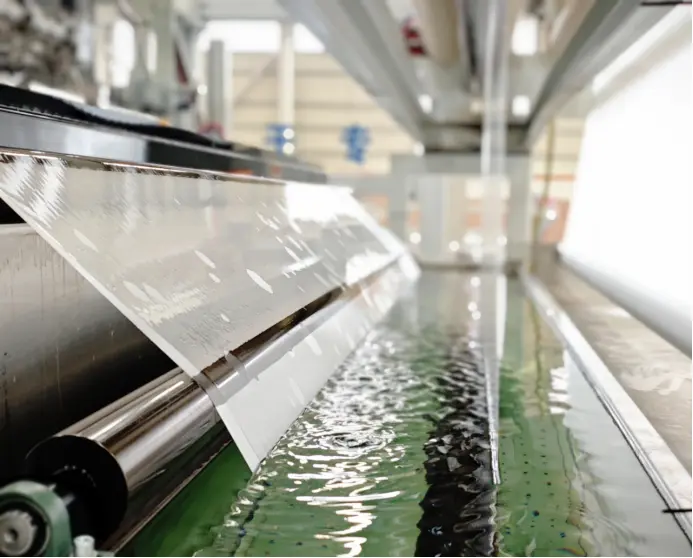
| Casting Roller Roughness | Ra < 0.1 μm | Ra < 0.02 μm (Super Mirror Finish) |
Macro Industry Solutions for Luxury Car Customization & Exporters
Global demand for premium PPF is shifting from generic, pre-cut films to highly customized multi-layer solutions. To support exporters in maintaining high yield margins, modern extrusion equipment must adapt to process varied laminating profiles. The standard structure of luxury paint protection film consists of three primary functional layers:
- The Carrier/Protective Liner: Typically a 50-micron PET film with release properties, supporting the adhesive layer.
- The Core TPU Film: The primary elastomer core, ranging from 100 to 200 microns in thickness, providing impact mitigation and self-healing memory.
- The Self-Healing Topcoat: A functional polyurethane chemistry that seals surface micro-scratches when exposed to ambient heat.
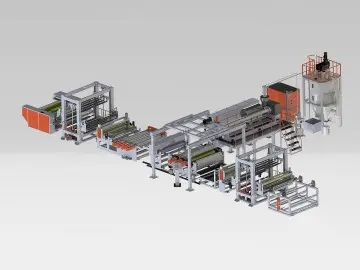
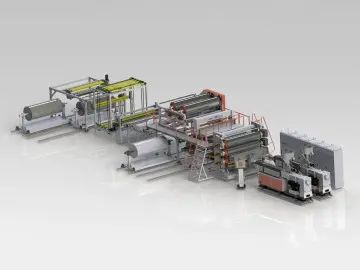
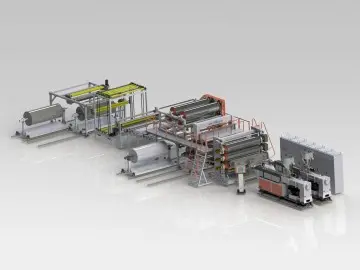
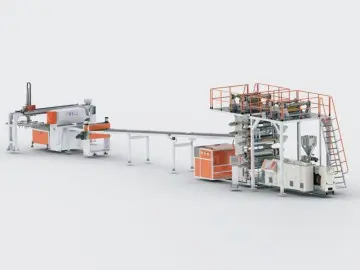
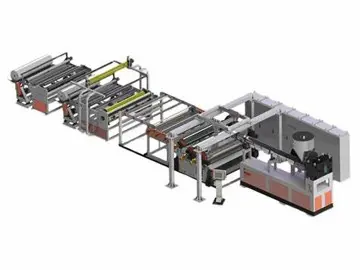
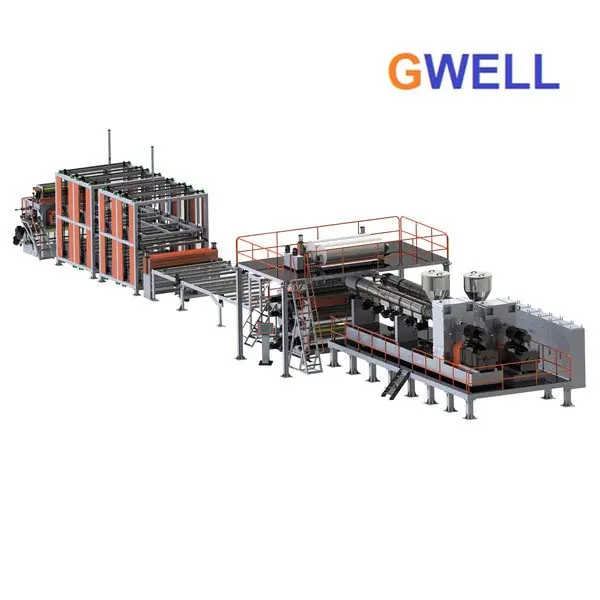
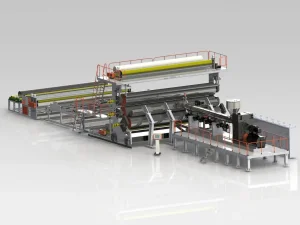
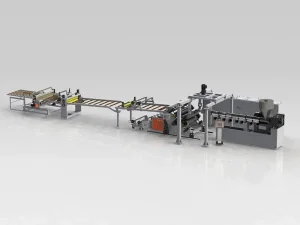
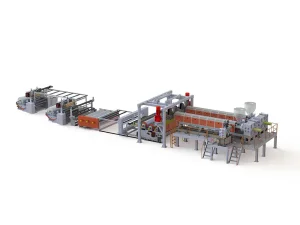
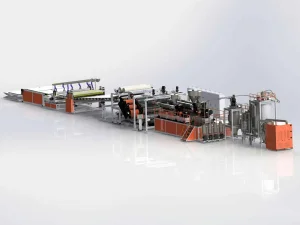
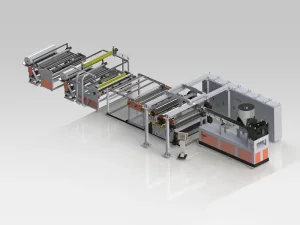
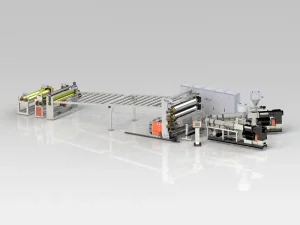
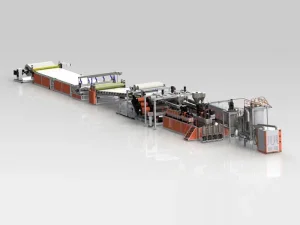
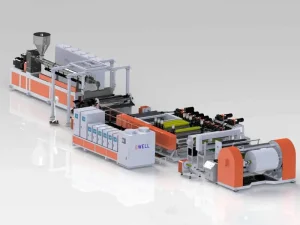
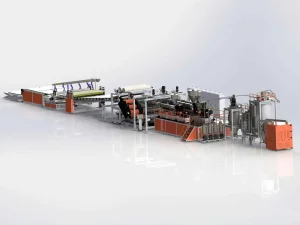
Our custom extrusion lines offer in-line multi-layer lamination systems. By integrating the extrusion of the core TPU film with high-precision lamination stations, the line minimizes secondary processing defects, eliminates environmental dust contamination between layers, and accelerates throughput for large-volume exporters supplying the Middle East, North America, and European customization hubs.
Technology Roadmap & Future Outlook: The Next Generation of PPF
As the automotive detailing industry evolves, the market requires thinner, more resilient films. Standard films rely on heat to trigger self-healing (thermoset mechanics). The next generation of TPU extrusion equipment is adapting to compile instant self-healing block co-polymers. This shift requires the machinery to run co-extrusion setups where two different durometer TPU compounds are joined in a multi-manifold block to yield a gradient cross-section.
Additionally, pigment dispersion is becoming a focal point. Extruders must handle direct dosing of liquid pigments or carbon black masterbatches without creating optical streaks. This is achieved by incorporating static mixers directly downstream of the gear pump, ensuring uniform molecular dispersion of pigments before the melt exits the T-die.