1 / 1

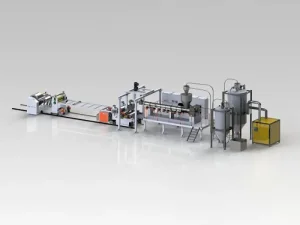
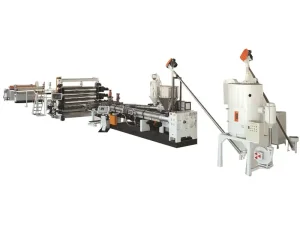
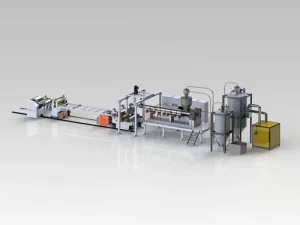
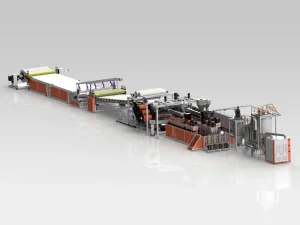
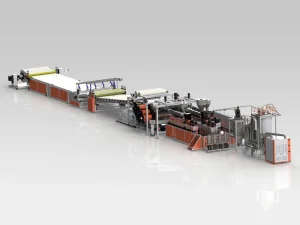
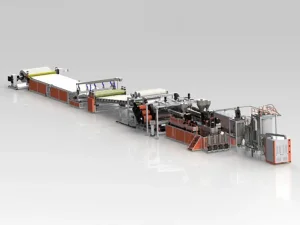
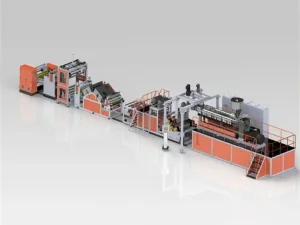
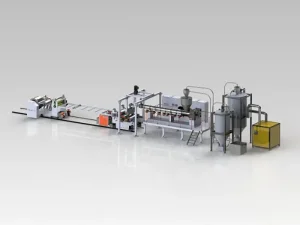
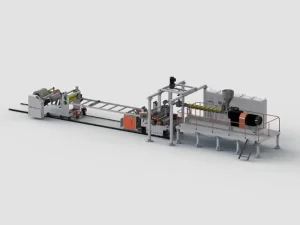
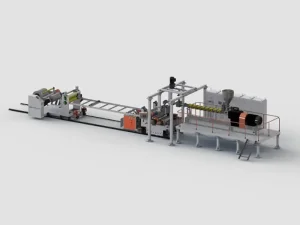
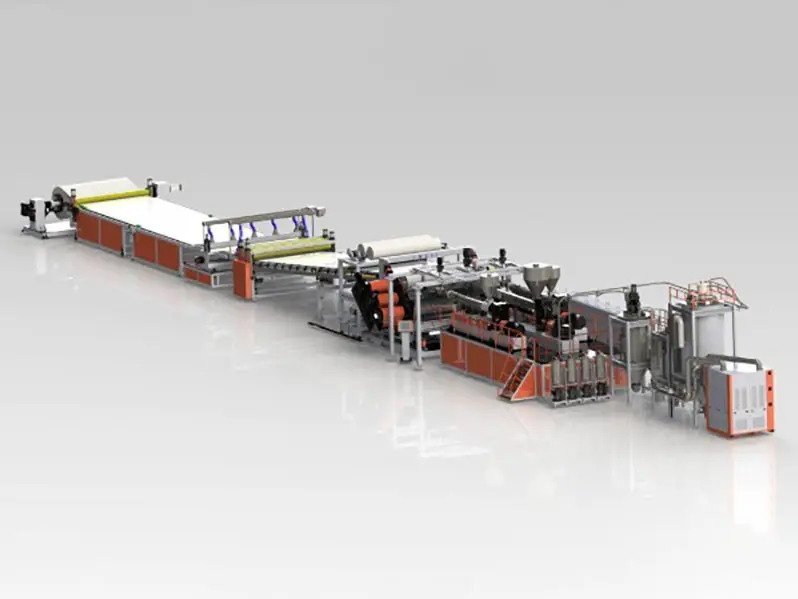
The PC PMMA Optic Sheet Extrusion Line represents a cutting-edge manufacturing solution designed to produce high-quality optical sheets from polycarbonate (PC) and polymethyl methacrylate (PMMA) materials. This advanced extrusion line integrates precision engineering, state-of-the-art technology, and robust materials handling capabilities to ensure consistent product output that meets the stringent demands of the optical industry.
The heart of the extrusion line is its precision extruder, equipped with a high-torque motor and a temperature-controlled barrel to ensure optimal melt flow and consistent material viscosity. This allows for the precise extrusion of PC and PMMA resins into thin, uniform sheets with exceptional optical clarity and surface finish.
The feed system of the extrusion line incorporates a sophisticated hopper and auger design, ensuring even and continuous material feed into the extruder. This minimizes material waste and enhances the overall efficiency of the production process.
To achieve the desired optical properties, the extrusion line is equipped with a multi-stage die system that carefully controls the width, thickness, and uniformity of the extruded sheets. The die design also incorporates advanced cooling channels to rapidly solidify the molten material, preserving its optical clarity and reducing the risk of internal stress and warping.
Once extruded, the sheets are guided through a series of calibration and flattening rollers, which further enhance their flatness and smoothness. These rollers are precision-engineered and temperature-controlled to maintain the sheets' dimensional stability and optical quality.
The PC PMMA Optic Sheet Extrusion Line also features an automated hauling and cutting system, which efficiently transports the extruded sheets to a precision cutting station. Here, high-speed cutting blades, guided by advanced sensors and control systems, accurately trim the sheets to the desired dimensions, ensuring that every product meets the specified tolerances and quality standards.
Polycarbonate, also known as PC, Lexan, or Merlon, is a tough and transparent synthetic resin. It was introduced in 1958 by Bayer AG of Germany and in 1960 by the General Electric Company of the United States. PC is produced through a polymerization reaction between bisphenol A, a volatile liquid derived from benzene, and phosgene, a highly reactive and toxic gas made from carbon monoxide and chlorine.
As an engineering plastic, PC exhibits exceptional impact strength, tensile strength, ductility, dimensional stability, and optical transparency. It can transmit approximately 90 percent of visible light. Due to its superior stiffness incorporated into the polymer chain by the aromatic rings and its excellent flowing properties when molten, PC has found applications in injection-molded products such as compact discs. Furthermore, PC's high impact strength makes it suitable for large carboys for water, shatterproof windows, safety shields, and safety helmets.
In the field of optical sheet materials, PC offers a combination of durability and optical clarity, making it ideal for applications that require high transparency and strength.
Polymethyl methacrylate, also known as PMMA, Acrylic, Plexiglas, Lucite, or Perspex, is a synthetic resin produced from the polymerization of methyl methacrylate. It was discovered in the early 1930s by British chemists Rowland Hill and John Crawford at Imperial Chemical Industries (ICI), which registered the product under the trademark Perspex. At around the same time, German chemist and industrialist Otto Röhm attempted to produce safety glass by polymerizing methyl methacrylate between two layers of glass. After the polymer separated from the glass, it formed transparent plastic sheets, which Röhm branded as Plexiglas. Both Perspex and Plexiglas were commercialized in the late 1930s.
PMMA is a transparent and rigid plastic often used as a substitute for glass in products such as shatterproof windows, skylights, illuminated signs, and aircraft canopies. It has high optical clarity, with a transmittance of about 92%, and maintains high transmittance even after accelerated aging. PMMA can also transmit X-rays and gamma rays, and its thin sheets can transmit alpha and beta rays but absorb neutron rays.
In the realm of optical sheet materials, PMMA provides a lightweight yet durable alternative to glass, offering excellent optical clarity and impact resistance.
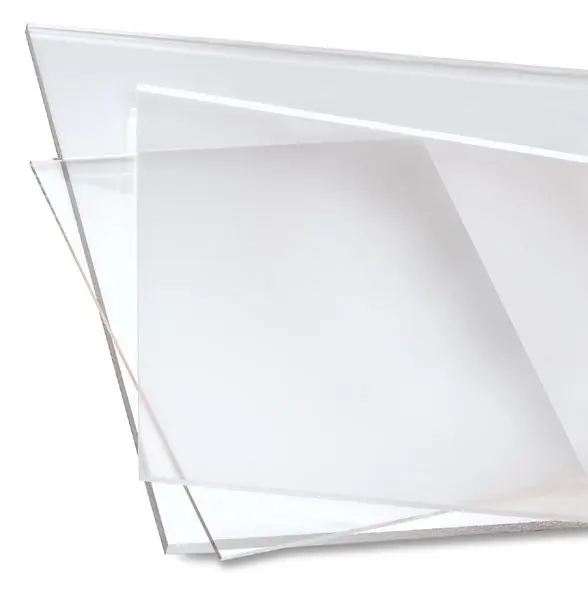
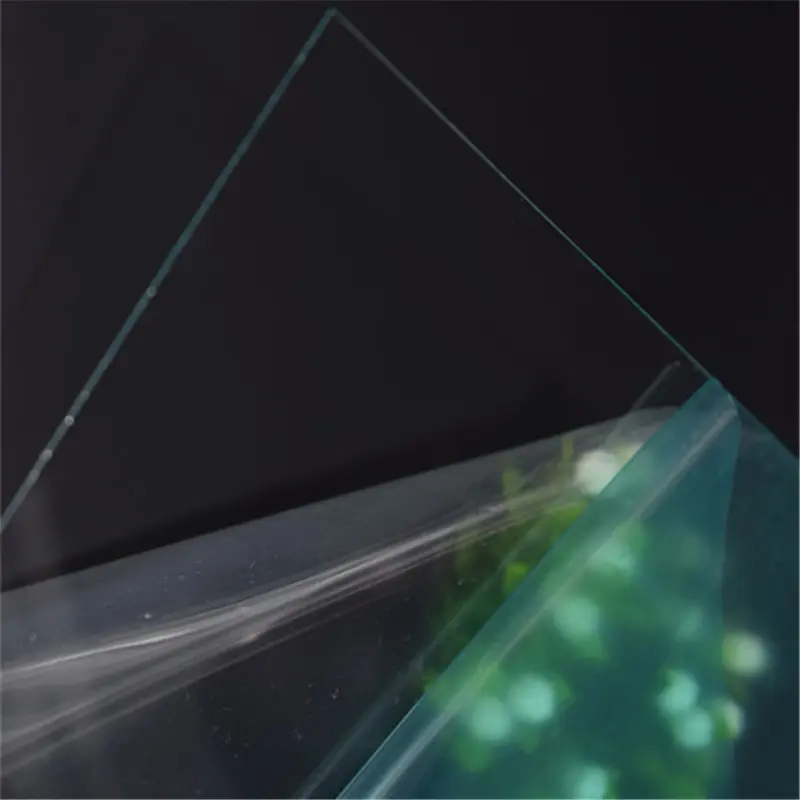
This extrusion line is specifically engineered to handle Polycarbonate (PC) and Polymethyl Methacrylate (PMMA) resins to produce high-grade optical sheets.
It utilizes a precision extruder with a high-torque motor, a temperature-controlled barrel, and a multi-stage die system combined with calibration and flattening rollers to guarantee uniformity and dimensional stability.
Polycarbonate (PC) sheets transmit approximately 90% of visible light while offering superior structural toughness. Polymethyl Methacrylate (PMMA) sheets offer slightly higher clarity with a light transmittance rate of about 92%.
The advanced cooling channels built into the die system rapidly solidify the molten material, which preserves optical clarity and minimizes the risk of internal stress, warping, or deformities.
The extrusion line features an automated hauling and cutting system equipped with high-speed blades and precision sensors to clean-trim sheets to the designated dimensions accurately.
PC is commonly used for shatterproof windows, safety shields, and helmets due to its high impact strength. PMMA is widely used as a glass substitute in skylights, illuminated signs, and aircraft canopies due to its lightweight nature and exceptional optical clarity.