
Explore our premium machinery components engineering specialized films, high-durability sheets, and custom composite laminating setups.
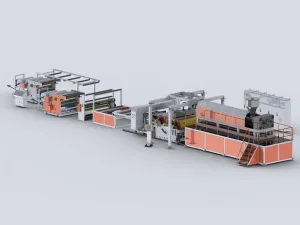
Advanced high-adhesion TPU/TPE composite leather production technology.
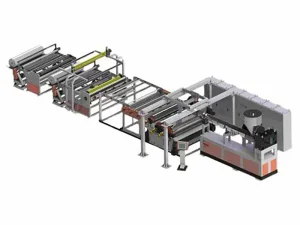
High stability PVE casting setups customized for solar encapsulation.
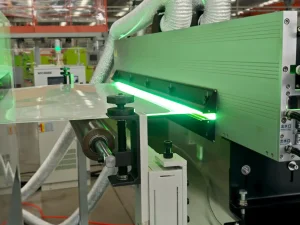
Engineered for high-clarity, impact-resistant PCTG sheet manufacturing.
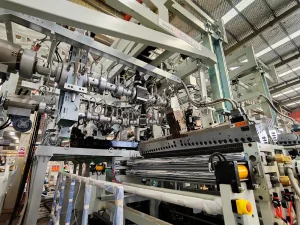
Integrated processing for lightweight, structural honeycomb sheets.
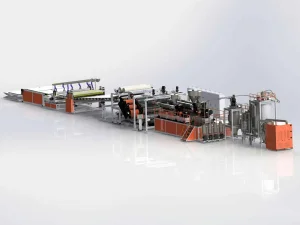
Optically clear PC sheet line with high extrusion output & precision control.
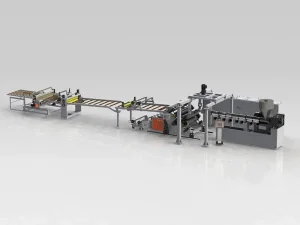
High-temperature polymers processing line for engineering plastics.
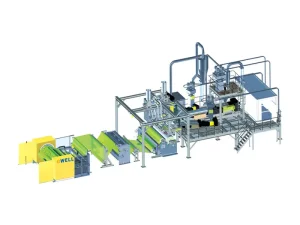
Innovative PPS separation diaphragms designed for hydrogen cell arrays.
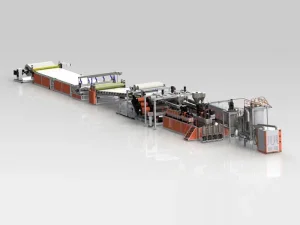
High automation TPE sheet extrusion customized for automotive carpets.
Detailed insight into the engineering science behind high-density PE water stops and specialized production machinery.
Highway tunnel projects present challenging geological and environmental hazards. In deep-burden and high-water-table regions, structural concrete lining joints are susceptible to continuous hydrostatic stress, shear displacement, and chemical erosion. Water ingress in expansion, contraction, and construction joints can lead to concrete deterioration, rebar oxidation, and operational failures.
Polyethylene (PE) water stops are the standard material for subterranean waterproofing. They combine structural tensile flexibility with chemical stability, matching the multi-decade lifespan of public concrete work. Their performance is highly dependent on the precision of the profile extrusion process, which controls dimensional tolerances, polymer density, and mechanical alignment.
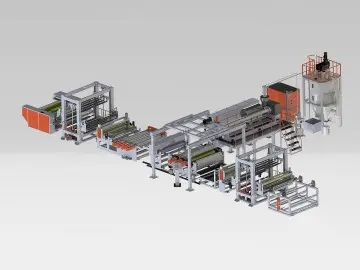
A breakdown of the engineering systems behind Gwell’s high-precision profile extrusion line.
Our single-screw extruder features a custom 30:1 to 33:1 L/D ratio. The barrier flight screw profile is optimized for HDPE, LDPE, and EVA blends, achieving smooth shear rates and constant polymer melt temperatures.
The extrusion die channels raw polymer through custom flow paths, producing complex rib configurations, central bulbs, and variable edge thickness without inducing structural stress in the material.
A multi-stage vacuum water bath cools the profile. Precision sizing plates maintain physical dimensions within 0.1mm tolerances, preventing cooling deformation in the thick central bulb sections.
Allows co-extrusion of steel-side plate reinforcement or swellable rubber strips into the PE body, creating high-performance composite water stops for severe pressure projects.
Tailoring extrusion profiles to withstand real-world subterranean pressures and seismic displacement.
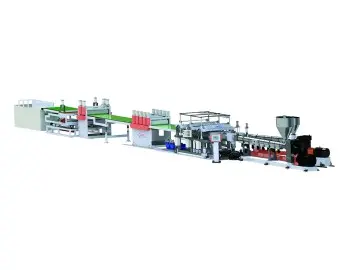
Waterproofing in underground infrastructure is a specialized process. We work closely with contractors to adjust the physical parameters of the PE Water Stop Extrusion Line, helping them meet project-specific requirements:
Alpine & High-Altitude Tunnels: Designed to withstand sub-zero freeze-thaw cycles, maintaining flexural elasticity down to -40°C. Heavy-wall profiles prevent joint rupture caused by frost heaving.
Subsea & Coastal Subways: The polymer matrix is formulated to resist salt-water corrosion, micro-organism growth, and long-term chemical decay from marine mud layers.
Seismic Fault Zones: Central bulb thickness and rib patterns are optimized for structural expansion, contraction, and multi-axis displacement without losing seal integrity.
Combining heavy-duty machinery design, strict quality control, and global logistics support.
Our production facilities utilize modern industrial systems to deliver high reliability and cost efficiency. By managing raw material sourcing, heavy component machining, and structural assembly in-house, we reduce production lag times and maintain high quality control. Our localized network allows us to ship heavy machinery projects directly to sea ports or overland rail lines, supporting project delivery across Europe, Asia, and the Americas.
Explore our main machinery divisions, engineered to process raw resins into high-value films, sheets, and structural profiles.
High-efficiency co-extrusion technology for weather-resistant outdoor capstocks.
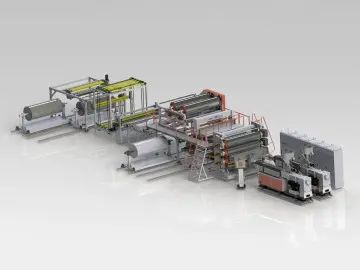
Highly precise casting and laminating equipment for medical and textile applications.
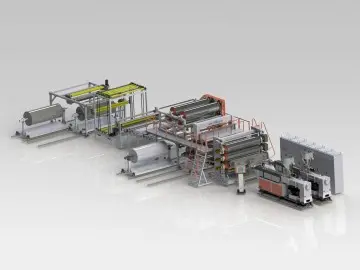
Optimized for processing high-elasticity, tear-resistant thermoplastic elastomers.
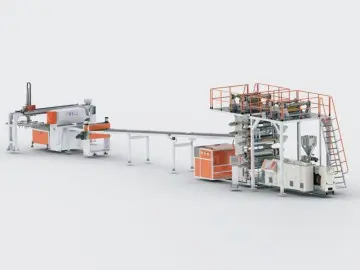
High-output systems designed to process structural building boards.
Designed for producing lightweight, reusable construction formworks.
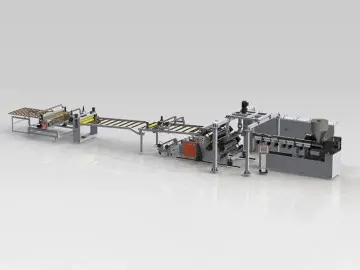
Specially configured for processing high-performance fluoropolymers and engineering plastics.
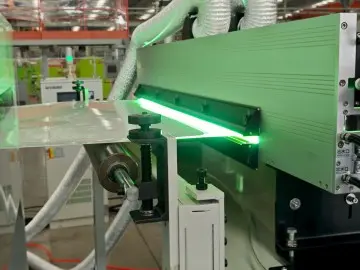
High-performance transparent copolyester extrusion systems.
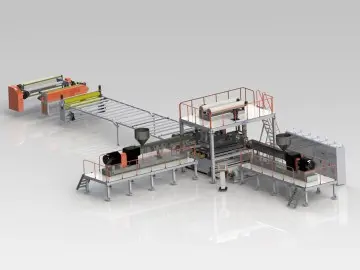
Engineered for low-stress thermoforming sheets in the automotive sector.
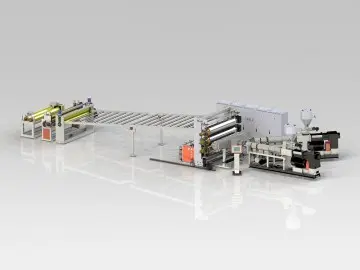
Designed to produce highly polished optical and glazing sheets.
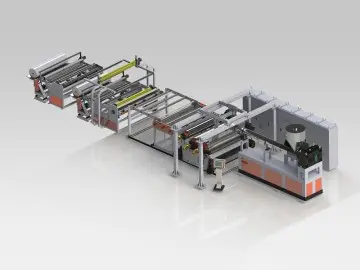
Engineered for high-strength, weatherable architectural safety glass interlayers.
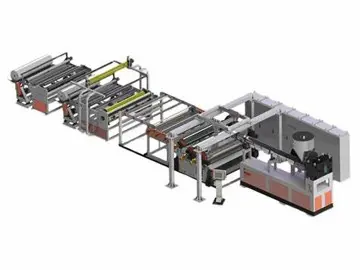
High-speed casting systems designed for industrial photovoltaic backsheets.
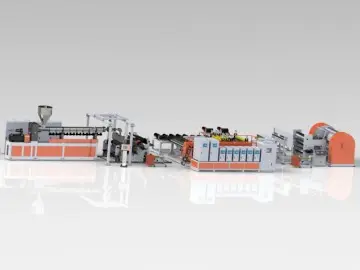
Specialized polymer processing systems designed for green energy fuel cells.
Continuous development paths to enhance processing precision and energy efficiency in high-output profile extrusion.
Closed-loop weight control systems and online diameter monitoring dynamically adjust screw speed and haul-off pulling tension to maintain tight dimensional tolerances.
Electromagnetic heating zones reduce thermal loss, saving up to 30% in heating energy compared to standard ceramic resistance bands.
Specialized screw configurations handle post-consumer recycled PE and eco-friendly polymer blends without degrading the physical properties of the water stop.
Get technical answers about extrusion line engineering, material handling, and installation from our R&D specialists.
Output speeds range between 2 to 6 meters per minute, depending on the thickness of the profile, the layout of the cooling channel, and the width of the water stop (typically 200mm to 500mm). The sizing and cooling stages are critical to maintaining production speed while preventing structural deformation.
PE and PVC process differently. While basic components like calibration tables and haul-offs can be shared, PVC requires a specialized corrosion-resistant barrel and a screw configuration designed for heat-sensitive polymers. Gwell offers dual-purpose systems with interchangeable screw sets and die heads to support both materials.
The system pulls the soft extruded polymer profile against a custom-machined calibration plate using vacuum pressure, while cooling water solidifies the shape. This setup controls the dimensions of complex shapes, such as expansion joint central bulbs, to prevent shrinkage or collapse during cooling.
Finished water stops are designed to comply with international infrastructure standards, including German DIN 18541, Chinese GB 18173.2, and ASTM D3575. The extrusion line maintains processing conditions to help the finished product meet density, tensile strength, and low-temperature flexibility specifications.
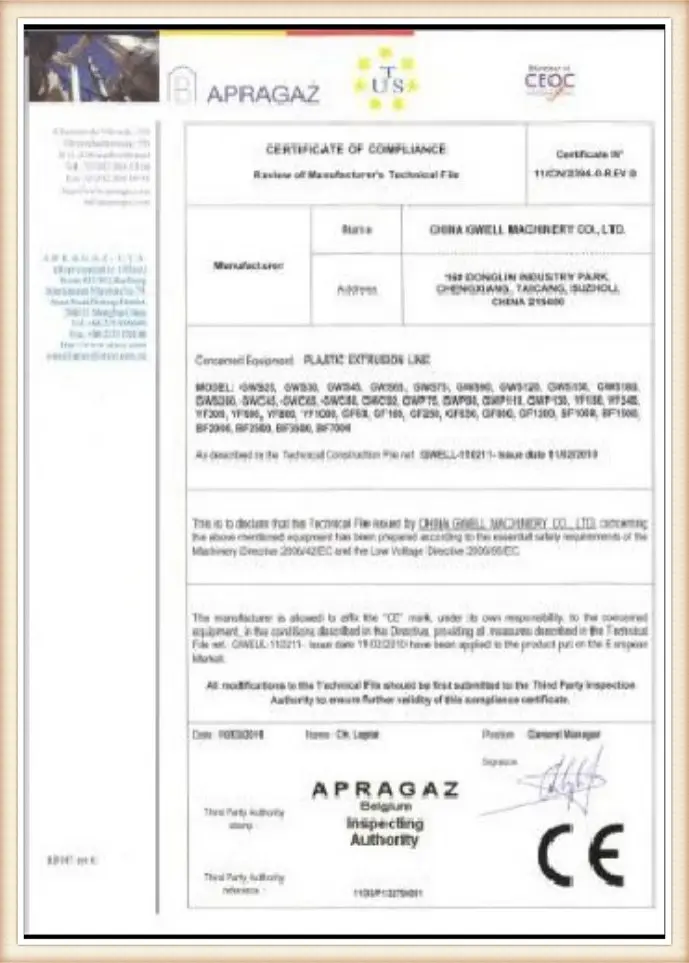
Our manufacturing and processing lines comply with international safety, environmental, and operational standards.
CE Compliance
ISO 9001 System
High-Tech Enterprise
Export Compliance
Explore our targeted specialized systems for sheet, film, board, and custom composite extrusion applications.
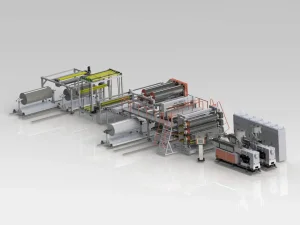
High-efficiency film casting systems for functional TPU materials.
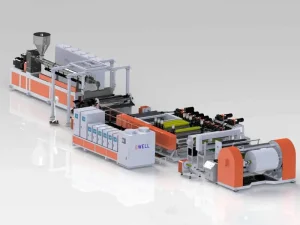
Environmentally friendly mineral-filled polymer paper extrusion technology.
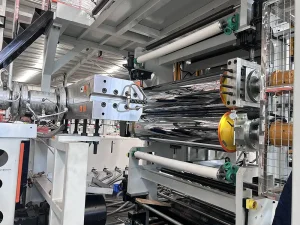
Specialized composite processing for hydrogen cell bipolar components.
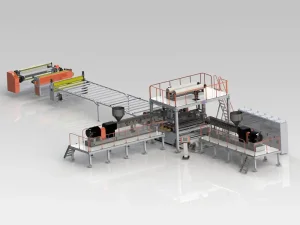
High-output co-extrusion setups designed for multi-layer composite sheets.
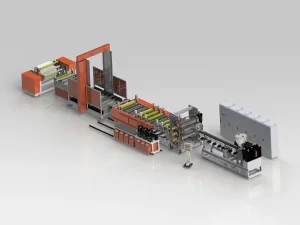
Precision stretching and winders for packaging films.
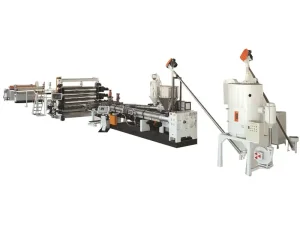
Dual-purpose sheet extrusion lines for high-volume interior panels.
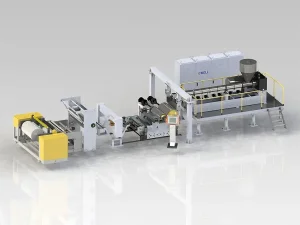
Precise thermal control for biodegradable, water-soluble packaging films.
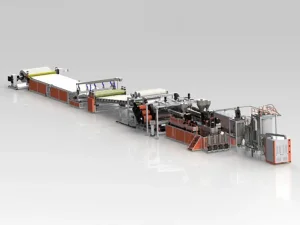
High-precision optical-grade sheet extrusion under cleanroom conditions.
Insights into our trade show schedules, technical developments, and global manufacturing operations.
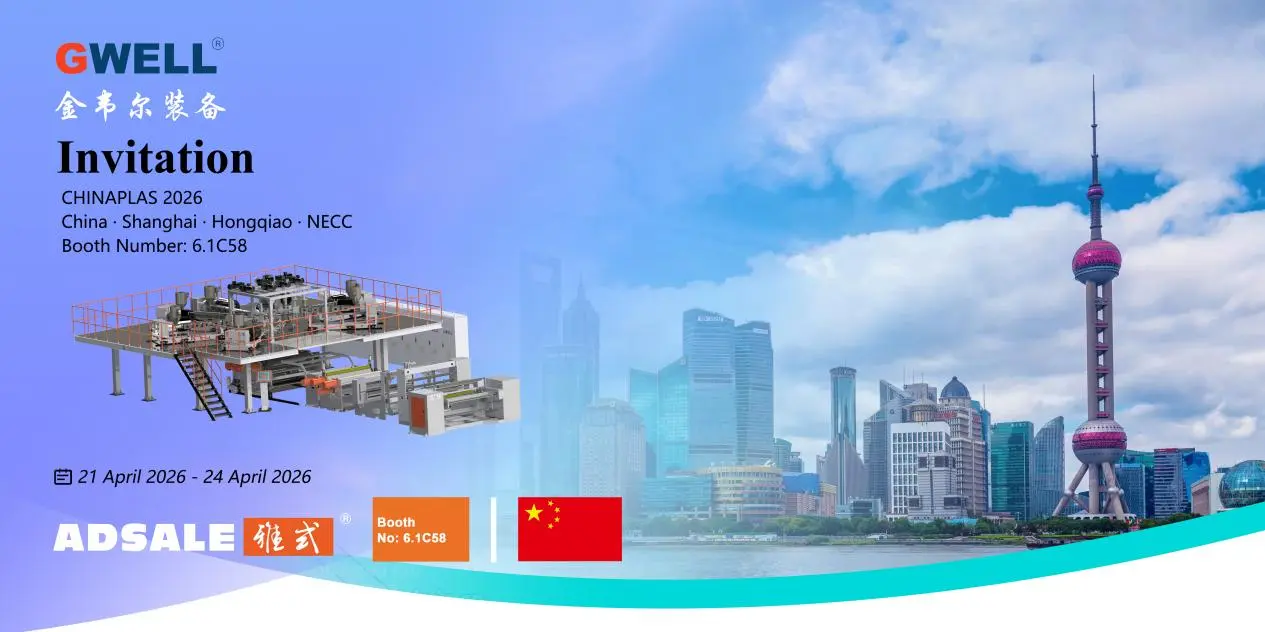
Demonstrating new extrusion designs and high-speed processing developments at our next global exhibition.
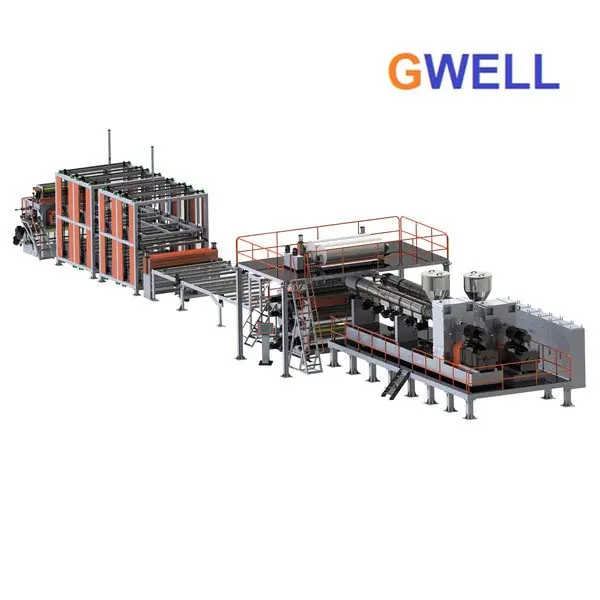
Exploring processing techniques for POE synthetic leather in automotive interior applications.
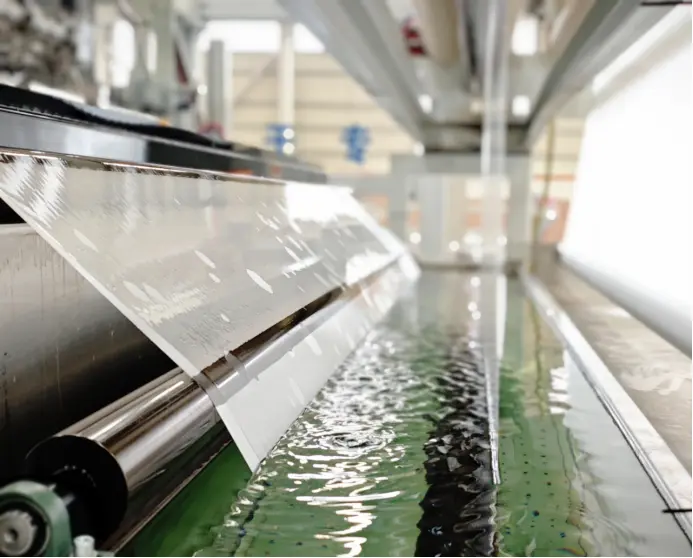
Our PVB wedge-shaped film extrusion line offers high thickness control for automotive HUD interlayer films.
Our engineering division will help you design screw profiles, select motor configurations, and optimize your downstream cooling setups.
Send Inquiry Now