1 / 1

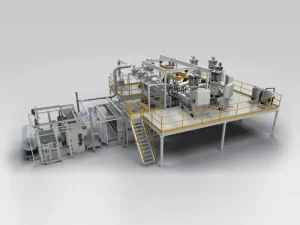
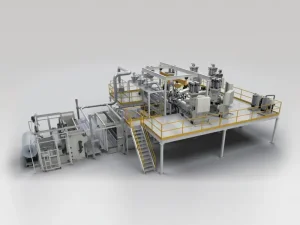
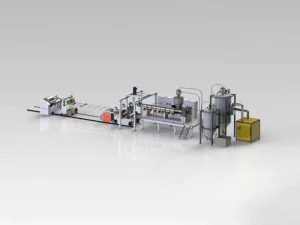
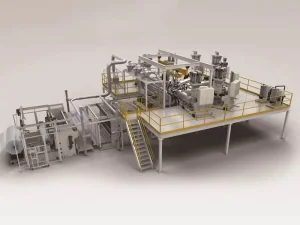
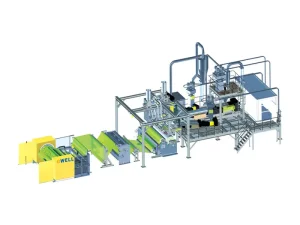
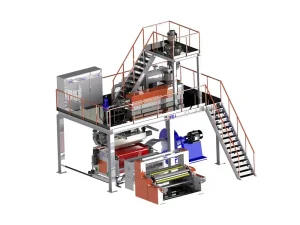
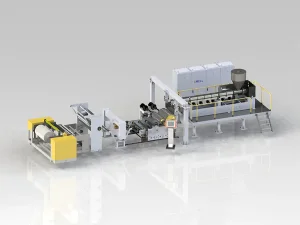
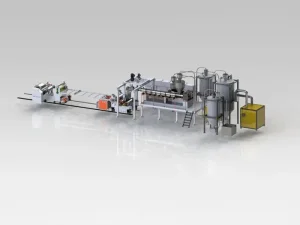
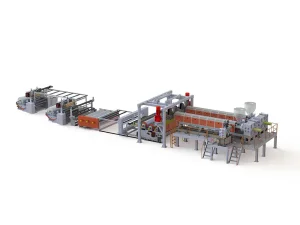
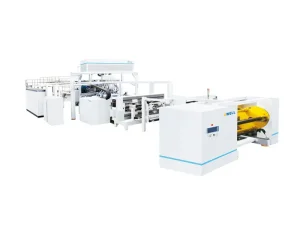
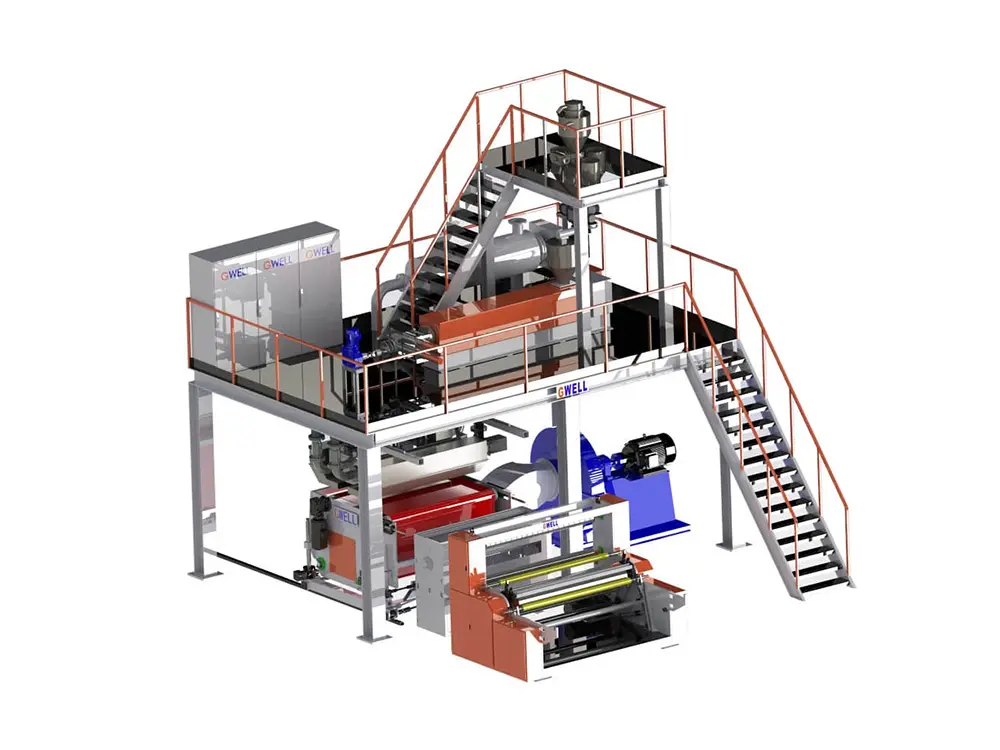
The production line begins with a meticulously designed polymer feeding system that ensures a consistent and smooth supply of raw materials, typically polypropylene (PP) pellets, to the extruder. This system includes hoppers with level sensors to maintain an optimal feed rate, ensuring continuous and uniform production.
The polymer pellets are melted and extruded under controlled temperatures and pressures in the extruder. The melted polymer is then forced through a fine die with numerous tiny holes into a high-velocity air stream in the meltblowing chamber. This process, known as meltblowing, rapidly expands and attenuates the molten fibers, creating a fine, web-like structure with exceptional fiber entanglement and filtration properties.
The fine meltblown fibers are collected on a moving conveyor belt or a forming wire, where they are consolidated into a nonwoven fabric. The collection system can be adjusted to control the basis weight, thickness, and porosity of the final product, catering to different application needs.
The production line is equipped with advanced automation and control systems that monitor and regulate key parameters such as temperature, pressure, feed rate, and air velocity. These systems ensure consistent product quality and enhance operational efficiency, reducing the need for manual intervention.
Inline quality assurance measures, including sensors for thickness and basis weight monitoring, as well as visual inspection stations, ensure that only defect-free materials proceed to the next stage. This rigorous quality control helps maintain the high standards expected in medical and hygiene applications.
Designed with energy conservation in mind, the Meltblown Nonwoven Production Line incorporates energy-efficient motors, optimized heating systems, and recyclable material handling practices. This contributes to reducing the carbon footprint and operational costs.
The line offers flexibility to produce a wide range of meltblown nonwoven grades, from fine, soft fibers suitable for baby diapers to coarse, durable fibers for industrial applications. Customers can customize the line configuration to meet specific production requirements and market demands.
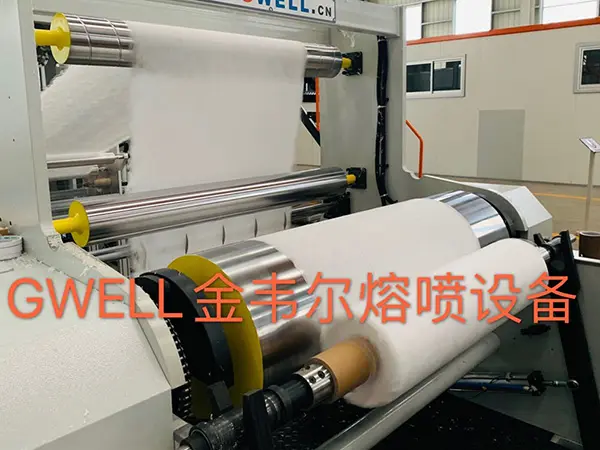
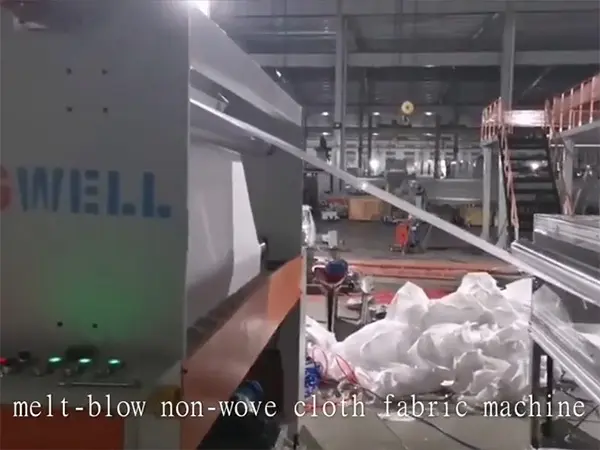
The production line primarily utilizes polypropylene (PP) pellets, which are fed systematically into the extruder to create consistent and uniform meltblown fibers.
The collection system controls these properties by adjusting the conveyor belt or forming wire speed. This determines the basis weight, thickness, and overall porosity of the finished fabric.
The line features inline quality control, integrating precision sensors that monitor basis weight and thickness alongside dedicated visual inspection stations to detect defects instantly.
Yes. It is engineered with energy-efficient motors, optimized heating zones, and recyclable material handling workflows to significantly lower operational costs and reduce environmental footprint.
Absolutely. The line is highly flexible and can be customized to manufacture various grades, ranging from soft, fine fibers for baby diapers and hygiene products to coarser, durable fibers for industrial filtration.