1 / 1

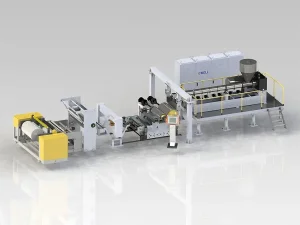
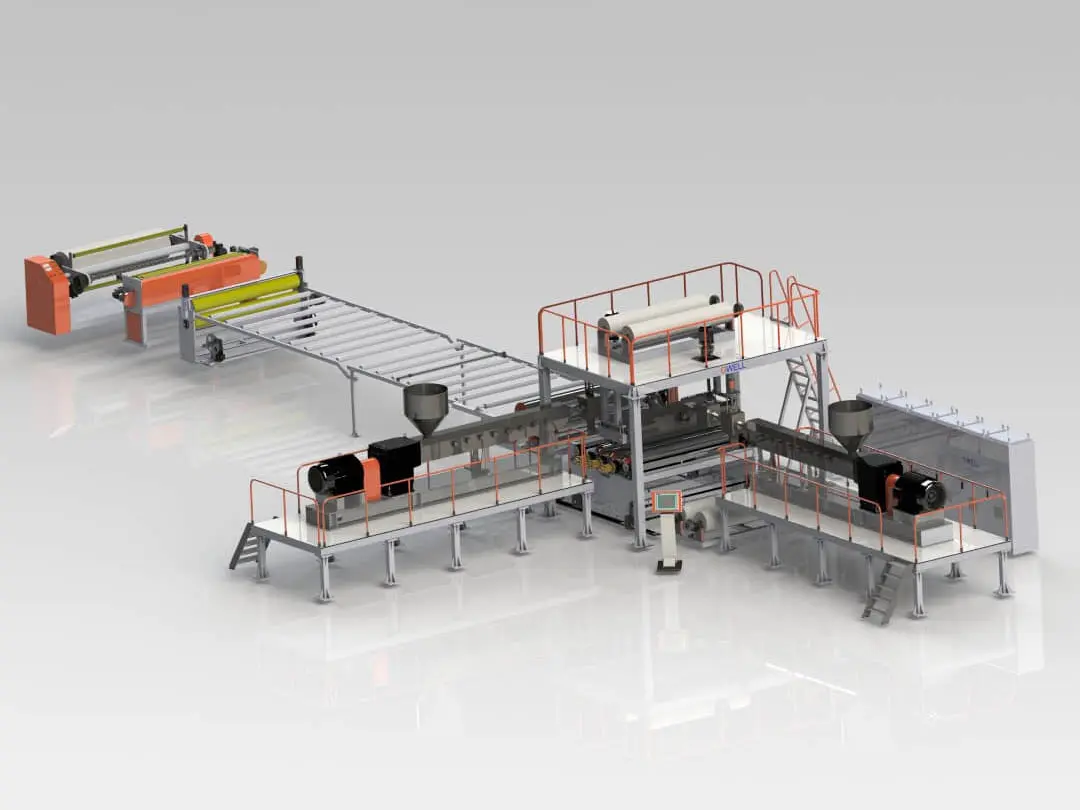
Hopper: A large container where the raw TPO resin, modifiers, and additives are loaded.
Feeder: A mechanism that meters the raw materials into the extruder at a controlled rate.
Barrel and Screw: The heart of the extrusion process. The screw rotates inside the heated barrel, mixing and melting the raw materials.
Heating Zones: Strategically placed heaters along the barrel.
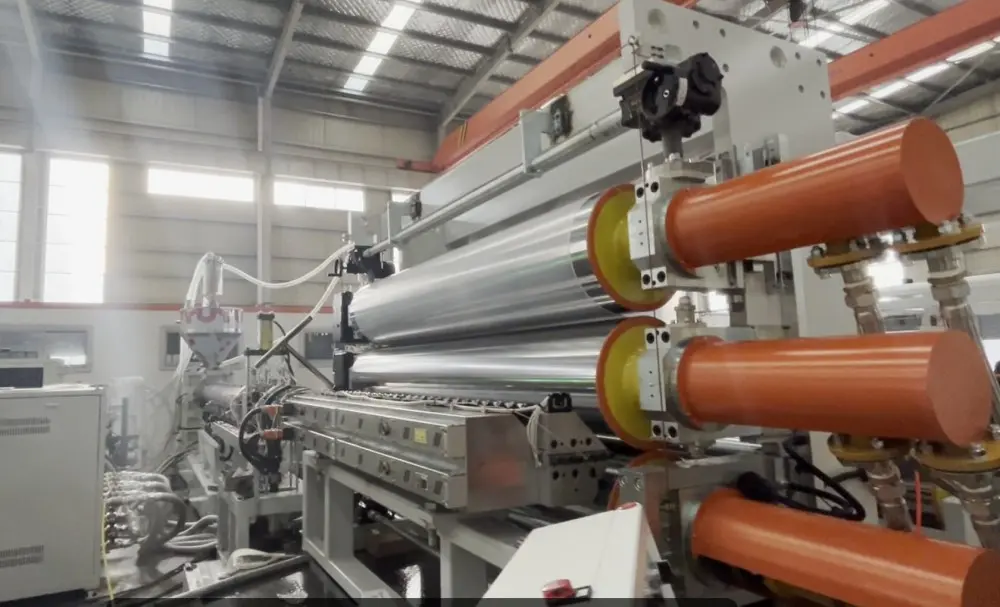
Die: A component that shapes the melted material.
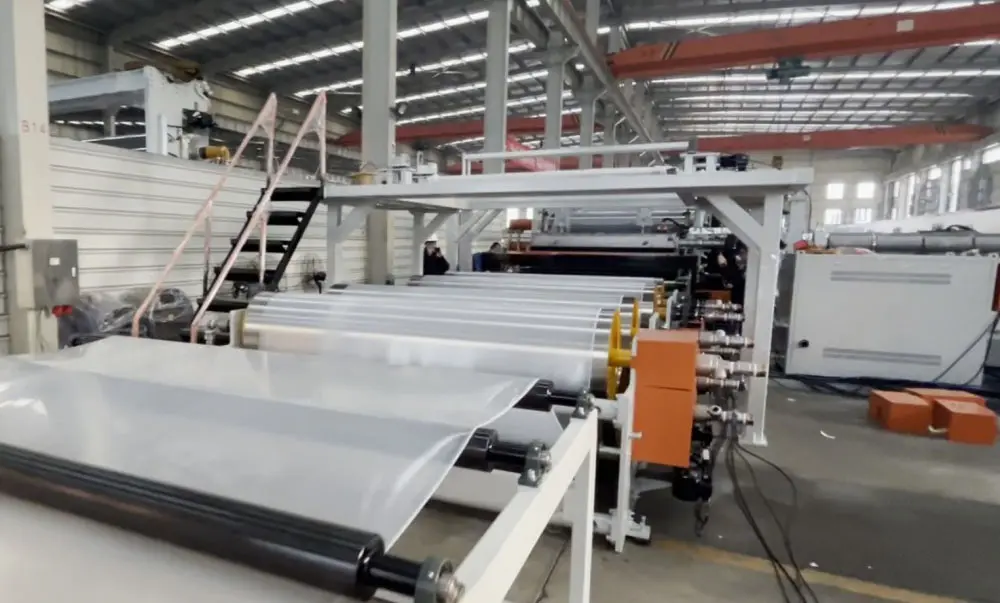
Calendering Rolls: A series of rolls that flatten and smooth the extruded sheet to achieve the desired thickness.
Cooling Rolls: Rolls with chilled water circulation to rapidly cool the sheet.
Trimming Devices: Tools to remove any excess material or imperfections from the sheet edges.
Cutting Machines: Systems to cut the sheet into specified lengths.
Winder: A mechanism that rolls up the sheet into compact rolls.
Packaging Equipment: Machines that wrap and label the rolls.
The automated nature of the extrusion line ensures high production rates and consistent quality.
Adaptable to produce sheets of varying thicknesses, widths, and colors for diverse applications.
TPO waterproof sheets are resistant to weathering, UV radiation, and chemicals, providing long-lasting protection.
TPO materials are recyclable, reducing waste and overall environmental impact.
Continuous production process minimizes labor costs and maximizes material utilization.
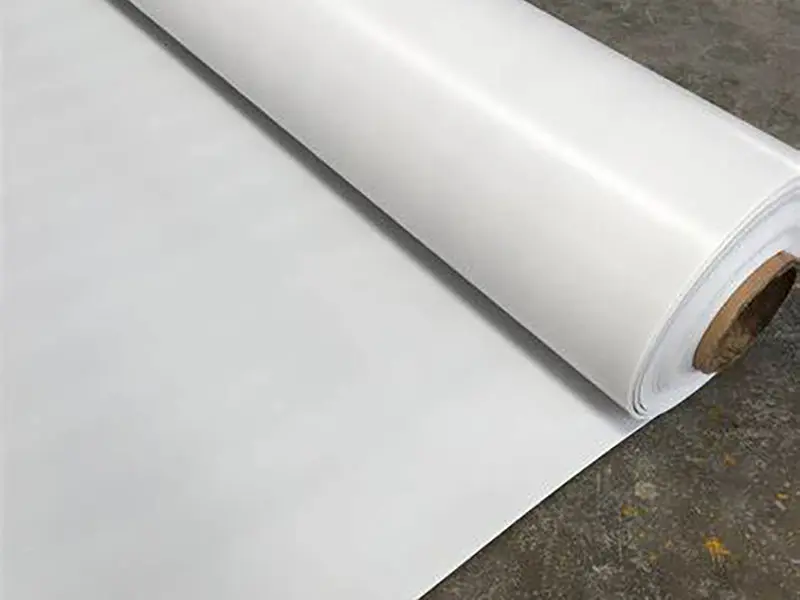
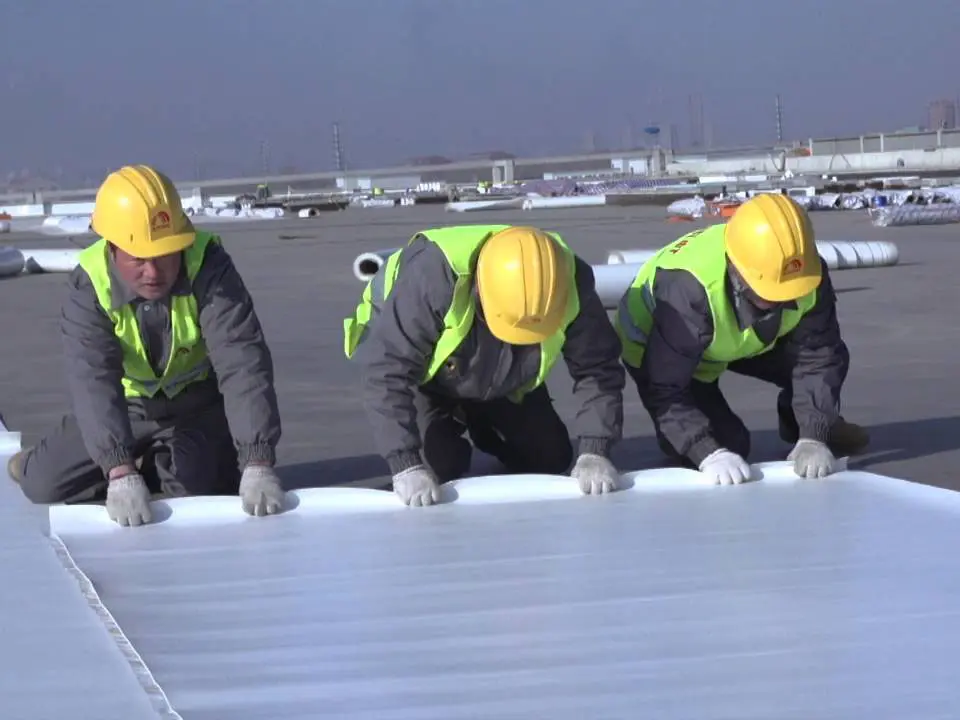
Highly resistant to weathering, UV radiation, chemicals, and mechanical abuse.
Maintains flexibility even at low temperatures, adapting to thermal expansion without cracking.
Easily welded using heat, creating seamless, water-impervious barriers.
Light color and smooth surface reflect solar radiation, reducing heat absorption and cooling costs.
TPO is recyclable, making it an environmentally friendly alternative to traditional options.
Can last up to 20 years or more with proper installation and maintenance.
Reflective properties lower energy consumption by reducing cooling requirements.
Perfect for flat/low-slope roofs, balconies, terraces, and other waterproofing applications.
Lightweight and easy to handle, facilitating quick and efficient installation.
Longevity and energy savings ensure a highly cost-effective long-term solution.
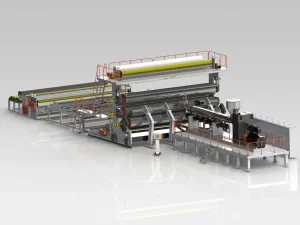
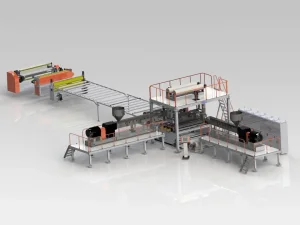
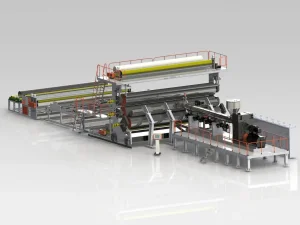
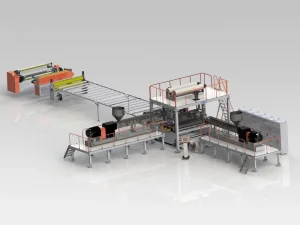
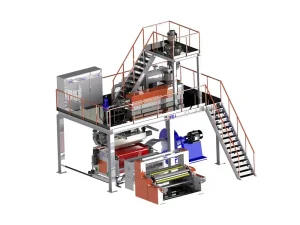
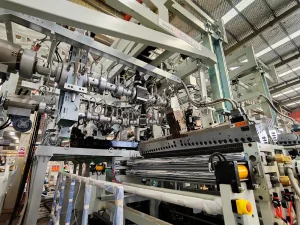
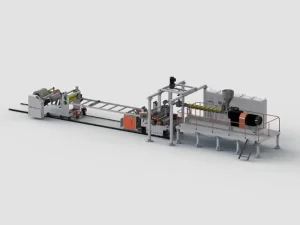
The extrusion line consists of a raw material feeding system (hopper and feeder), the extruder (barrel, screw, heating zones, and die), a sheet forming and cooling system (calendering and cooling rolls), a trimming/cutting station, and a winding/packaging system.
TPO waterproof sheets are primarily composed of Polypropylene (PP) for strength and chemical resistance, Ethylene-Propylene Rubber (EPR) for flexibility and UV resistance, and various performance-enhancing stabilizers and modifiers.
Due to the incorporation of Ethylene-Propylene Rubber (EPR), TPO sheets maintain high flexibility even at low temperatures. This allows the sheet to expand and contract under thermal fluctuations without cracking or tearing.
TPO sheets feature a light color and smooth surface finish that efficiently reflects solar radiation. This reduces heat absorption into the building structure, significantly lowering indoor cooling costs during warm seasons.
They are commonly used in low-slope and flat commercial roofing, building waterproofing (such as basements, bathrooms, and kitchens), green roof base insulation layers, and chemical-resistant pool linings.
With proper installation, sealing, and basic maintenance, TPO waterproof sheets are highly durable and can provide reliable waterproofing protection for up to 20 years or more.