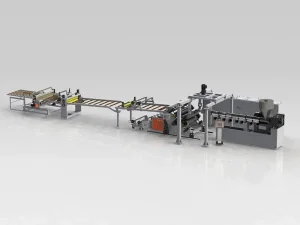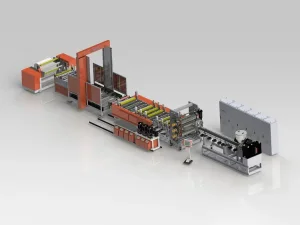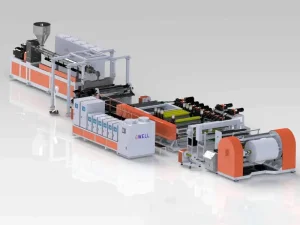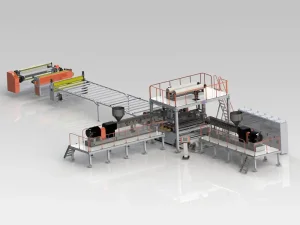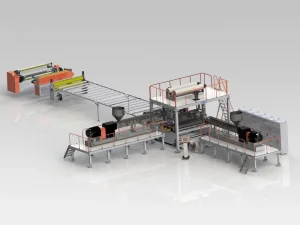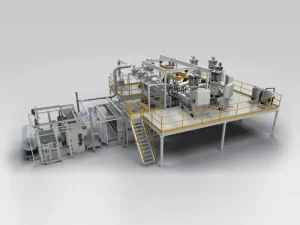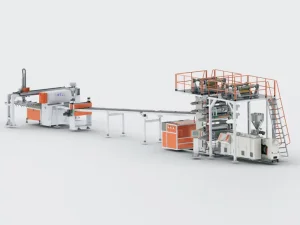
In the evolving landscape of global industrial lighting and electronic displays, the demand for Lighting PC PMMA Optic Sheet Extrusion Lines has transitioned from mere capacity expansion to high-fidelity optical precision. Modern enterprises in Europe, North America, and Southeast Asia are prioritizing "Optical Grade" output, where light transmission exceeds 92% and haze is strictly controlled under 1%.
Global procurement trends indicate a shift toward Industry 4.0 integration. Exporters who provide real-time melt pressure monitoring, automated thickness control (down to ±0.01mm), and energy-efficient vacuum degassing systems are currently dominating the market share. For Tier-1 automotive and architectural lighting manufacturers, the "Total Cost of Ownership" (TCO) now includes carbon footprint metrics, making GWELL’s high-efficiency extrusion technology a preferred choice for sustainable manufacturing.
Reduction in energy consumption via GWELL's new heating distribution systems.
Precision tolerance achieved through automated T-Die adjustment technology.
Light transmittance for high-end optical PMMA sheets produced on our lines.
AI-driven sensors that adjust screw speed and temperature based on raw material batch variations to ensure zero-defect production.
The roadmap includes 5-layer and 7-layer functional sheets combining PMMA's clarity with PC's impact resistance and UV-blocking layers.
Integration of systems capable of processing up to 30% recycled optical-grade regrind without losing light-guiding properties.
From the miniaturization of LED backlights (Mini-LED) to the massive deployment of UGR<19 architectural light panels, the PC PMMA Optic Sheet is the backbone of visual comfort. GWELL’s solutions address the "Yellowing Resistance" challenge and "Stress-Free" extrusion requirements, ensuring that sheets remain optically stable for over 10 years of continuous operation.
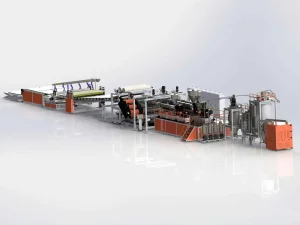
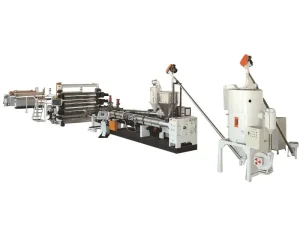
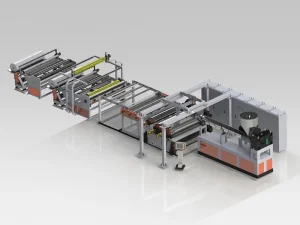
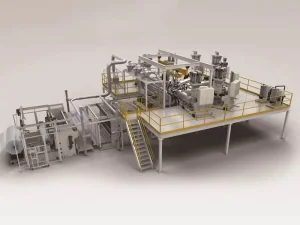
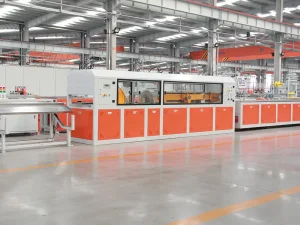
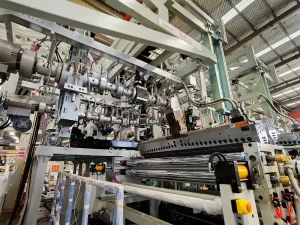
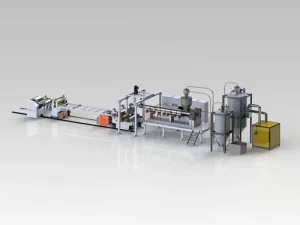
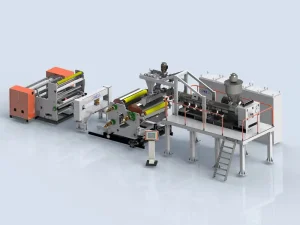
China GWELL Machinery, a high-tech enterprise, specializes in High-Tech Plastic Extrusion Lines for Film, Sheet, and Profile. Our operating philosophy, "Expertise creates customers’ values," is evident in our PC PMMA Optic Sheet Extrusion Line, which integrates:
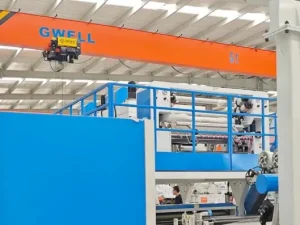
Relying on the powerful technology and equipment of the group and an innovative spirit, GWELL commits to the development of international markets through three major production bases covering 866,000㎡.
All GWELL extrusion lines meet rigorous European safety standards and international quality management protocols.
Utilizing IoT connectivity, our engineers can troubleshoot your line anywhere in the world, reducing downtime by 70%.
Strategic warehouses in key regions ensure critical components like heaters and sensors are delivered within 48 hours.
A: Our lines feature a specialized high-vacuum venting system and precision temperature profiles to ensure complete degassing before the T-Die.
A: Yes, GWELL's multi-functional extrusion lines are designed with interchangeable screw modules and adjustable calendar gaps to handle different polymers.
A: Depending on configuration complexity, typically 4 to 6 months including rigorous factory testing before shipment.