
Explore our premium extrusion lines, engineered to meet the highest international standards of performance, efficiency, and reliability.
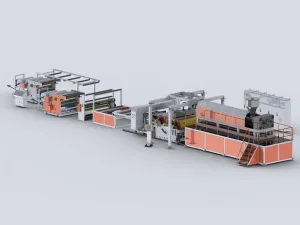
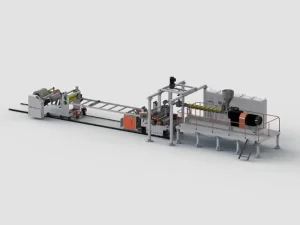
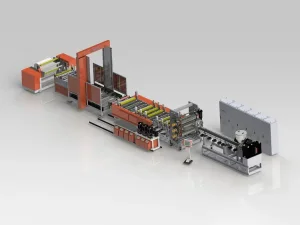
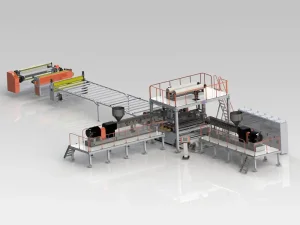
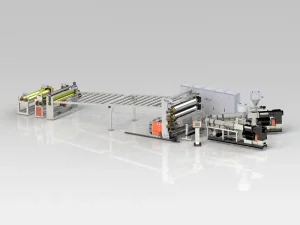
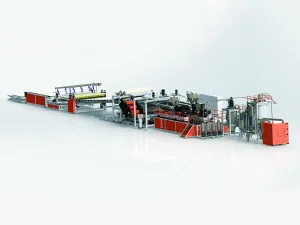
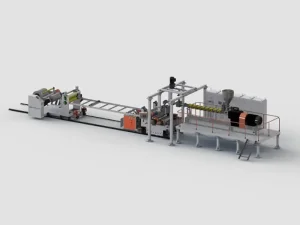
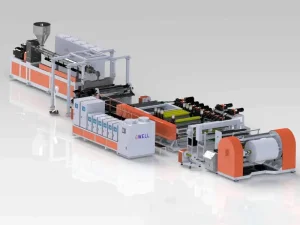
Understanding the science, raw material preparation, and precision engineering metrics behind high-clarity polyvinyl butyral interlayers.
Achieving a haze value under 0.2% and light transmission greater than 90% requires strict contamination controls, specialized screw geometry, and optimal melt filtration.
Multi-layer PVB structures integrate functional resins for enhanced acoustic dampening, infrared insulation, and targeted UV blocking without reducing clarity.
For Heads-Up Display (HUD) applications, cross-directional wedge profile extrusion demands sub-micron level die lip thermal controls to eliminate double images.
High Transparency Polyvinyl Butyral (PVB) film serves as the core functional interlayer for architectural safety glass and automotive laminated windshields. The production process involves complex compounding of PVB resin with plasticizers, followed by precise flat-die sheet extrusion. Achieving high optical transparency demands strict exclusion of particulate impurities, thermal degradation gels, and moisture pockets. Key variables include raw material consistency, melt temperature uniformity, and downstream embossing control, which determines the surface roughness (Rz) critical for vacuum de-airing during glass lamination.
Unlike standard polymer films, PVB is highly hygroscopic. Extrusion lines must operate in controlled-environment cleanrooms with strict relative humidity (RH) levels below 25% and temperatures below 20°C in the winding zone to prevent moisture absorption, which causes adhesion loss and bubbling in the final glass laminates.
From an engineering perspective, the extrusion screw must provide high shear input to distribute plasticizers uniformly without causing thermal shear degradation. Degradation can manifest as micro-gels or a yellow tint. The process relies on custom L/D ratios (usually 28:1 to 32:1) and specialized mixing elements to melt and homogenize the resin at lower processing temperatures.
How high-transparency PVB interlayers are driving structural changes across automotive, green building, and clean energy sectors.
The global market for high-transparency PVB film is growing, driven by stricter automotive safety regulations and energy-efficient building codes. In the automotive sector, laminated side glazing is increasingly used alongside front windshields to reduce interior noise levels and protect passengers from UV radiation. This has led to higher demand for high-performance acoustic PVB and thermal PVB films.
In architecture, the shift toward sustainable urban design has increased the use of structural PVB interlayers in double and triple-glazed facades. These films must maintain long-term edge stability and resist yellowing when exposed to outdoor moisture and UV light. Additionally, the building-integrated photovoltaics (BIPV) market uses PVB films to encapsulate solar cells directly into architectural glass facades, combining power generation with structural safety.
Chinese manufacturers have optimized the supply chain for PVB raw materials and extrusion machinery, making high-performance equipment more accessible globally. This optimization allows domestic and international manufacturers to scale up production with lower capital expenditures while meeting global standards like European EN 12600 and American ANSI Z97.1.
A closer look at the step-by-step engineering advancements that ensure optical purity and consistent thickness control.
PVB resin powder is blended with plasticizers, UV stabilizers, and adhesion control agents using high-accuracy gravimetric loss-in-weight feeders. This step ensures consistent polymer melt properties and mechanical strength in the finished film.
The mixture is processed through a single-screw or twin-screw extruder designed to minimize shear heat. The melt then passes through a large-area continuous screen changer to filter out contaminants larger than 40 microns, preventing optical defects in the film.
An automatic T-die with thermal expansion bolts continuously adjusts the lip gap based on real-time thickness measurements from a closed-loop beta-ray or laser scanner. This setup maintains precise cross-directional thickness tolerances within ±1%.
The film passes through cooled embossing rollers to create a specific surface roughness pattern (Rz 30-70 μm) on both sides. This texture allows air to escape during the glass lamination process. Finally, the film is cooled, trimmed, interleaved, and wound in a temperature-controlled cleanroom.
A leading high-tech enterprise specializing in high-performance polymer extrusion technology and global equipment delivery.
China Gwell Machinery is a high-tech enterprise dedicated to the design and manufacture of plastic extrusion lines for Film, Sheet, and Profile. By leveraging advanced group technology, precision processing machinery, and an innovative R&D team, Gwell delivers high-tech solutions to international markets. Operating under the philosophy "Expertise creates customers' values," we support clients in over 80 countries with customized systems built for efficiency and long-term durability.
Our R&D efforts focus on optimizing melt flow dynamics, reducing energy consumption, and implementing digital control systems. This ensures our PVB, EVA, POE, and sheet extrusion lines deliver high performance and reliable product quality.
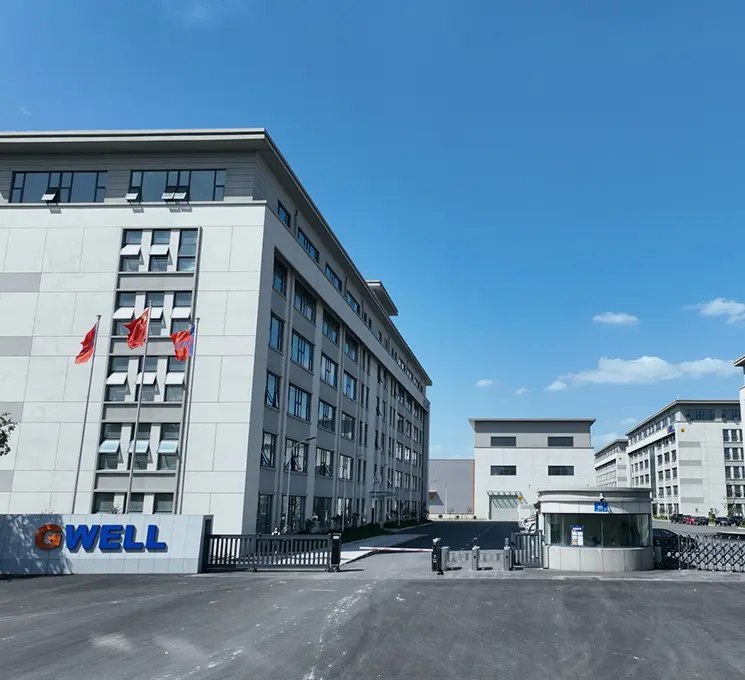

We collaborate with universities and research institutes to develop high-tech, energy-efficient plastic processing machinery.

We provide comprehensive, end-to-end customer support, from initial factory design and installation to process optimization and parts supply.

Our three major manufacturing bases enable us to build and ship over 1,000 high-performance extrusion lines annually.

Our machinery is exported worldwide, supporting architectural glass and solar encapsulation film manufacturers across diverse markets.

Our team includes over 100 specialized design and commissioning engineers dedicated to maintaining high standards of machine performance.
Explore our specialized machinery classifications engineered for diverse plastic sheet, board, and solar film applications.
Designed for weather-resistant co-extrusion films used in building facades and roofing applications.
Produces highly elastic, abrasion-resistant films for apparel, medical, and protective laminates.
Specialized line for solar backsheet layers, offering excellent UV and chemical resistance.
Optimized for architectural safety glass and automotive acoustic/wedge interlayers.
High-capacity lines for rigid composite floorings and building cladding products.
Engineered for high-temperature engineering plastics used in chemical and semiconductor industries.
Maintains optical clarity for electronic displays, light guide plates, and safety barriers.
Eco-friendly sheet manufacturing for thermoforming packaging and consumer goods.
A key system for producing solar cell encapsulation film, designed for high output and low shrinkage.
Optimized for structural ionoplast safety interlayers, offering high post-breakage strength.
Specialized line for high-durability separator membranes used in electrolysis systems.
Tailored for building-integrated photovoltaic module encapsulation, ensuring long-term outdoor stability.
Integrated manufacturing setups engineered for high productivity and reduced operating costs.
For large glass facades, we offer PVB extrusion lines that produce films up to 3600mm wide. These systems include inline thickness sensors and automated tension control to prevent film deformation, ensuring uniform glass lamination.
We provide co-extrusion lines capable of producing multi-layer PVB films. These systems include acoustic barriers to reduce wind noise and wedge-shaped profiles for head-up displays (HUD), meeting strict automotive tolerances.
Our solar-grade PVB extrusion lines handle specialized resin formulations. They produce interlayers with excellent adhesion, low water absorption, and high volume resistivity, protecting solar cells from moisture and PID (Potential Induced Degradation).
Our production systems feature modular designs, allowing plants to upgrade from standard architectural film setups to automotive acoustic or solar PVB film production with minimal changes to downstream components. This flexibility helps manufacturers adapt to shifting market demands.
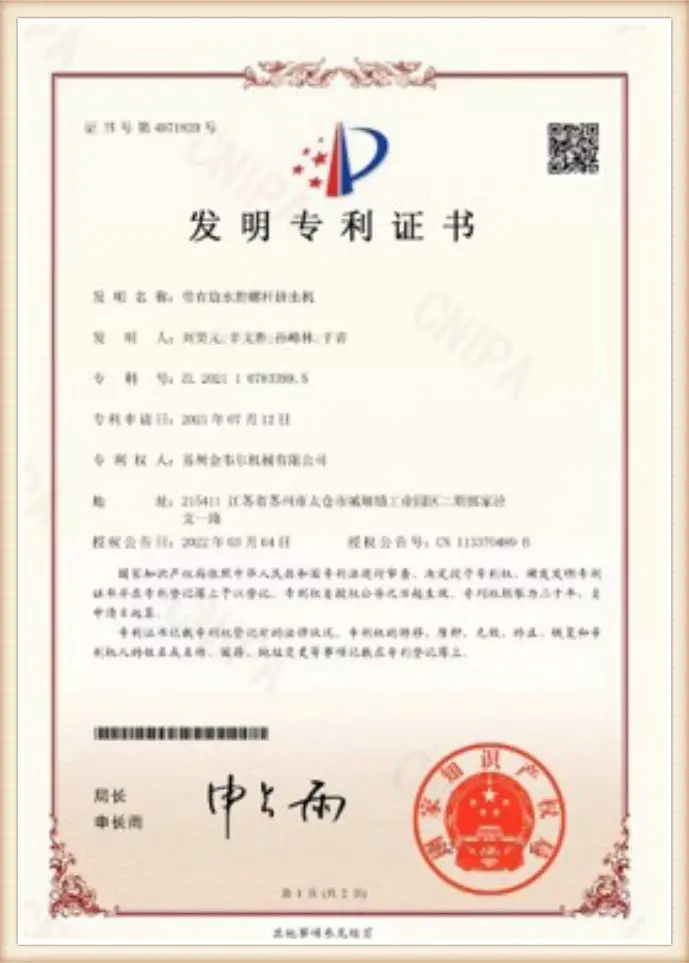
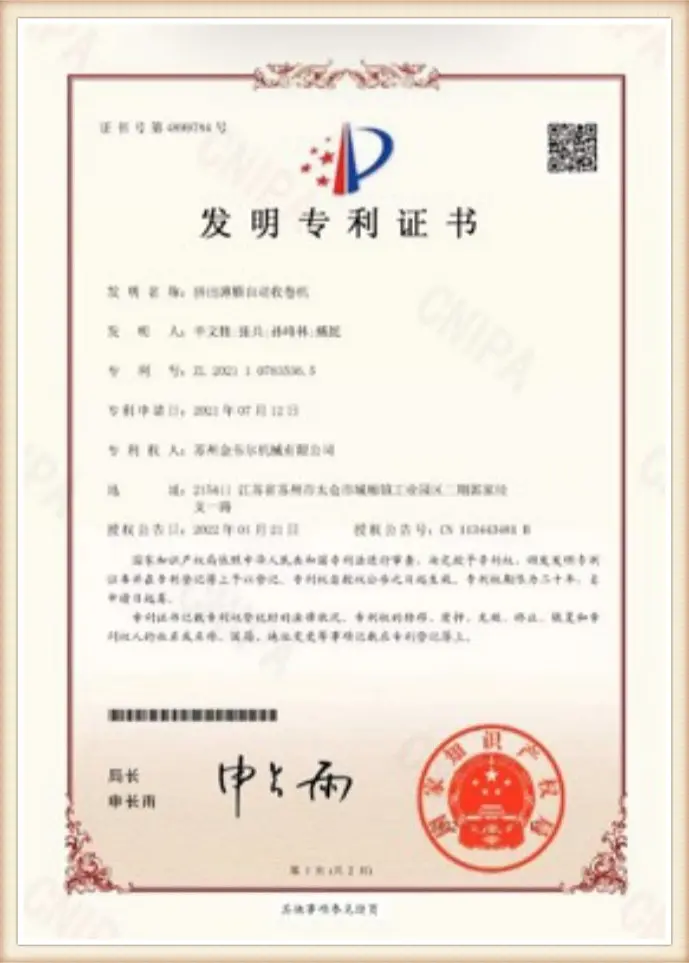
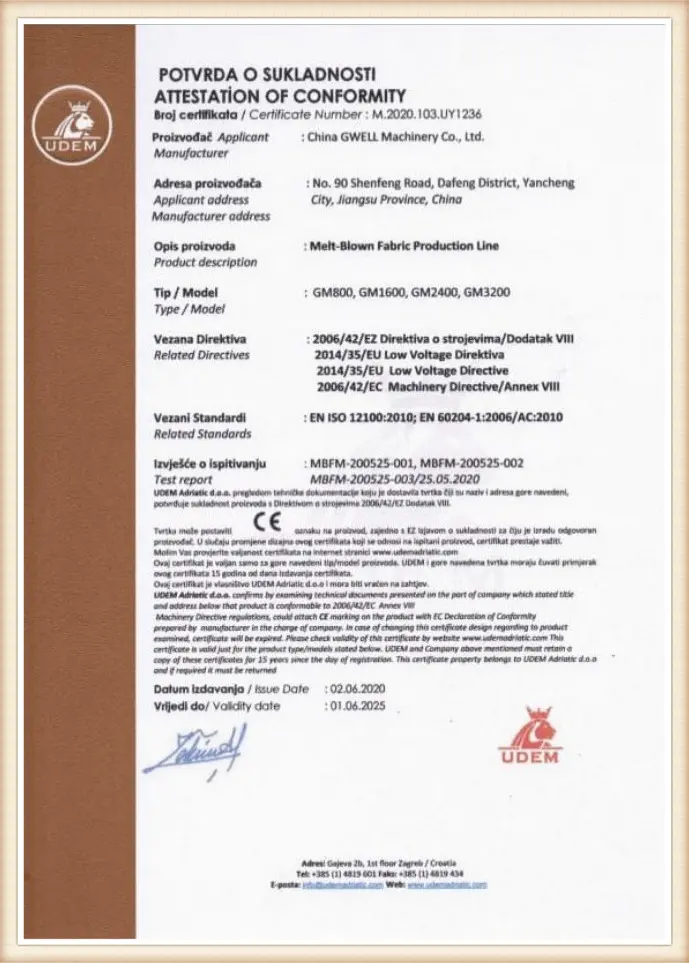
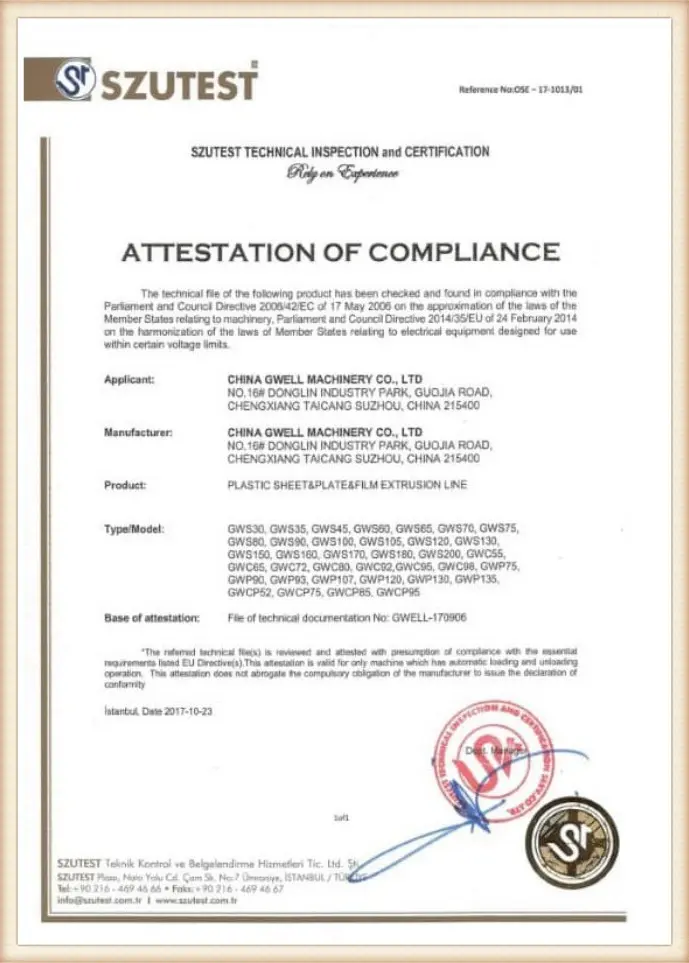
Gwell extrusion machinery and systems comply with strict international engineering and safety standards.
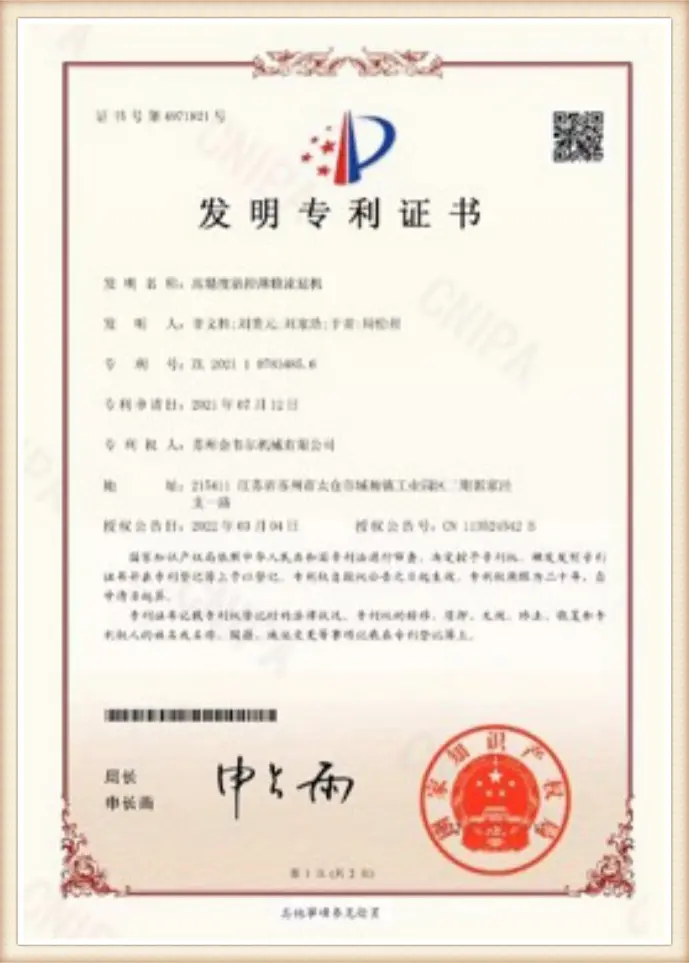
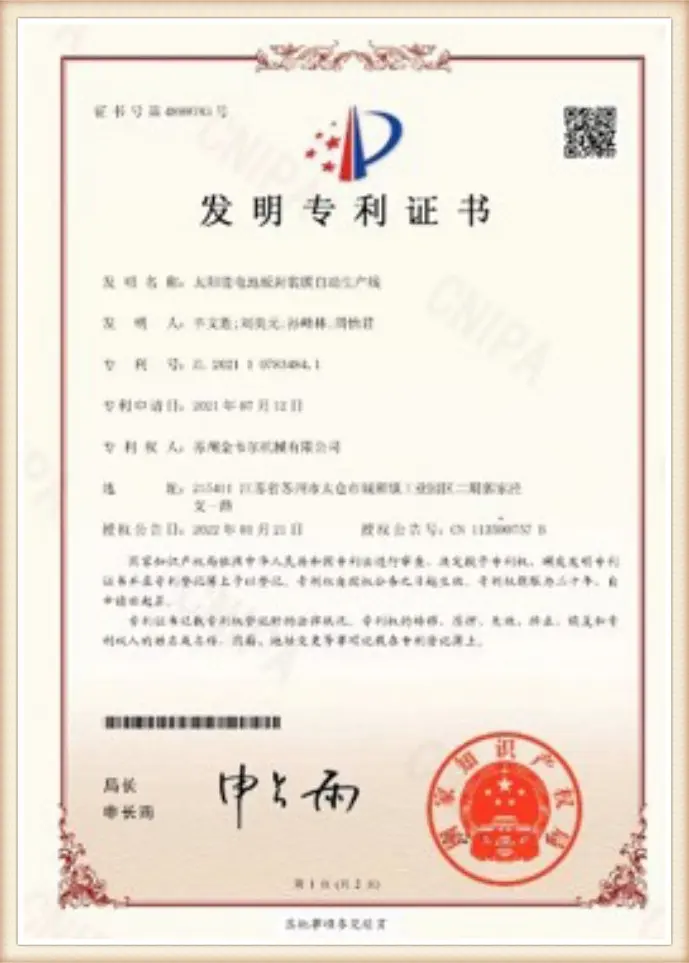
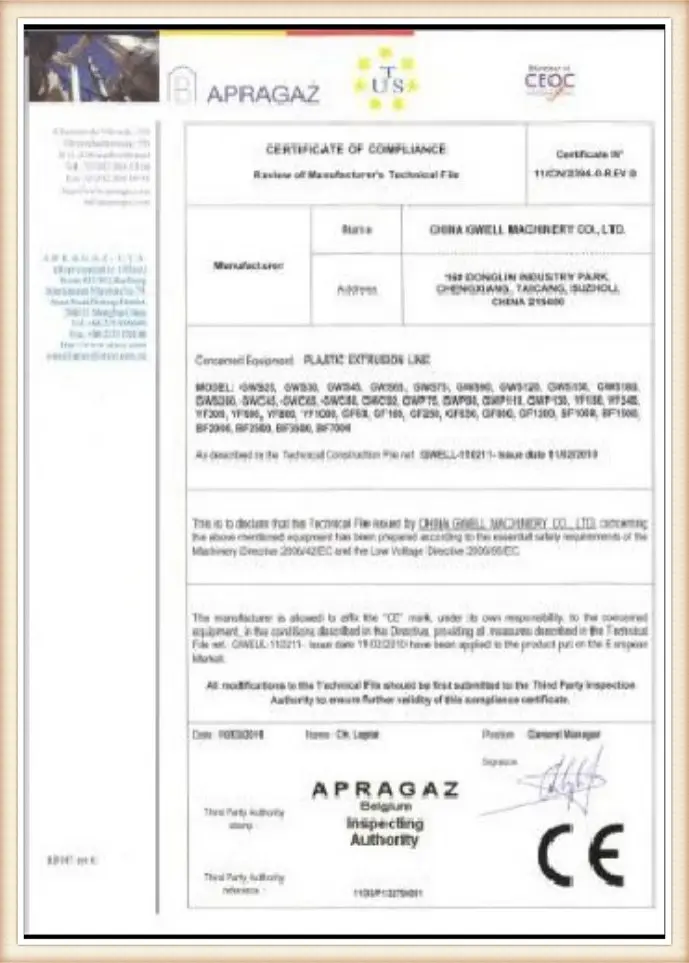
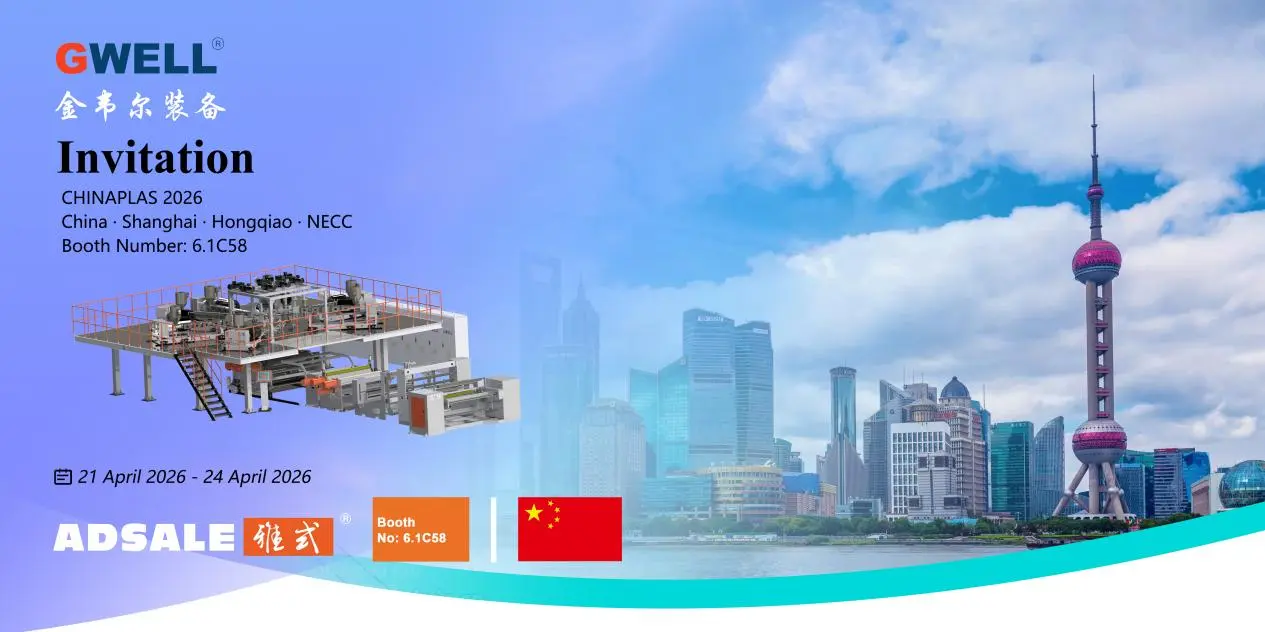
Stay informed about technical milestones and upcoming exhibitions in the plastic extrusion machinery sector.
Join Gwell at upcoming international plastics expos, where we will display our latest multi-layer co-extrusion technology for solar and optical film applications.
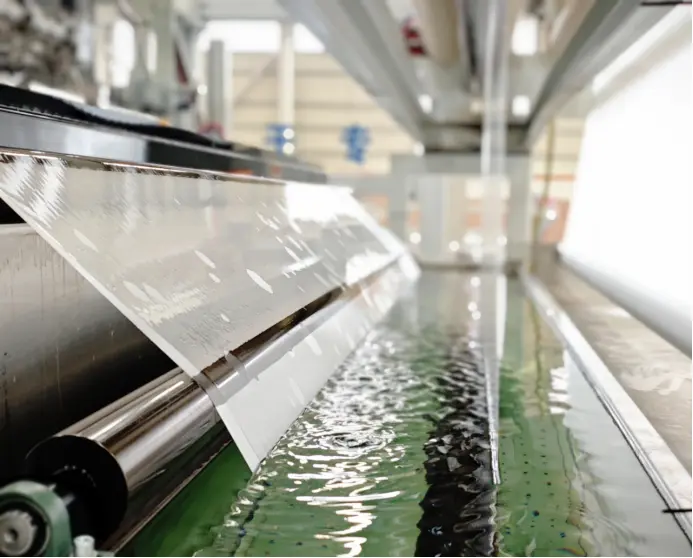
Our wedge-shaped PVB film lines offer high precision and compatibility, delivering consistent thickness control for automotive HUD manufacturing.
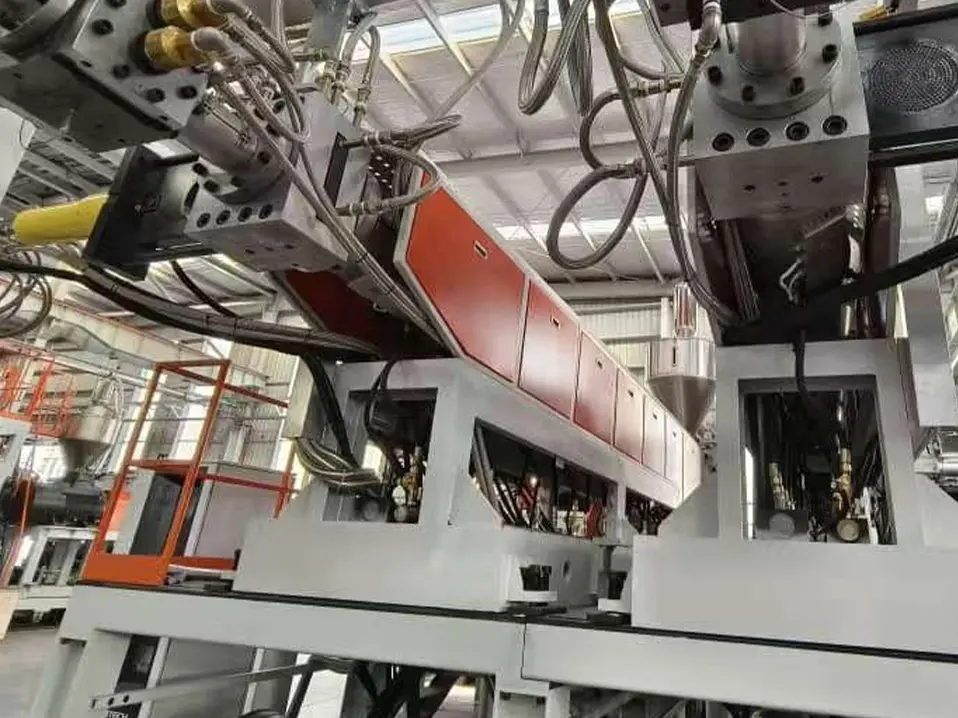
We have updated our solar encapsulation film lines, incorporating technology that reduces film shrinkage and improves processing output.
In-depth technical answers addressing common manufacturing, material processing, and quality control questions.
Optical transparency is primarily affected by thermal degradation gels and raw material purity. If the polymer melt experiences excessive heat or shear within the extruder, it can create micro-gels. These gels cause light scattering and increase the haze index. Using a low-shear screw design and continuous fine-mesh melt filtration helps minimize these defects.
The embossed surface pattern (characterized by Rz roughness) creates micro-channels that allow air to escape during the glass vacuum-bagging or rolling lamination steps. If the film is too smooth, air pockets can become trapped between the glass and the PVB, leading to bubbles and laminate failure after autoclaving.
Windshields for Heads-Up Displays (HUD) require a wedge-shaped profile (gradually tapering from top to bottom) to align the projected image and prevent ghosting. Our wedge film extrusion lines use specialized T-die lips with dynamic thermal bolt control to create this precise wedge profile across the film's width.
PVB is highly hygroscopic and should be packaged with a moisture content of less than 0.45%. During winding and packaging, the film is typically interleaved with PE protective liner film and sealed in moisture-proof aluminum foil bags to prevent ambient moisture absorption.
Browse our complete list of machinery lines, designed to handle diverse polymer materials and processes.
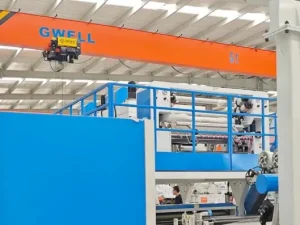
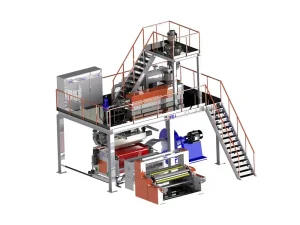
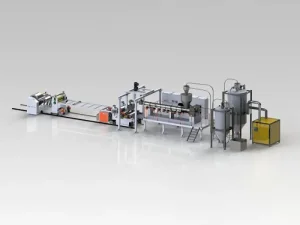
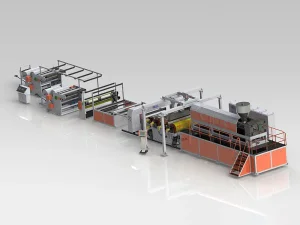

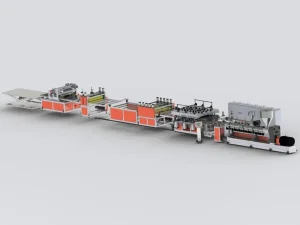
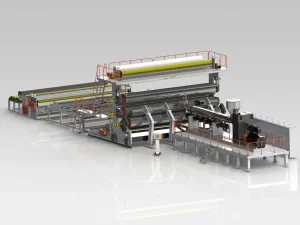
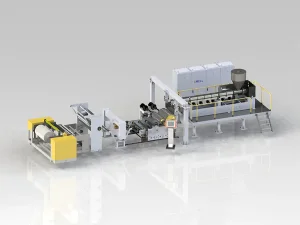
Gwell's precision machining and extrusion capabilities are recognized across the polymer processing industry. Contact us to discuss your production requirements.
Send Technical Inquiry