1 / 1

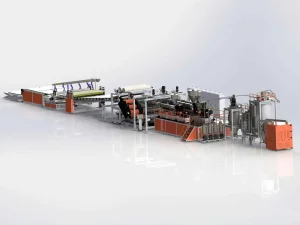
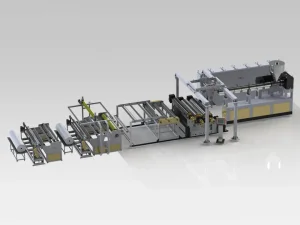
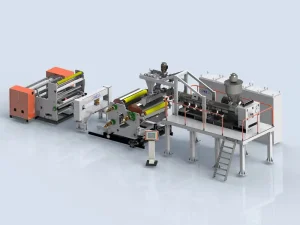
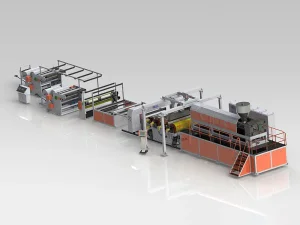
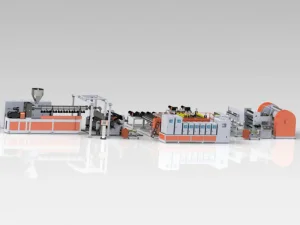
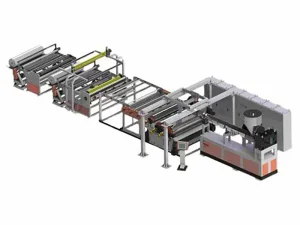
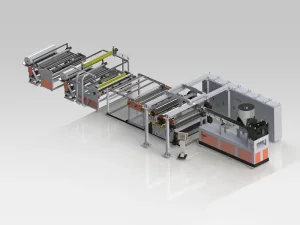
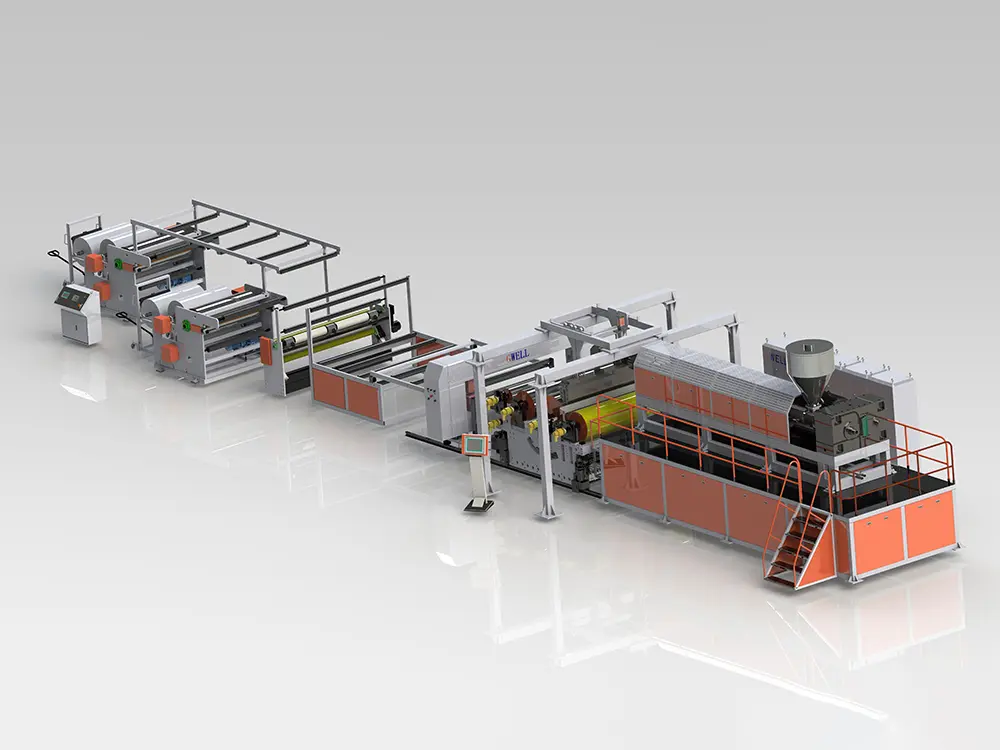
Equipped with sophisticated extruders designed to handle a wide range of EVA (Ethylene Vinyl Acetate) and POE (Polyolefin Elastomer) formulations specifically engineered for solar encapsulation. The extruder's precision ensures uniform melting and mixing, resulting in films with consistent mechanical and optical properties.
Features a precision-engineered die that guarantees even flow and distribution of the molten polymer, critical for achieving uniform film thickness. Advanced calibration and cooling systems ensure rapid solidification of the film while maintaining flatness and preventing distortion.
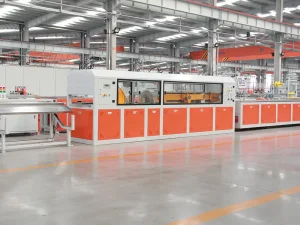
Integrated automation ensures smooth and tension-controlled film handling from extrusion to winding, minimizing defects and maximizing productivity. High-capacity haul-off units and winding mechanisms accommodate large-diameter rolls, facilitating efficient downstream processing.
Incorporates corona or plasma treatment to improve the film's surface energy, enhancing adhesion to solar cells and backsheets, critical for long-term encapsulation integrity.
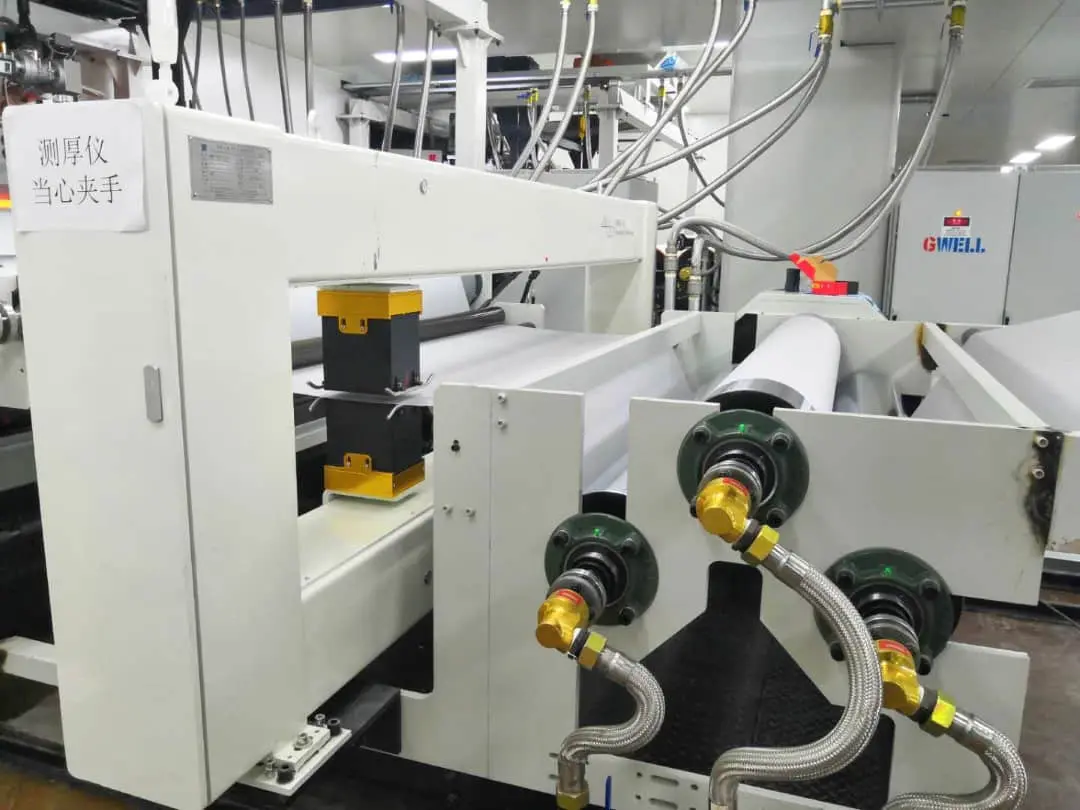
Equipped with inline thickness gauges and defect detection systems to monitor film quality in real-time, ensuring compliance with stringent industry standards. Data logging and analytics capabilities provide traceability and insights for continuous improvement.
Designed with energy-saving features, including optimized heating and cooling systems, reducing operational costs and environmental footprint. Options for recycling scrap materials minimize waste and contribute to a circular economy.
Customization options are offered to tailor the extrusion line to specific customer needs, including film width, thickness, and performance characteristics. Scalable design accommodates production volumes from pilot to industrial scales, supporting the growth of solar energy projects.
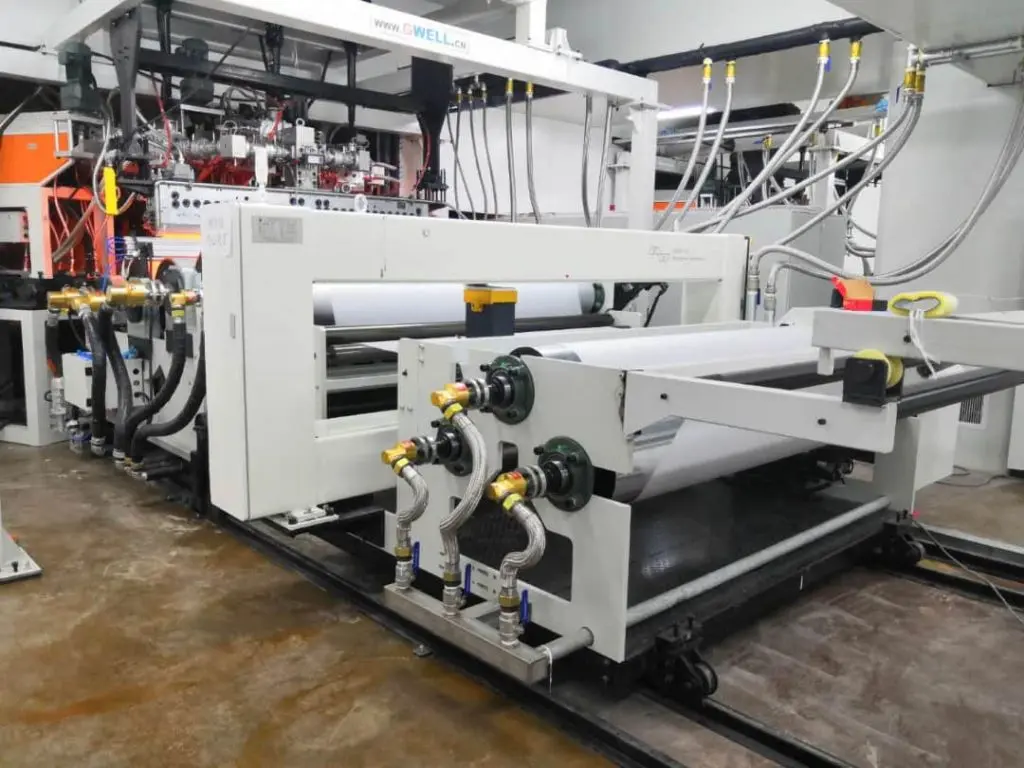
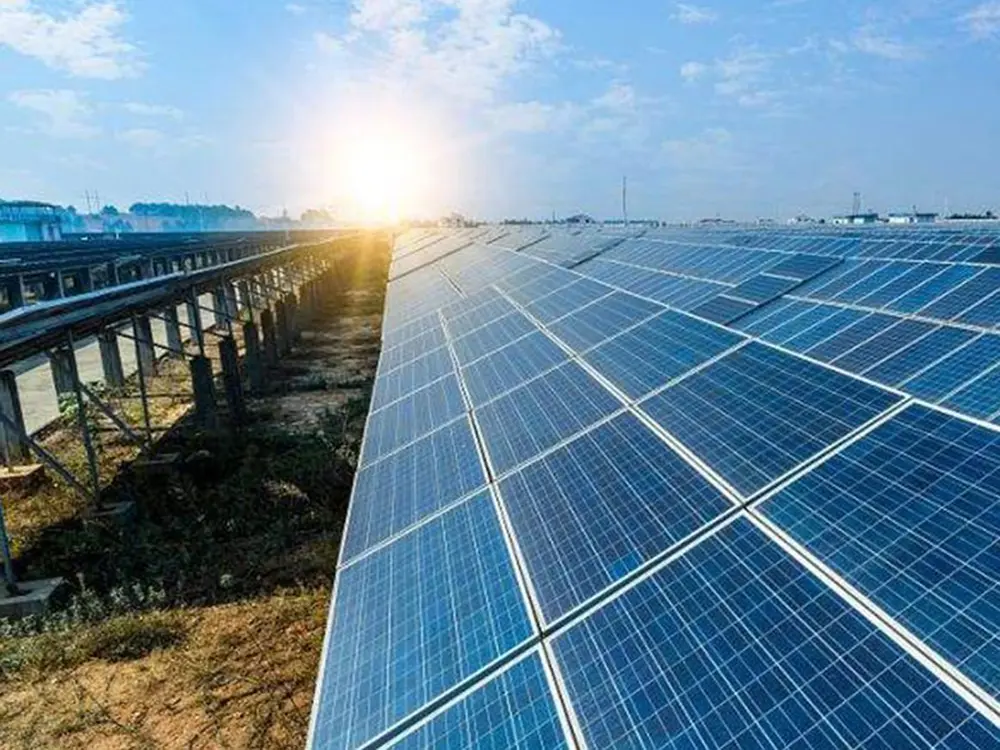
The encapsulation films produced on this line are vital for protecting solar cells from environmental factors such as moisture, UV radiation, and mechanical stress, ensuring long-term performance and reliability of solar panels.
After the filter plate is produced for a period of time, the plastic melt enters the flow channel, and the mesh should be replaced when a predetermined pressure difference is formed. During the net changing work, the hydraulic system pushes the plunger to move correspondingly, prompting the filter plate to withdraw from the working position, and at the same time another filter plate enters the working position, and the protective cover is opened when the movement is stopped. Use a tool to quickly clean the melt around gates and filter holes, remove the old filter, replace with a new one, and you’re done. The machine is equipped with a pressure sensor and display in front of the net to monitor the clogging of the filter and ensure timely net change.
The energy-saving static mixer has a special structure of mixing elements, consisting of a plurality of intersecting steel bars (rods) arranged at right angles, separated by an angle of 45 degrees, so that the flowing melt is divided into multiple strands. Second-rate. The orientation is changed to further promote uniform dispersion and plasticization of the melt. It is usually used in extruders where very high precision is required.
High forming cooling capacity and excellent temperature uniformity result in films with small roll non-uniformity and uniform thickness. High-speed and stable operation is possible because the roll surface is molded and precision-machined.
The structure adopts double-station servo unwinding device, which has high stability and mobility. The unevenness is small, and a very stable unwinding tension can be obtained.
EVA POE EPE film can be used for solar cells, crystalline silicon cells, thin film photovoltaic cells and other components within the packaging material.
The content of 30% - 33% of the EVA resin as main raw material, made through a special process, with strong bonding, high light transmission, anti-aging characteristics.
EPE film is three layer flim, combined by EVA/POE/EVA three layer, the ratio of each layer is 1/2/1, or 1/1/1, POE is better in water and air barrier performance, but due to POE cost is higher than EVA, market still mostly using the EVA, not POE, but EPE is a kind of alternative solution, to find a middle point,
EPE cost is in the middle between EVA and POE, also the quality is better than EVA.
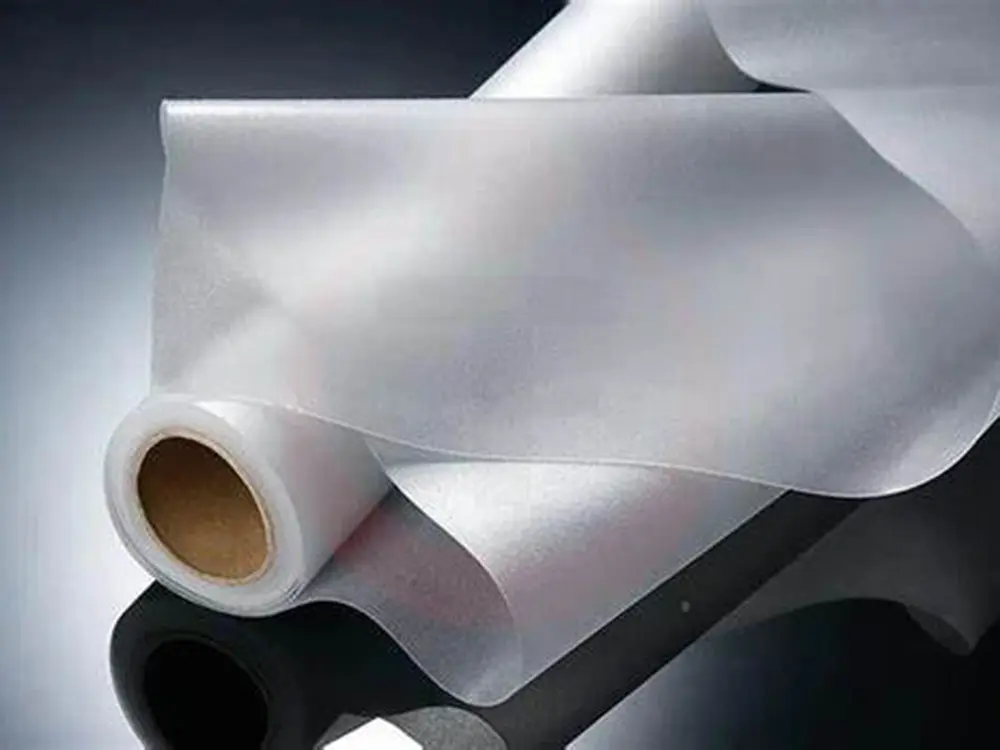
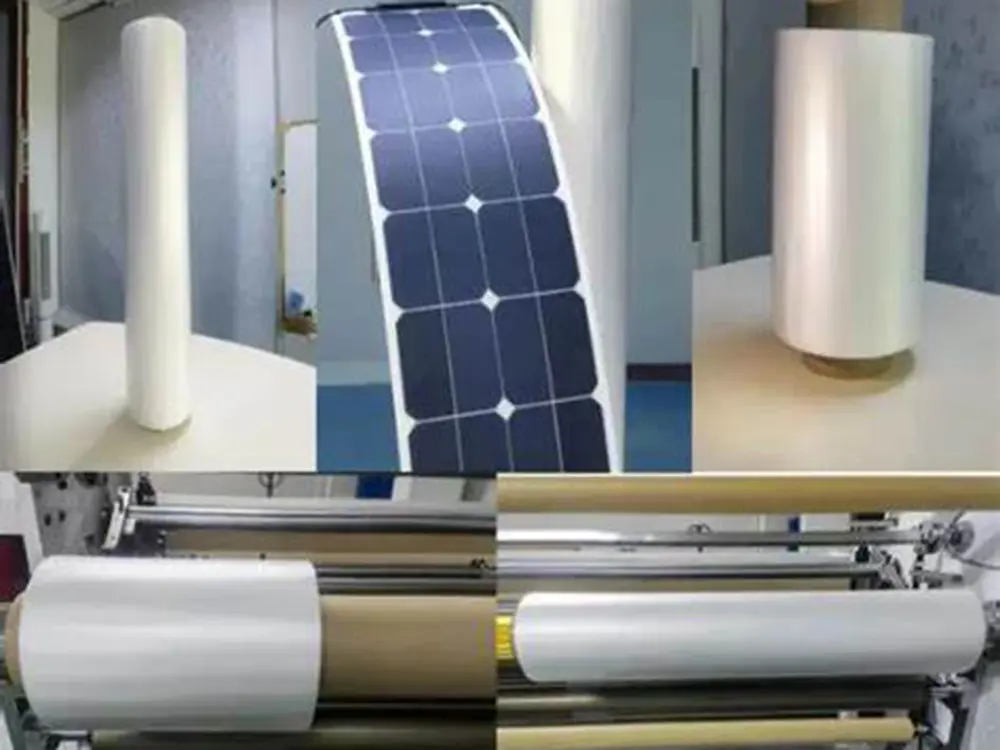
EVA film features strong bonding and high light transmission but is less effective as a moisture barrier. POE offers superior water and air barrier performance but is more expensive. EPE is a cost-effective three-layer composite (EVA/POE/EVA) that combines the properties of both materials at an intermediate cost level.
The static mixer uses a specialized structure of intersecting bars at 45-degree angles to divide the molten polymer flow. This ensures uniform dispersion and plasticization, which is critical for maintaining high-precision optical and mechanical uniformity in solar films.
It integrates a specialized die, advanced calibration systems, and inline quality control tools, including real-time thickness gauges and automated defect detection systems, to monitor and ensure strict adherence to industrial standards.
The inline corona or plasma surface treatment increases the film's surface energy. This enhancement improves adhesion strength to both solar cells and module backsheets, protecting the solar module from peeling and environmental stresses over its operating lifetime.
Yes, the extrusion line features a highly customizable and scalable design. It supports adjustments in film width, thickness, and performance parameters, allowing operations to scale seamlessly from pilot testing to large-scale industrial output.