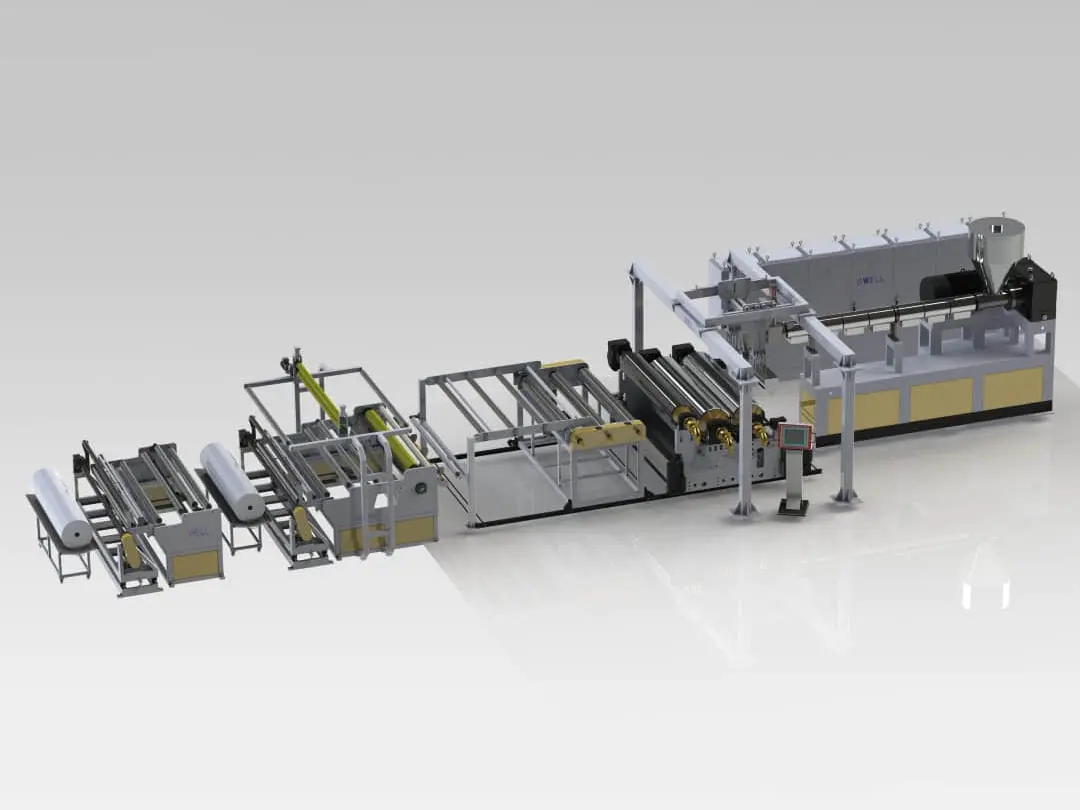
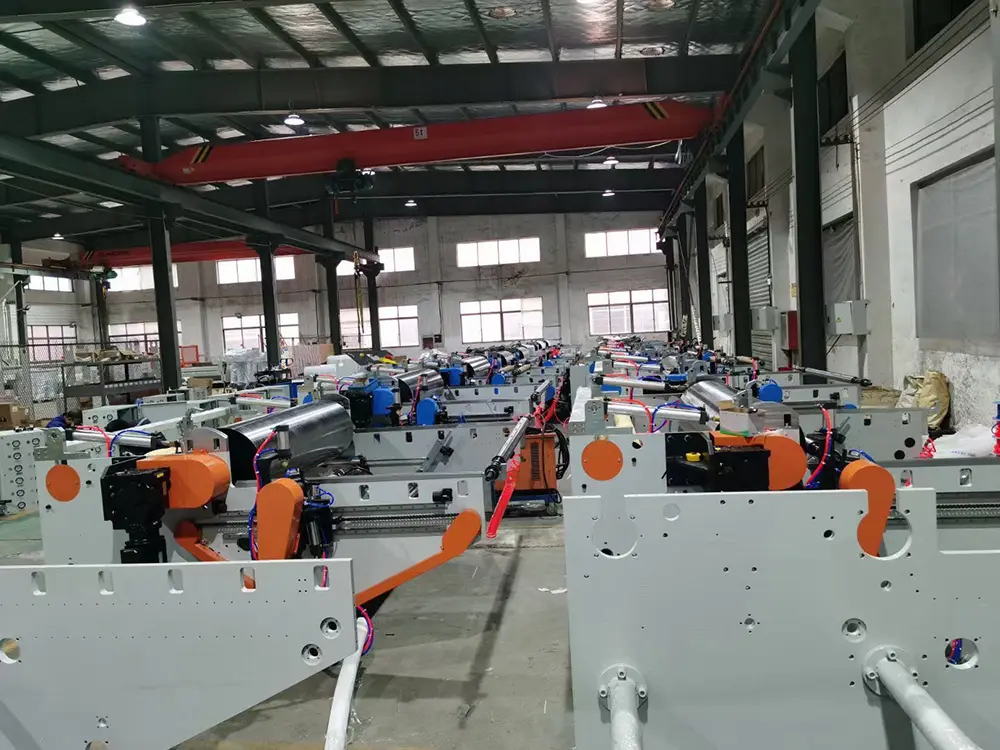
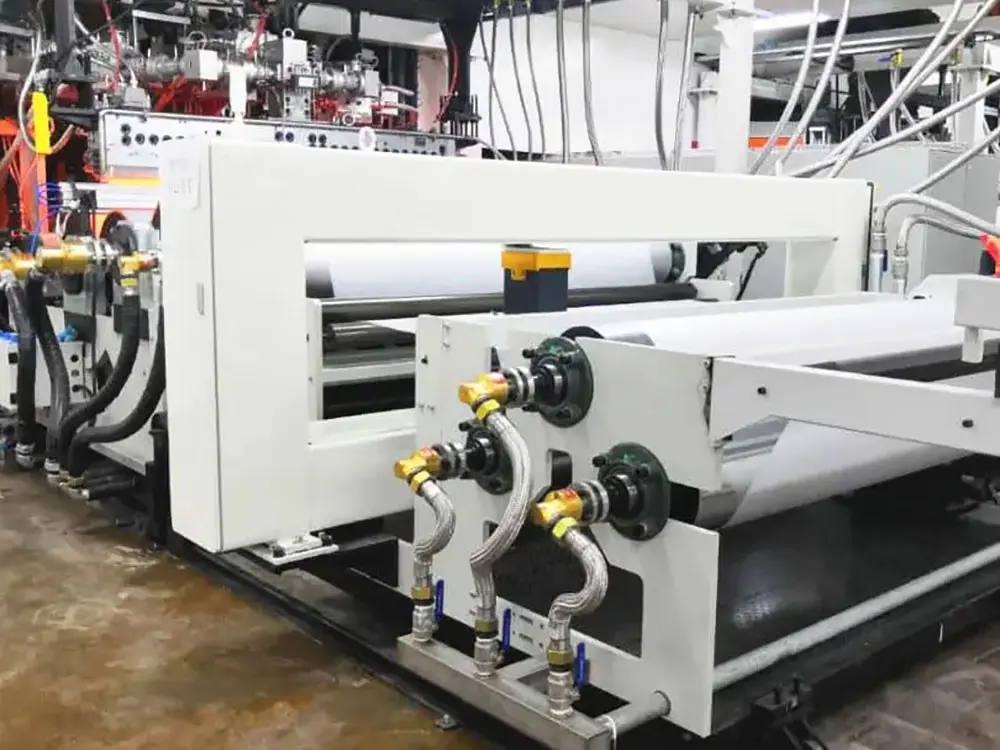
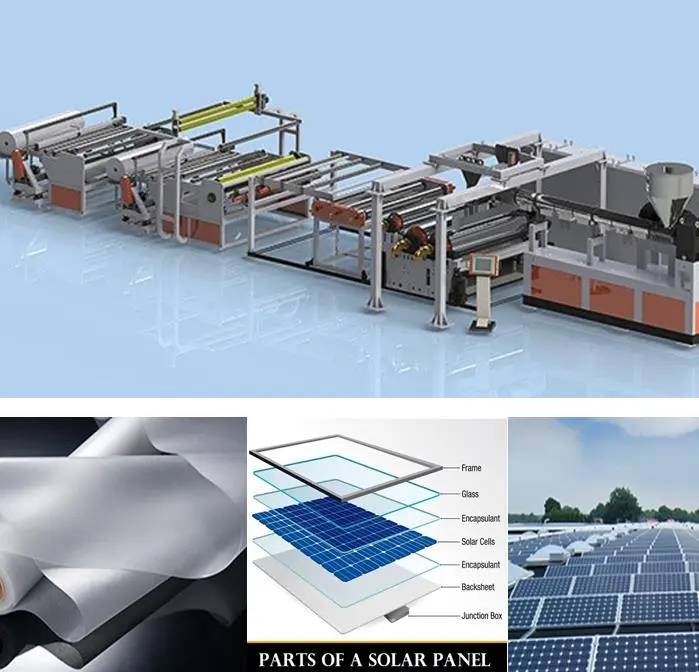
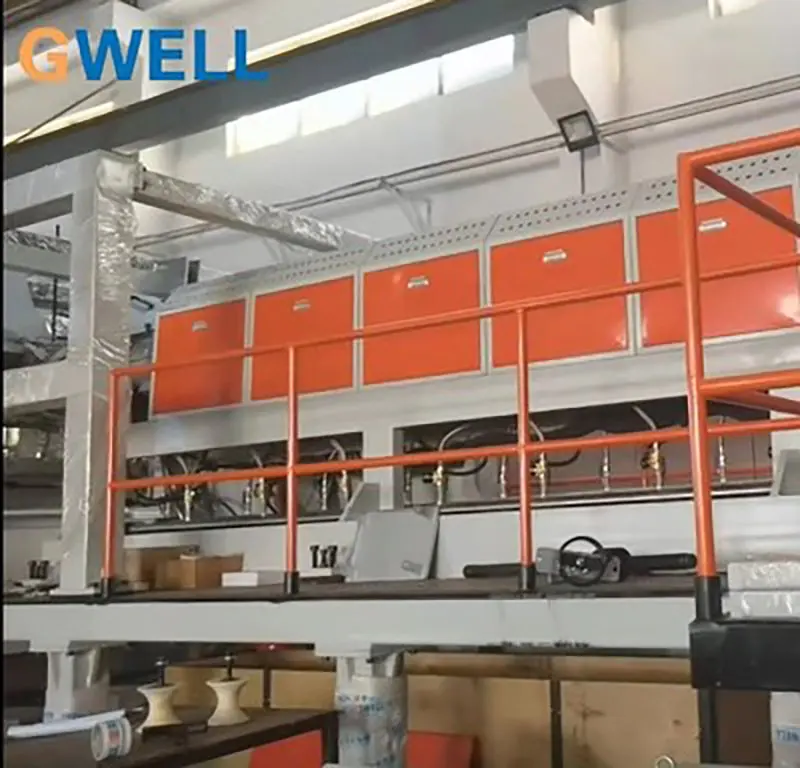
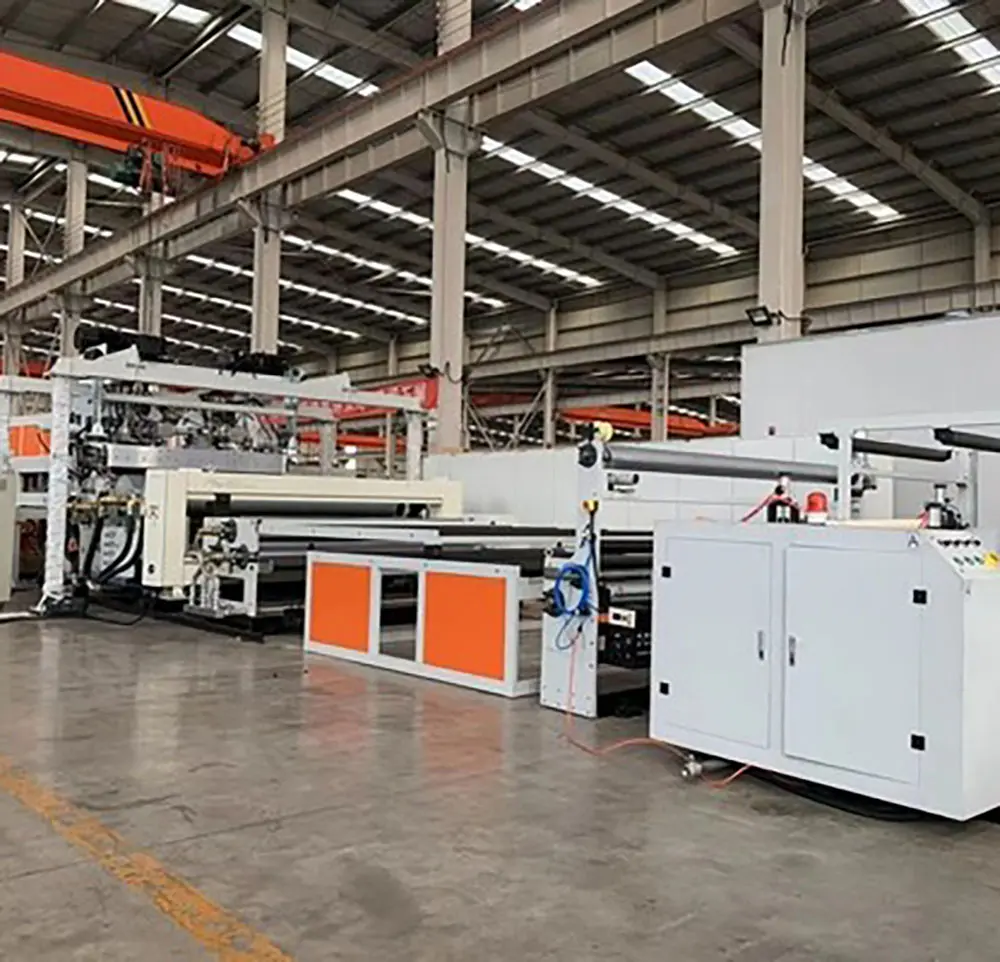
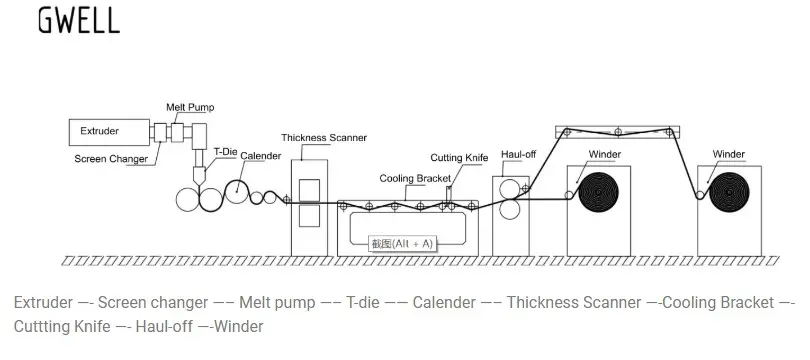
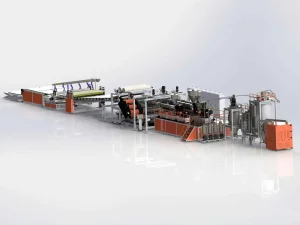
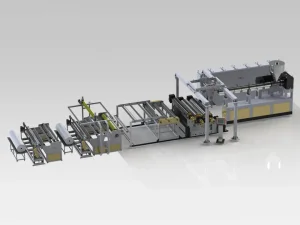
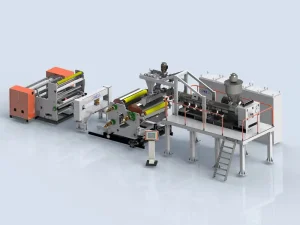
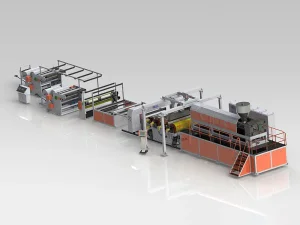
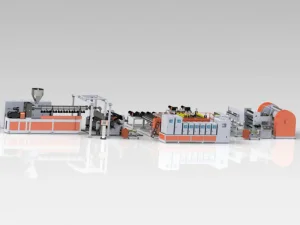
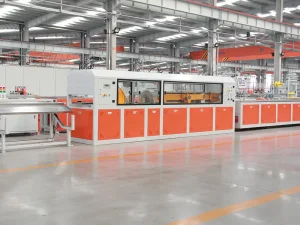
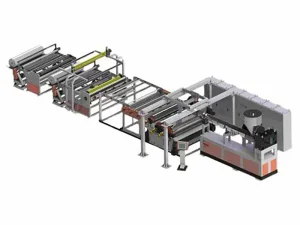
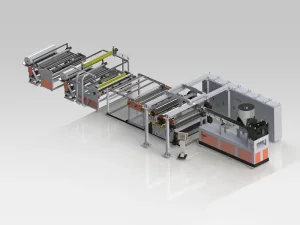
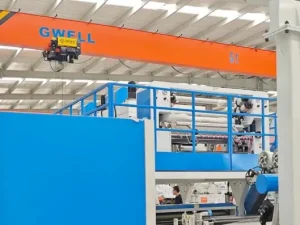
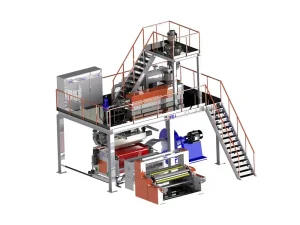
The line begins with a robust raw material feeding system, which precisely meters and feeds the polyethylene resin and any necessary additives into the extruder. The extruder, equipped with a high-torque, energy-efficient motor and precision temperature control, melts and homogenizes the material under controlled conditions. This ensures that the molten polymer has the ideal viscosity and homogeneity for subsequent processing.
Following the extruder, the molten polymer passes through a specially designed die, which shapes the material into a thin, continuous film. The die's precise geometry and engineering ensure uniform thickness and width of the EPE film, critical for its performance in solar applications.
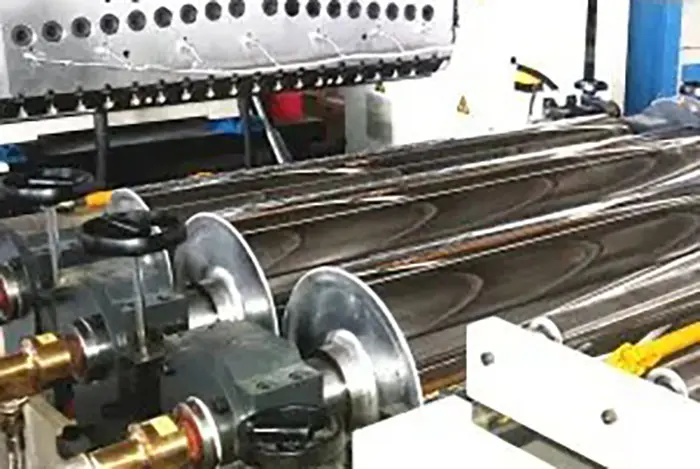
Immediately after exiting the die, the film is rapidly cooled and solidified on a chilled roller system. This rapid cooling process preserves the film's dimensional stability and enhances its mechanical properties, such as tensile strength and tear resistance.
Subsequently, the film undergoes a series of stretching and orientation processes, which further enhance its optical clarity, light transmission, and durability. These processes also contribute to the film's ability to withstand environmental stressors, such as UV radiation and temperature fluctuations, making it ideal for use in solar panels and other outdoor applications.
To achieve the desired thickness and texture, the film may then pass through a calendaring stage, where it is pressed between heated and cooled rollers. This step allows for fine-tuning of the film's properties and ensures a smooth, uniform surface.
Finally, the EPE solar film is wound onto a high-capacity take-up roll, ready for further processing, such as lamination, cutting, or packaging. The entire extrusion line is equipped with advanced automation and monitoring systems, ensuring seamless operation, minimal downtime, and consistent product output.
Features of the EPE(EVA/POE/EVA) Solar Film Extrusion Line
-
✓
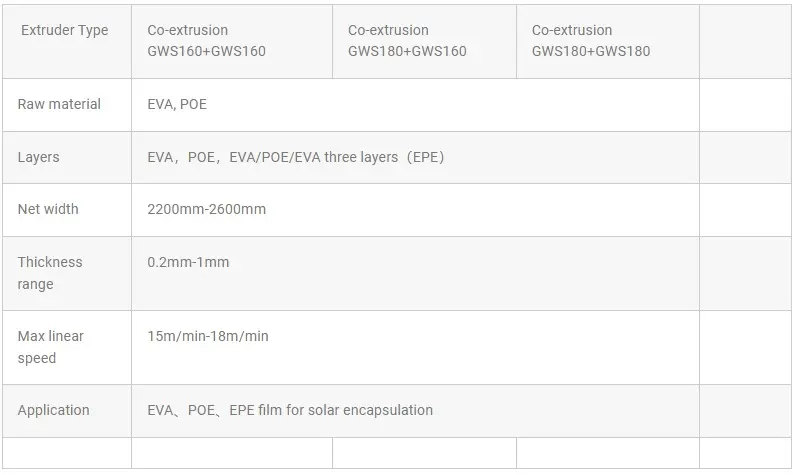
Film Layers Structure: According to the finished film, EVA/POE/EVA film has three layers (EPE film). Based on requirements, the extrusion line can also produce EVA or POE single layer.
-
✓
Encapsulation Performance: The solar film is used for solar cell encapsulation. After lamination and curing, it is bonded and sealed. It plays the role of high light transmittance, preventing water vapor penetration, high and low-temperature resistance, and ultraviolet light resistance to ensure the stable and efficient use of battery modules.
Advantages of the EPE(EVA/POE/EVA) Solar Film Extrusion Line
-
✓
Global Market Share: The extrusion production line currently has a global market share of 90%, including the United States, India, Turkey, Sri Lanka, etc.
-
✓
High Production Speed: EPE film production speed can reach 12m/min-15m/min, EVA can reach 15-18m/min, and POE can reach 10-13m/min.
-
✓
Optimal Shrinkage: Integrated cooling parts ensure the shrinkage rate is kept under 3%.
-
✓
Advanced Winder: Equipped with a special winder to ensure micro-tension, achieving automatic winding and cutting.
EPE solar film, specifically referring to EPE (Ethylene Vinyl Acetate-Polyolefin Elastomer) composite solar film, is a type of advanced photovoltaic (PV) encapsulant film used in the encapsulation of solar cells. This film is primarily composed of multiple layers, often including EVA (Ethylene Vinyl Acetate) and POE (Polyolefin Elastomer), which are co-extruded to form a single, highly functional material. Below is a detailed overview of EPE solar film:
Composition and Structure
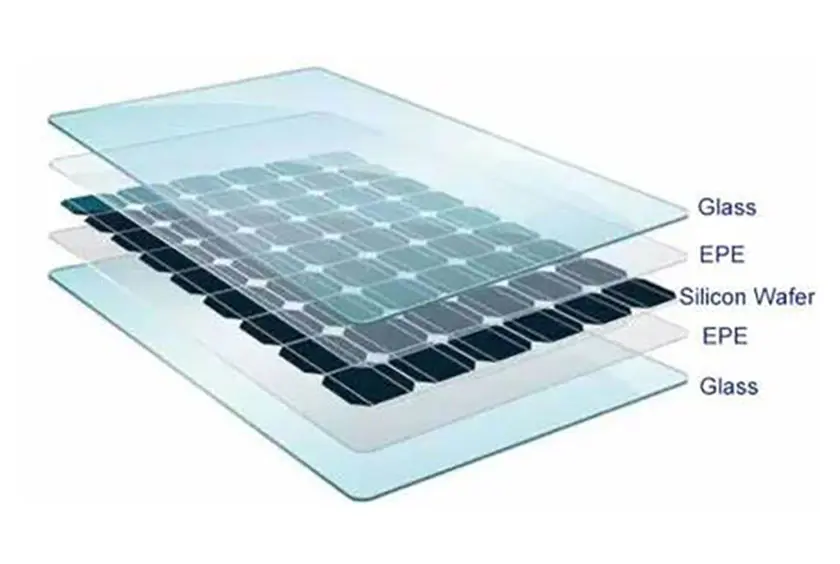
Multi-layer Design: EPE solar film typically consists of three layers: EVA-POE-EVA. This structure combines the high moisture resistance and PID (Potential Induced Degradation) resistance of POE with the easy lamination properties of EVA.
Material Properties
-
✓
EVA Layer: Provides good adhesion to the solar cells and protective materials, ensuring a strong bond and encapsulation.
-
✓
POE Layer: Offers excellent moisture barrier properties and resistance to PID, which are crucial for the long-term performance and reliability of solar panels.
Applications
-
✓
Solar Panel Encapsulation: EPE solar film is primarily used in the encapsulation of solar cells within solar panels. It protects the cells from environmental factors such as moisture, UV radiation, and mechanical stress.
-
✓
High-Performance Requirements: Due to its superior durability, optics, adhesion, and transmittance, EPE solar film is suitable for high-performance PV modules, including PERC double-sided double-glass modules and N-type double-sided double-glass modules.
Market Trends and Prospects
-
✓
Growing Market Share: As the PV industry continues to grow and technological advancements drive the need for better encapsulants, EPE solar film's market share is expected to increase.
-
✓
Advantages Over Traditional Materials: Compared to traditional EVA films, EPE films offer improved moisture resistance, PID resistance, and lamination properties, making them a more attractive option for high-performance solar panel manufacturers.
-
✓
Challenges and Opportunities: While EPE solar films face challenges such as potential quality risks (e.g., additive migration, delamination, and thickness control), ongoing research and development are addressing these issues. As battery technologies evolve, particularly with the adoption of N-type TOPCon batteries, the demand for EPE solar films is expected to further increase.
Technical Considerations
Material Compatibility: The choice of encapsulant film must be compatible with the solar cell material and the overall module design.
Processing Techniques: The co-extrusion process used to produce EPE solar films requires precise control of temperature, pressure, and material feed rates to ensure consistent film quality.
Comparison of the EPE(EVA/POE/EVA), EVA, and POE Solar Films
-
✓
Transparent EVA Solar Film: With high light transmittance, it is used for bonding glass and cells. The raw materials are EVA resin and various modifiers, which are cost-effective.
-
✓
White EVA Solar Film: Compared with transparent EVA film, white fillers like titanium dioxide are added. It features a strong barrier, low light transmittance, and high reflectivity to improve power output. It offers strong resistance to damp-heat and UV aging.
-
✓
POE Solar Film: Features a higher water vapor barrier rate and stronger anti-PID performance, facilitating long-term module use. It is the primary adhesive film for double-sided double glass modules.
-
✓
EPE(EVA/POE/EVA) Solar Film: Combines the anti-PID performance of POE with the lamination efficiency of EVA film. It reduces the use of POE particles to achieve cost reduction and efficiency increases, making it ideal for high-efficiency components.