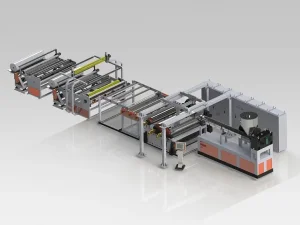
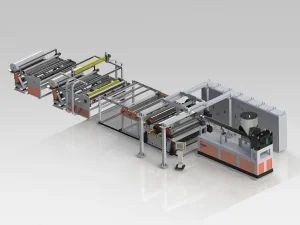
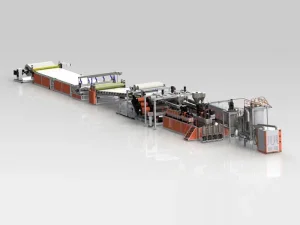
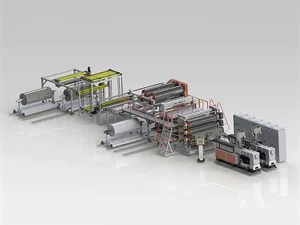
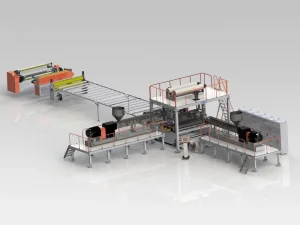
China PVB Head-up display Film Extrusion Line Factory, Exporter
GWELL's PVB Head-Up Display (HUD) Film Extrusion Line: A High-Tech Solution for Automotive Displays
GWELL, a leading manufacturer in the field of plastic extrusion equipment, offers a state-of-the-art PVB Head-Up Display (HUD) Film Extrusion Line tailored for the production of high-quality films used in automotive HUD systems. Below is a detailed introduction to this innovative product:
The PVB HUD Film Extrusion Line combines advanced extrusion technology with precision engineering to produce films that meet the demanding requirements of modern automotive HUD systems. These films are designed to offer exceptional optical clarity, durability, and reliability, ensuring a clear and accurate display of critical driving information directly in the driver's line of sight.
Key Features
High-Precision Extrusion
The extrusion line is equipped with precision extruders capable of producing films with uniform thickness and consistent quality. The use of advanced temperature control systems ensures optimal plasticization and extrusion of the PVB material.
Automated Production
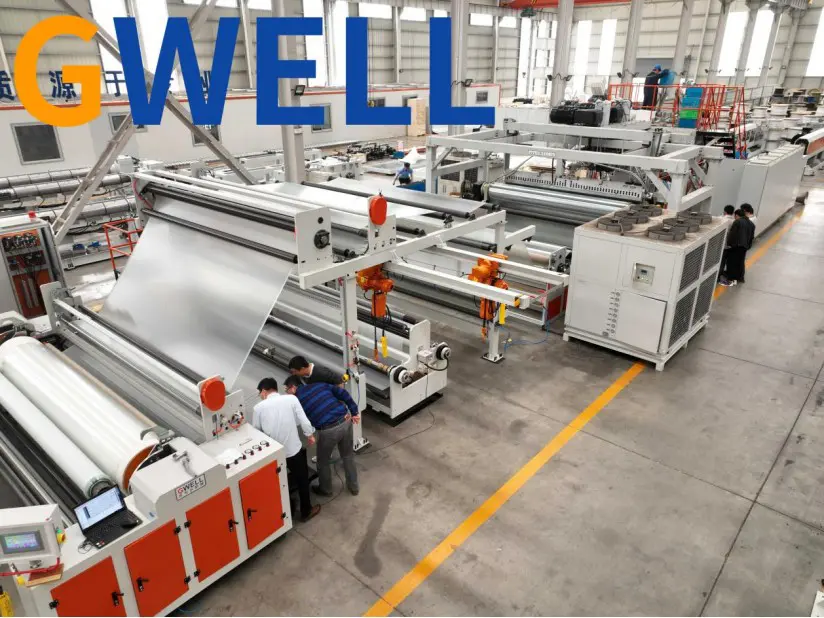
The line is highly automated, reducing manual intervention and increasing production efficiency. Integrated sensors and control systems monitor and adjust process parameters in real-time, ensuring consistent product quality.
Material Handling
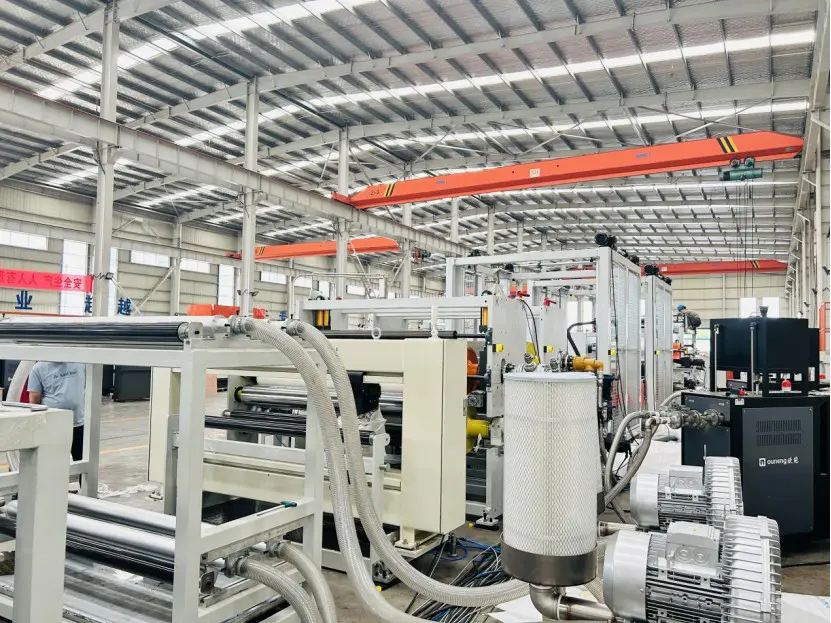
The extrusion line is designed to handle a wide range of PVB materials, allowing for flexibility in product formulation and customization. Specialized feeders and conveyors ensure smooth and continuous material flow throughout the production process.
Optical Performance
The produced films exhibit excellent optical clarity, ensuring a sharp and distortion-free display of information. The films are also designed to withstand the rigors of automotive use, including exposure to sunlight, temperature fluctuations, and humidity.
Environmental Considerations
The extrusion line is designed with energy efficiency in mind, minimizing waste and reducing operational costs. The use of recyclable materials and eco-friendly production processes further underscores the commitment to sustainability.
Applications
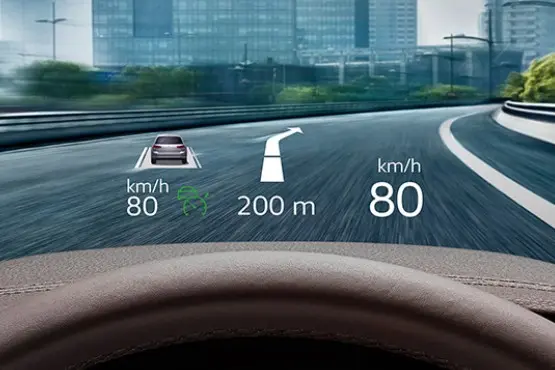
The PVB HUD Film Extrusion Line is ideal for the production of films used in automotive HUD systems. These systems are becoming increasingly popular in modern vehicles, providing drivers with critical information such as speed, navigation directions, and safety alerts directly in their line of sight. The films produced by the extrusion line are essential components of these systems, ensuring a clear and accurate display of information that enhances driving safety and convenience.
Customization and Support
Customization options for the PVB HUD Film Extrusion Line are available, allowing customers to tailor the equipment to their specific needs. Additionally, comprehensive support and after-sales services are provided, including installation, training, and ongoing technical assistance.
Conclusion
The PVB Head-Up Display Film Extrusion Line represents the pinnacle of technological advancement in the production of automotive display films. With its high-precision extrusion, automated production, and exceptional optical performance, this line is poised to meet the demands of the ever-evolving automotive industry. By choosing this technology, customers can expect a reliable and sustainable solution for their automotive HUD film production.
PVB Wedge Interlayer Film
PVB Wedge Interlayer Film is a special type of Polyvinyl Butyral (PVB) interlayer film featuring a unique conical thickness design. Unlike traditional PVB films with uniform thickness, the wedge-shaped PVB film has one end thicker than the other, forming an inclined wedge angle. This special design optimizes the refraction path of light as it passes through the film layer.
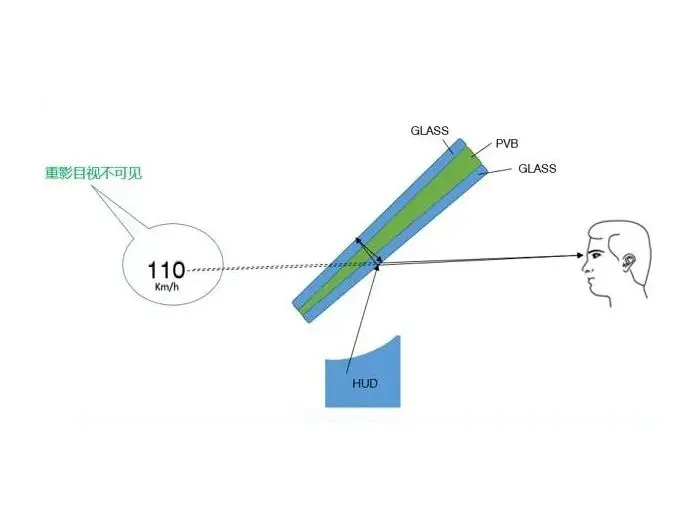
The core of the wedge PVB film technology lies in adjusting the thickness distribution of the film to alter the refraction path of light. Specifically, when the light from an Augmented Reality Head-Up Display (AR-HUD) projects onto a windshield equipped with a wedge PVB film, the light undergoes non-uniform refraction as it passes through the wedge layer. Due to the gradual change in film thickness from top to bottom, the propagation speed and direction of the light within the film layer also change accordingly. This change brings the paths of the two reflected light rays (one from the outer surface of the glass and one from the inner surface) closer together, and in some cases, they can even coincide, thereby effectively reducing or eliminating the ghosting phenomenon.
Technical Advantages and Applications
HUD Windshield (Application in Front Windshields) Wedge Film features:
Enhanced Imaging Quality: The wedge PVB film technology can significantly reduce or eliminate ghosting issues in the projection process of AR-HUD, making the virtual image clearer and more stable, thus improving the driver's visual experience.
Enhanced Safety: By using the wedge film to correct ghost images, high-precision windshields can clearly project vehicle operation information approximately 2-3 meters in front of the driver. This allows the driver to obtain driving information more accurately, reducing distractions caused by visual blurriness or dizziness, thereby enhancing driving safety.
Promotion of AR-HUD Adoption: The application of wedge PVB film technology lowers the barrier to entry for AR-HUD technology, enabling more vehicle models to equip this advanced intelligent driving assistance system, thus driving the development of automotive intelligence.
PVB wedge interlayer films are also used in other scenarios requiring special optical designs, such as high-end display devices and optical instruments. These applications typically have extremely high requirements for material precision and performance. The primary application field of PVB wedge interlayer films focuses on the manufacturing of HUD front windshields in the automotive industry. Meanwhile, they also have wide applications or potential in fields such as architecture, photovoltaics, aerospace, and military.
PVB Wedge Interlayer Film Production Line
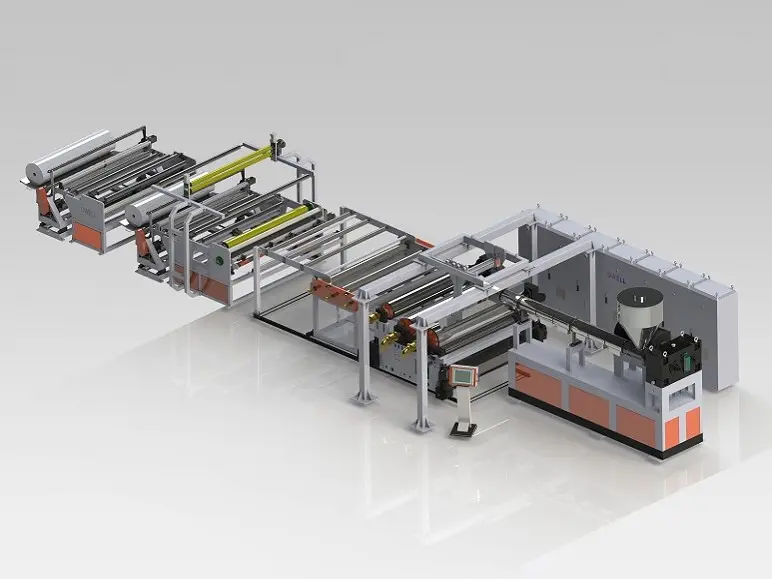
The PVB Head-Up Display (HUD) Film Extrusion Line is a dedicated production facility designed to manufacture PVB (Polyvinyl Butyral) films specifically for use in automotive windshields, enhancing the imaging quality and visual effects of Head-Up Display (HUD) technology. Below is a detailed introduction to this production line:
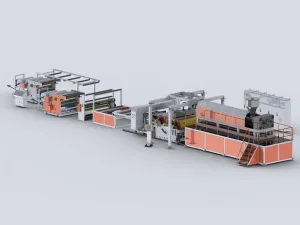
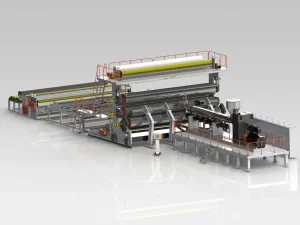
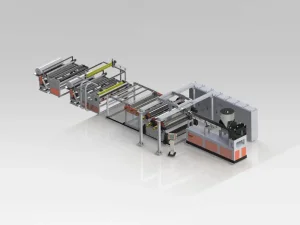
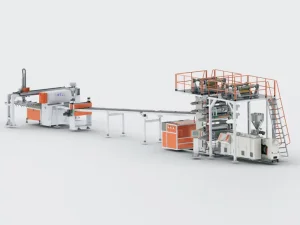
Overview of the Extrusion Line
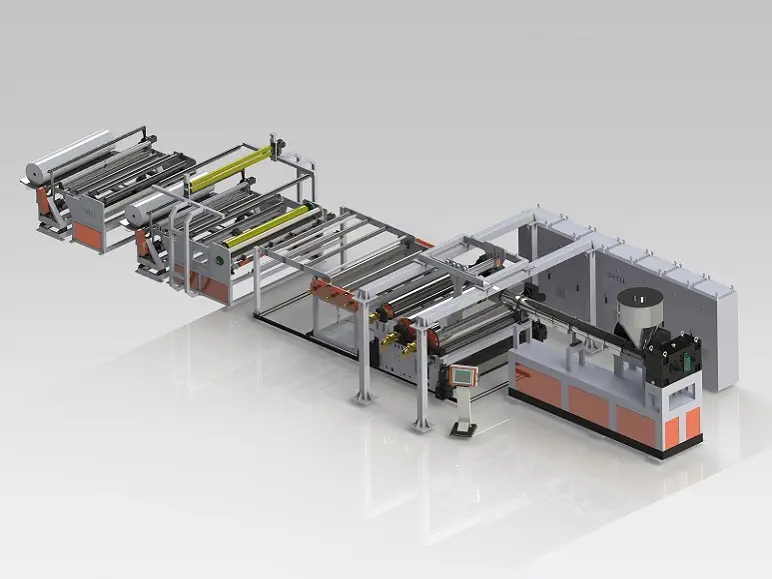
The PVB HUD Film Extrusion Line employs advanced extrusion technology to process raw materials such as PVB resin through melting, extrusion, stretching, cooling, winding, and other processes, ultimately producing PVB films with specific thicknesses, uniformity, and optical properties. This production line typically incorporates an automated control system to ensure stability and efficiency throughout the production process.
Composition of the Extrusion Line
Raw Material Pretreatment System
Includes equipment for raw material storage, metering, mixing, and other functions to ensure accurate proportioning and uniform mixing of raw materials.
Extruder System
Featuring twin-screw or multi-screw extruders, this system melts and extrudes the mixed PVB resin. Equipped with a temperature control system to maintain stable melting temperatures.
Die System
Shapes the melted PVB resin into films of specific shapes and sizes. Precision-designed dies ensure uniform film thickness and width, critical for HUD applications.
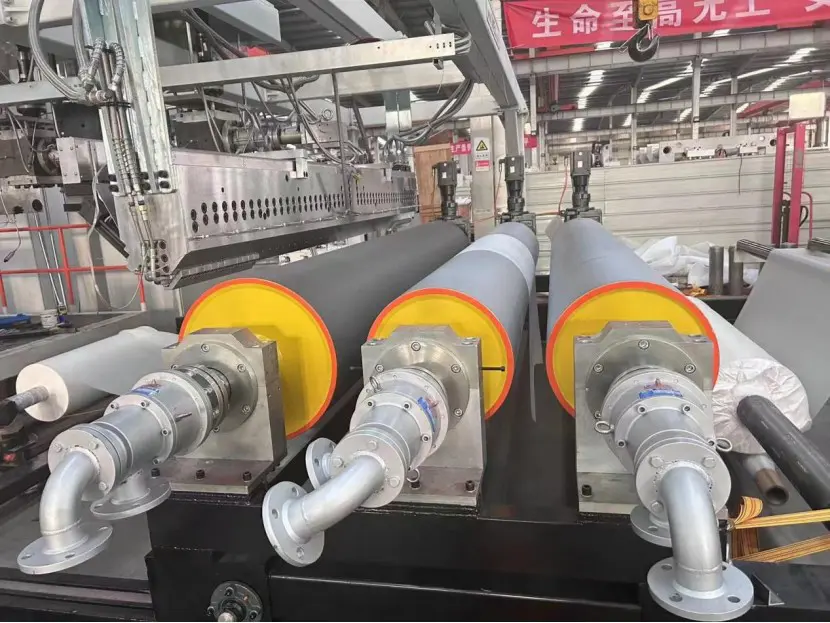
Stretching and Cooling Device
The film is stretched to improve its mechanical properties and optical clarity, followed by rapid cooling to solidify the film and maintain its shape.
Winding Machine
The cooled film is wound onto rolls for storage and transportation. The winding machine ensures even tension to prevent wrinkles or creases.
Quality Control & Inspection
Various online monitoring and inspection systems verify film dimensions and properties, ensuring it meets strict requirements for HUD integration.
Advantages and Applications
The PVB HUD Film Extrusion Line offers several advantages, including high production efficiency, stable product quality, and flexibility in producing films of different thicknesses and specifications. These films are widely used in automotive windshields, enhancing the clarity and stability of HUD images, improving driving safety, and providing a more immersive driving experience.
Frequently Asked Questions
What is the purpose of the PVB HUD Film Extrusion Line?
It is a specialized production system designed to manufacture high-precision Polyvinyl Butyral (PVB) films. These films are engineered for automotive windshields to enhance the display quality, clarity, and reliability of Head-Up Display (HUD) systems.
How does Wedge PVB Interlayer Film eliminate ghosting?
Traditional PVB films have uniform thickness, causing light rays reflected off the outer and inner windshield surfaces to separate, creating a double image (ghosting). The wedge film features a conical thickness profile that adjusts the light refraction path, aligning the reflections so they coincide and project a single, clear image.
What are the core components of the extrusion line?
The line comprises a raw material pretreatment system, a high-efficiency extruder system (twin or multi-screw), a high-precision die system for shape forming, stretching and cooling devices, a structural winding machine, and dedicated quality inspection equipment.
Can the extrusion system handle custom specifications?
Yes. The production line is designed with material flexibility and advanced control parameters, allowing manufacturers to customize film width, thickness distributions, wedge angles, and raw material formulations to fit specific automotive windshield designs.
Where else are wedge PVB films applied besides automotive windshields?
While the primary application is automotive HUD front windshields, these films are also highly valuable in other fields requiring unique optical paths, such as architectural glass, solar photovoltaics, aerospace displays, military devices, and high-end display instrumentation.