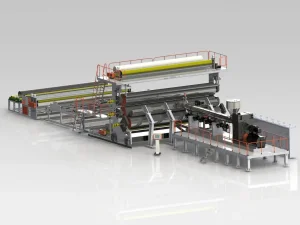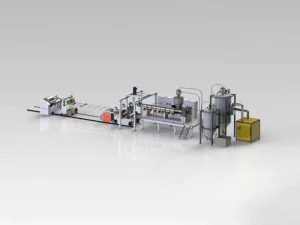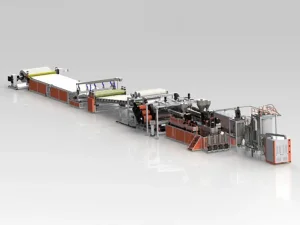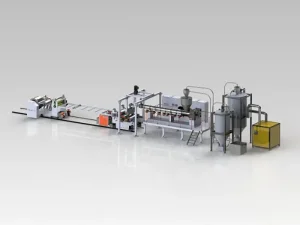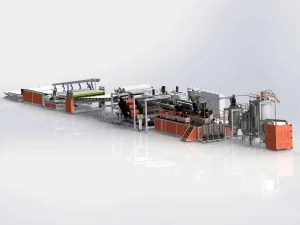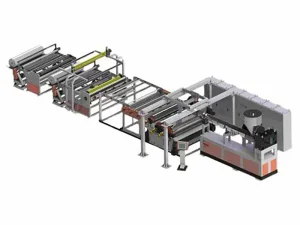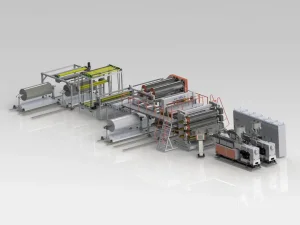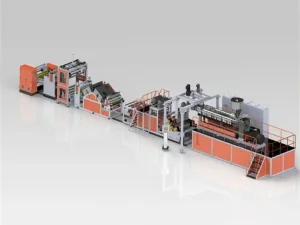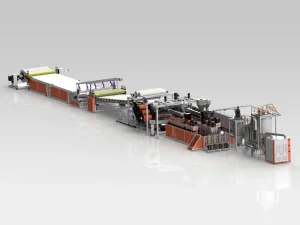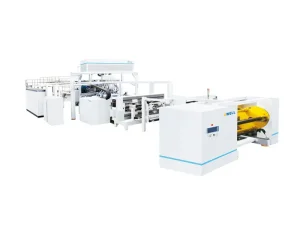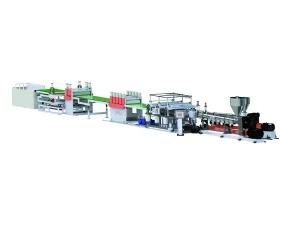
The global automotive lighting market is undergoing a seismic shift. As electric vehicles (EVs) and autonomous driving technologies become mainstream, the demand for lightweight, high-durability, and superior optical clarity materials has skyrocketed. PC (Polycarbonate) and PMMA (Polymethyl Methacrylate) have emerged as the primary materials for headlight lenses, replacing traditional glass due to their impact resistance and design flexibility.
Current estimates value the automotive external lighting market at over $35 billion USD. China, as the world's largest automotive producer, now accounts for 40% of the global manufacturing capacity for optical grade sheet extrusion equipment.
PC is favored for its thermal stability and toughness (perfect for outer lenses), while PMMA is used for internal light guides and decorative elements due to its unparalleled light transmission (92%) and UV resistance.
Industry 5.0 is pushing for "Circular Extrusion," where equipment must handle recycled optical-grade scraps without compromising the strict refractive index required for safety standards.
Manufacturing headlight lenses is not standard extrusion; it is optical engineering. To achieve the "Information Gain" required for Tier 1 automotive suppliers, equipment must address internal stress, thickness uniformity, and contamination control.
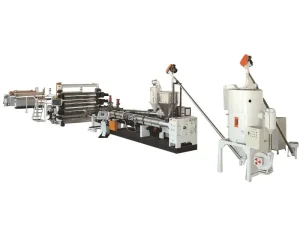
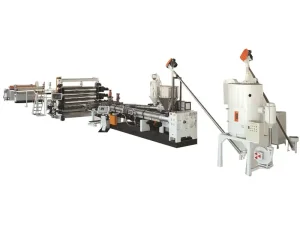
Our PC/PMMA extrusion lines utilize a specialized screw design with L/D ratios optimized for low-shear melting. This prevents the degradation of polymer chains, ensuring the final sheet maintains maximum impact strength and zero yellowing over a 10-year lifespan.
Modern headlights require functional coatings. Our equipment supports multi-layer co-extrusion, allowing a thin UV-stabilized layer to be applied over the PC core. This eliminates the need for secondary dip-coating processes, significantly reducing production costs.
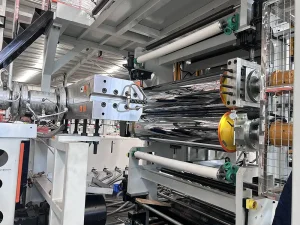
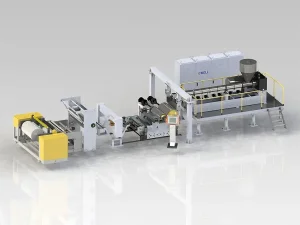
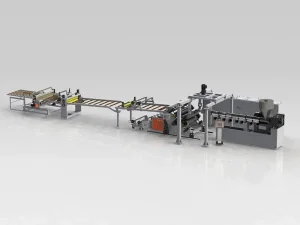
The "heart" of the optic sheet line is the calender. Using independent motor drives and ultra-mirror finished rollers (roughness < 0.025μm), we ensure that the sheet surface is free of "chatter marks" or "orange peel" effects that would distort headlight beam patterns.
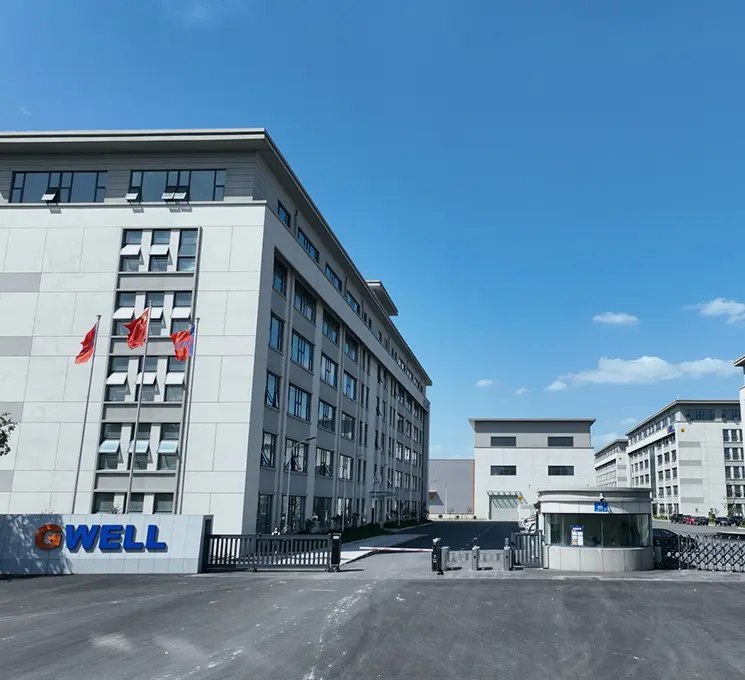
China GWELL Machinery is a high-tech enterprise dedicating to the manufacture of plastic extrusion lines for Film, Sheet and Profile. Relying on the powerful technology and equipment of group and innovative spirit, GWELL commits to the development of high-tech products and international market. “Expertise creates customers’ values” has always been the company’s operating philosophy.
We don't just sell machines; we provide Turnkey Industrial Ecosystems. Our solutions cover the entire lifecycle of PC/PMMA headlight lens production.
Integrated dehumidifying dryers that reach dew points of -50°C, essential for PC materials which are highly hygroscopic.
Online annealing systems that gradually reduce sheet temperature to eliminate internal stresses that cause cracking during secondary molding.
IoT-enabled control systems that record every parameter (temperature, pressure, speed) for every meter of sheet produced, ensuring full traceability for automotive safety audits.
In Europe and North America, ADB systems require complex PMMA light guides. Our equipment produces sheets with high dimensional stability that can be precisely machined into matrix LED components.
Modern EVs use large-area PC sheets for aerodynamic "front grilles" that house sensors and LiDAR. Our wide-width extrusion lines (up to 2500mm) cater specifically to this growing design trend.
Ultra-thin PC sheets (0.5mm) produced on Gwell lines are used in HUD systems for luxury vehicles in the Asian market, requiring zero optical distortion.
Solutions for ASA, TPU, and PVDF films. TPU laminating films produced on our lines are versatile and suitable for wide industrial applications.
Focusing on PVC, SPC, WPC, and high-performance PEEK/PFA/PVDF boards for extreme environments.
The core of automotive optics: PC, PMMA, PCTG, and PETG decorative sheets. Including medical-grade PCL production.
Cutting-edge lines for EVA, POE, and SGP solar encapsulation films, supporting the global green energy transition.
We utilize a high-vacuum venting system in the extruder barrel and a precise melt pump to stabilize pressure, ensuring all volatiles are removed before the melt reaches the die.
Yes. Our "Dual-Purpose" lines feature interchangeable screw segments and temperature control logic optimized for the different rheological properties of PC and PMMA.
Typically 4-6 months, including design, manufacturing, and internal testing at one of our three production bases.
Absolutely. All Gwell lines are CE certified and can be configured to meet UL (USA) or CSA (Canada) electrical standards.
The roadmap for PC/PMMA extrusion is moving toward Autonomous Extrusion. By integrating AI-driven visual sensors, our future machines will detect optical defects in real-time and automatically adjust the die lip or calender gap to compensate, achieving a zero-waste production cycle. As China Gwell continues to innovate, we remain committed to being the backbone of the global automotive optical industry.