
1. Introduction: The Evolution of Footwear Composites
The modern footwear sector has shifted dramatically from traditional stitched elements toward highly advanced, multi-layered polymer composites. Leading athletic brands require raw components that offer high abrasion resistance, exceptional lightweight properties, elasticity, and minimal ecological footprint. At the core of this materials revolution is thermoplastic polyurethane (TPU) and thermoplastic elastomer (TPE) composite structures bonded directly to synthetic and natural leather bases.
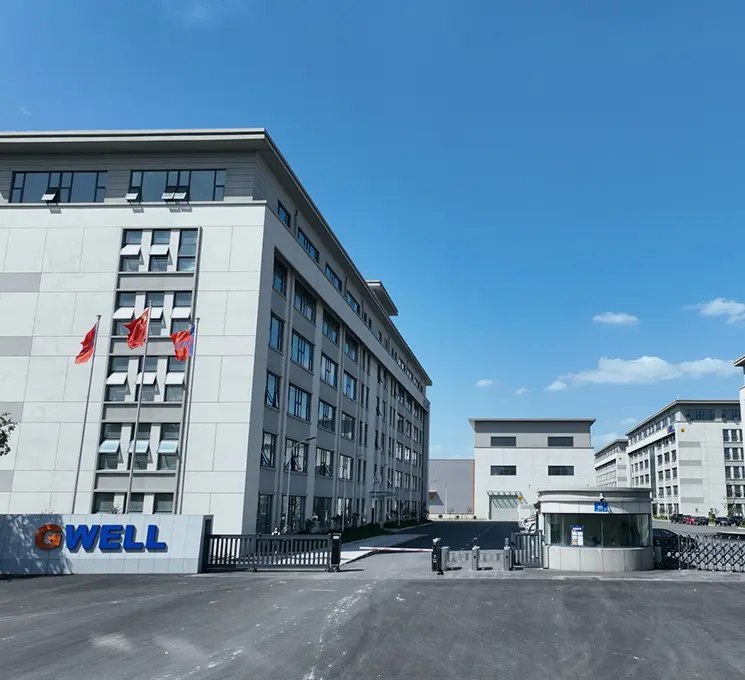
Creating high-quality laminates requires sophisticated cast extrusion and direct-extrusion coating lines. By eliminating adhesive-based lamination, producers save on energy costs, reduce volatile organic compound (VOC) emissions, and deliver durable composites that withstand aggressive flexing cycles. As a leading specialized manufacturer of extrusion equipment, GWELL offers engineered extrusion solutions optimized specifically for global footwear material applications.
2. Global Procurement Demands & Industry Needs
OEM footwear contract manufacturers in key hubs across Vietnam, India, Indonesia, and China are modernizing their facilities to comply with strict international regulatory standards. Major footwear conglomerates demand non-toxic components, zero-waste processing, and absolute batch uniformity.
To meet these targets, procurement groups look for equipment exporters that offer:
- High Feed Rate Versatility: The ability to process bio-based TPUs, recycled TPE granules, and traditional virgin polymers on a single extrusion line without changing screw configurations.
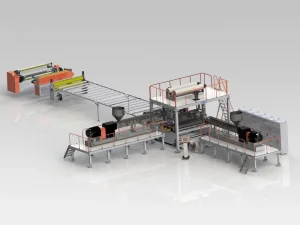
- Multi-Layer Co-extrusion: Co-extruding dense, wear-resistant outer TPU skins with soft, microcellular cushioning TPE inner layers, combined directly with leather substrates.
- Operational Efficiency (OEE): Lower power consumption ratios per kilogram of output via optimized induction barrel heating and energy-efficient servo drives.
3. Macro Industry Solutions: Addressing Key Challenges
Traditional footwear laminating approaches rely heavily on secondary solvent glues to bond polymer films to leather. Over time, these adhesive films decay, resulting in peeling and performance degradation under humid or freezing conditions.
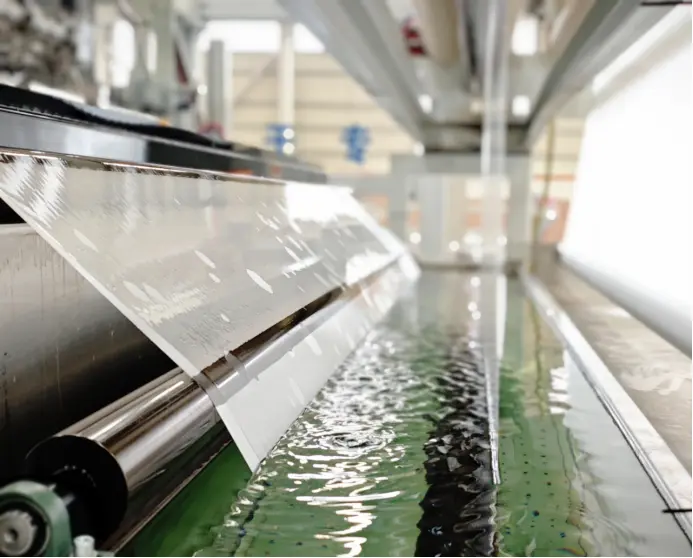
GWELL’s extrusion lines solve this issue via inline direct-melt lamination. The hot polymer melt leaves the T-die and bonds directly with the substrate under controlled pressure in a three-roll calendar unit. This achieves high thermal bonding without adhesives, delivering superior peel strength, reduced material layers, and simplifying the recycling of the end footwear component.
4. Technical Roadmap & Extrusion Line Specifications
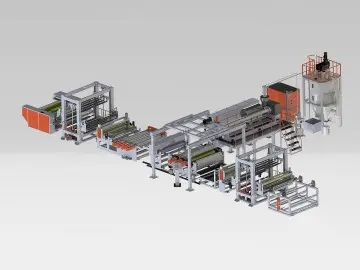
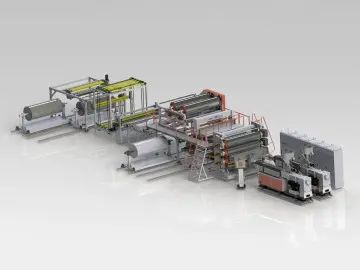
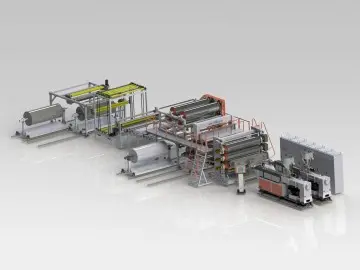
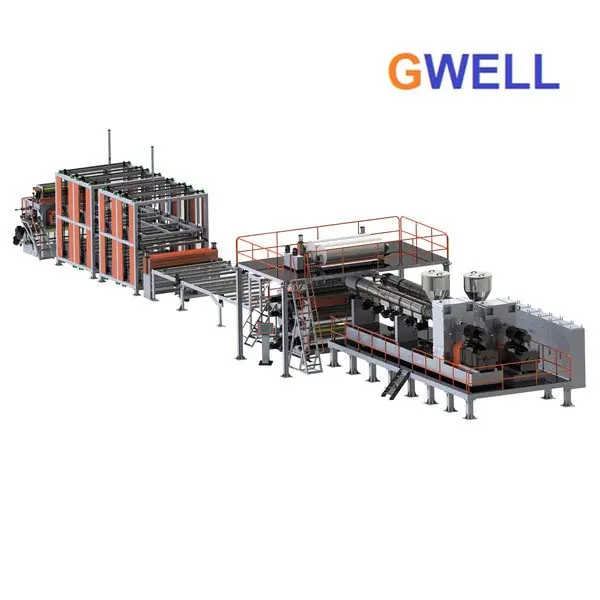
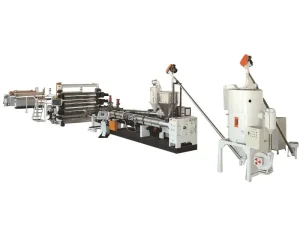
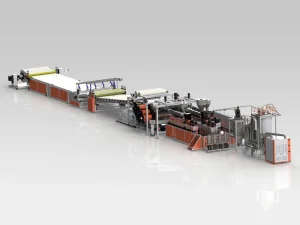
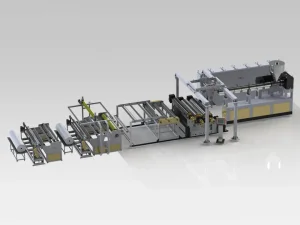
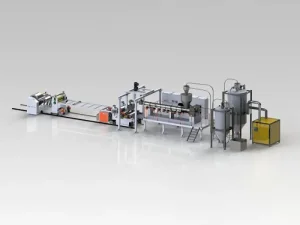
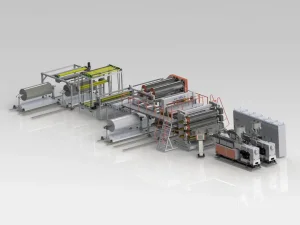
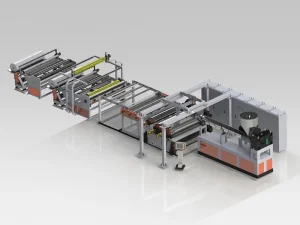
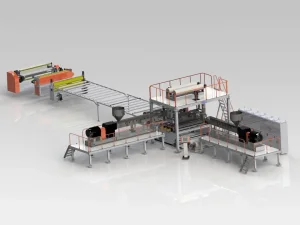
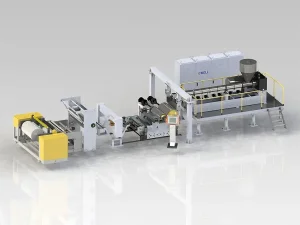
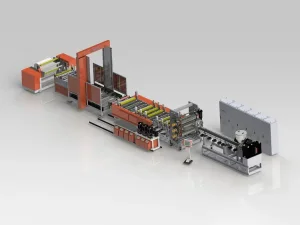
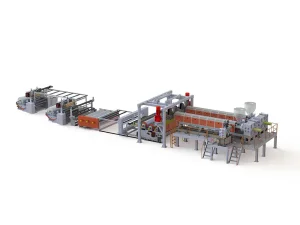
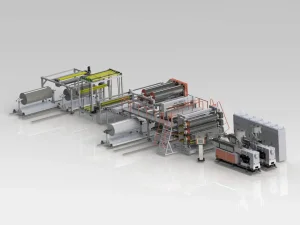
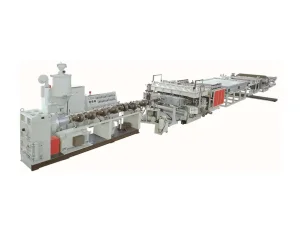
A typical high-output TPU/TPE composite extrusion line features several custom-designed sub-systems:
| Sub-system Component | Core Functionality | Technical parameters |
|---|---|---|
| High-Torque Extruder | Specially designed screw geometry for TPU/TPE material processing to prevent shear degradation. | L/D Ratio: 28:1 - 32:1; Nitrided & bimetallic screw treatment. |
| Automatic Die Unit | Ensures consistent melt flow distribution over widths up to 2200 mm. | Flex-lip flat die with thermocells for automatic gap correction. |
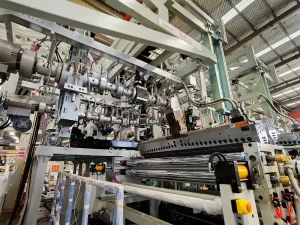
| Composite Calendering | Synchronized unwinding of leather, embossing, and uniform cooling. | Hard chrome-plated cooling rolls with internal mirror finish and oil/water temperature control. |
5. Sustainability and Future Directions
The footwear industry is rapidly shifting toward circularity. Brand owners plan to source 100% bio-based or ocean-recycled polymers by 2030. Extrusion systems must adapt to handle these non-standard raw inputs. GWELL’s R&D division has optimized screw and barrel geometries to process high-moisture bio-TPU polymers without causing hydrolytic damage, helping global footwear suppliers manufacture eco-friendly composite lines with minimal down-time.