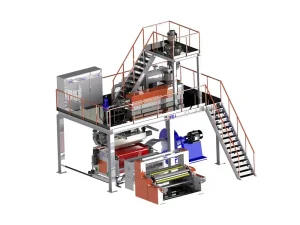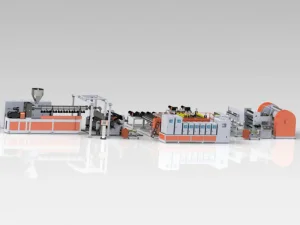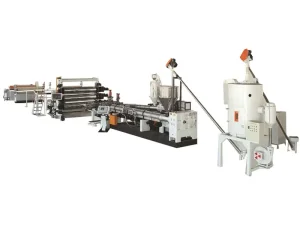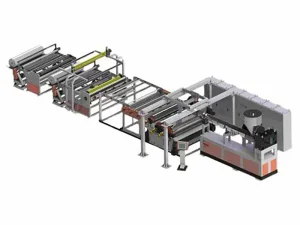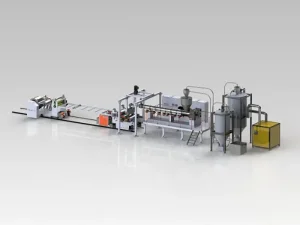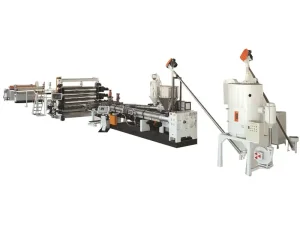
Explore our specialized industrial extrusion solutions engineered to maximize throughput, polymer distribution stability, and operational longevity.
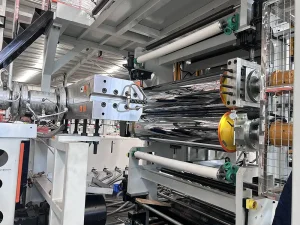
An in-depth analysis of polystyrene co-extrusion technology, raw material optimization, and global industrial applications.
Polystyrene (PS) extrusion technology remains a cornerstone of the global polymer processing sector. Characterized by its dimensional stability, exceptional thermoforming properties, and optical clarity, polystyrene is predominantly classified into High Impact Polystyrene (HIPS) and General Purpose Polystyrene (GPPS). Today, modern manufacturers are faced with the challenge of optimizing extrusion lines to handle diverse formulations, incorporate recycled post-consumer waste (PCR), and maintain high melt homogeneity at high outputs. This document discusses the technological architectures defining state-of-the-art PS sheet production lines and the supply chain realities enabling global procurement success.
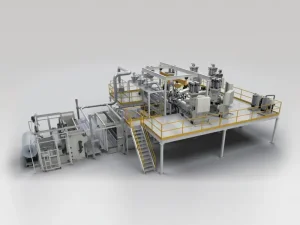
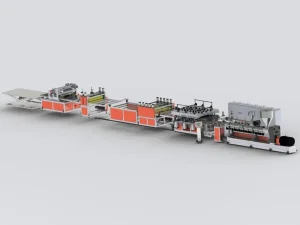
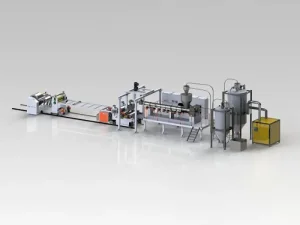
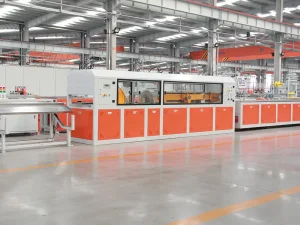
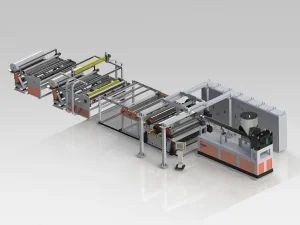
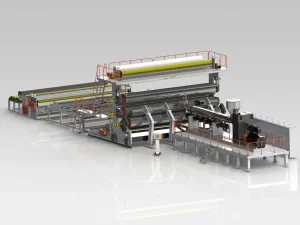
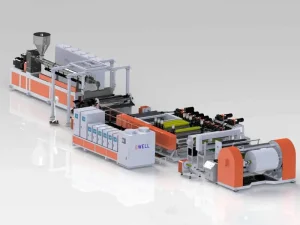
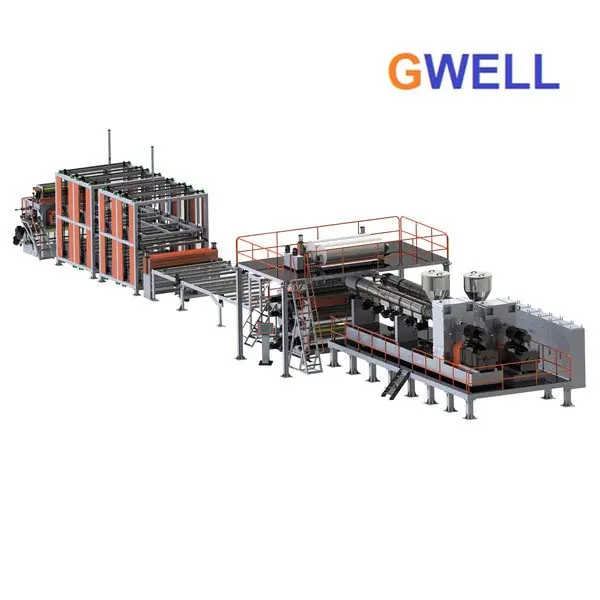
A high-throughput PS sheet extrusion system is defined by its modular stages, engineered to manage polymer thermal degradation while ensuring high throughput. Modern custom PS sheet lines feature the following technical subsystems:
SEO Insight - Material Compatibility: Standard PS extrusion systems often suffer from thickness variations and poor surface finish when utilizing post-consumer regrind. Integrating advanced melt-pump automation with closed-loop roll adjustments mitigates these viscosity shifts in real time.
| Parameter / Specification | Standard Configuration | High-Speed Custom Configuration |
|---|---|---|
| Output Capacity Range | 150 - 350 kg/h | 400 - 800+ kg/h |
| Extruder L/D Ratio | 28:1 or 30:1 | 33:1 to 35:1 (Vented) |
| Thickness Range Capabilities | 0.2 mm - 2.0 mm | 0.15 mm - 3.0 mm |
| Gauge Tolerance Control | ± 4% | ± 1.5% (Closed-Loop Automatic Die) |
| Structural Configurations | Single Layer / Mono-layer | Co-extruded A/B, A/B/A, A/B/C/B/A Multi-layer |
A High-Tech Enterprise Dedicated to Plastic Extrusion Innovation
China GWELL Machinery is a high-tech enterprise dedicated to the design and manufacture of plastic extrusion lines for Film, Sheet, and Profile. Relying on the powerful technology, machinery resources, and innovative spirit of our corporate group, GWELL commits to the development of high-tech products and global expansion. "Expertise creates customers' values" has always been the company's operating philosophy.
Our research and development engineering teams continuously collaborate with universities and research institutes to develop high-tech machinery, allowing us to maintain a strong position in the international market.
Connect with our Engineering Team
Why Tier-1 industrial buyers partner with Gwell for their long-term extrusion asset investments.
Collaborating with top research universities to develop custom screw geometries and multi-layer feedblocks that support biomaterials (PLA) and complex engineering polymers.
We provide full-service support including installation, calibration, PLC updates, operator training, and high-quality replacement parts to reduce downtime.
With three manufacturing bases in China, we deliver more than 1,000 advanced extrusion lines each year, keeping shipping and delivery timelines on track.
Our industrial production machinery operates in over 50 countries, matching CE, UL, and localized pressure-vessel safety standards worldwide.
Over 100 dedicated technical engineers specialize in customized line design, software integration, and structural co-extrusion feedblock modeling.
Located in a major industrial cluster with convenient transport access to domestic and international ports, optimizing logistics costs and lead times.
Polystyrene sheets manufactured on Gwell custom extrusion lines target primary commercial sectors globally:
The global shift toward supply chain resilience highlights the value of partnering with vertically integrated equipment manufacturers in China. As a major extrusion machinery manufacturer, Gwell leverages China's industrial base to deliver quality and value:
Select a product category to explore our specialized machinery solutions for films, boards, sheets, and green solar energy applications.
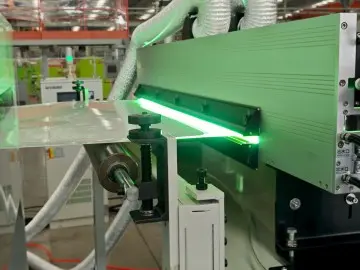
PCTG copolyester sheets provide high impact strength and clarity, combining structural stiffness with design flexibility for premium consumer packaging.
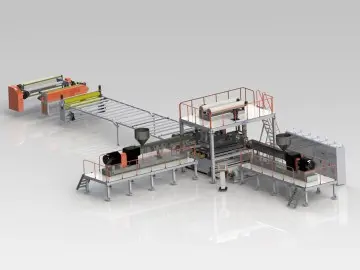
Designed to process thermoplastic olefins and elastomers, this line produces high-quality sheets for automotive interior panels and industrial seals.
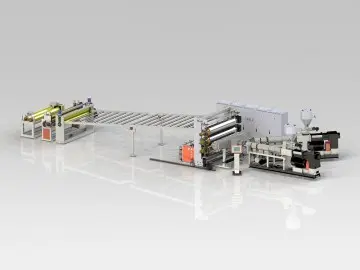
Engineered for high-clarity polymers, this configuration limits surface defects and particulate contamination in optical sheet manufacturing.
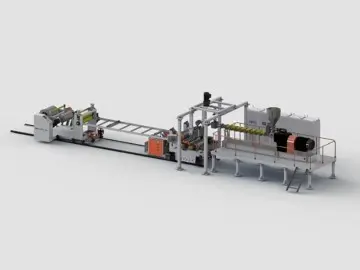
Uses co-extrusion feedblock technology to combine contrasting colors on opposite sides of a single PP sheet, ideal for folder covers and luggage.
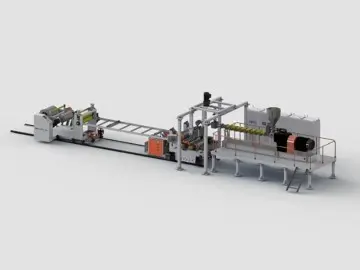
A high-capacity configuration tailored for packaging applications, ensuring uniform melt temperature and consistent cooling rates.
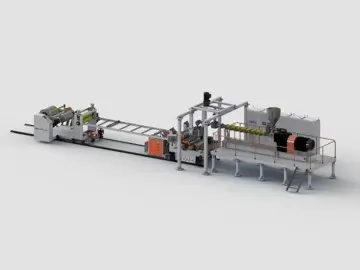
Equipped with specialized screw profiles and high-efficiency dryers to prevent hydrolysis when processing biopolymers like PLA.
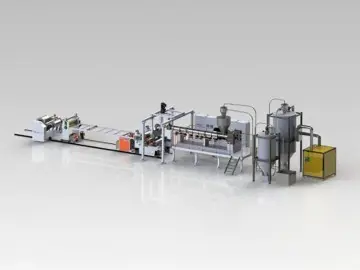
Produces APET/PETG structures with high clarity, meeting food safety standards through effective vacuum-devolatilization drying.
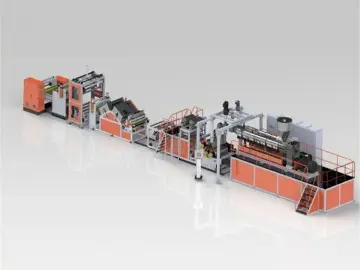
Designed for cleanroom installations, producing high-grade polycaprolactone sheets for orthopedic splints and medical packaging.
Every extrusion system is designed, wired, and tested to meet international standards for electrical safety and mechanical performance.

Key technical answers to assist polymer processing engineers and industrial investment managers in making informed decisions.
High Impact Polystyrene (HIPS) contains polybutadiene rubber, which makes it more heat-sensitive and prone to cross-linking if subjected to excessive shear. Screw profiles for HIPS feature deeper channels and milder compression zones compared to General Purpose Polystyrene (GPPS). GPPS is highly amorphous, requiring intensive distributive mixing to achieve uniform temperature profiles without sacrificing optical clarity. We design screws with custom barrier zones and mixing elements to process both materials efficiently on the same line.
When co-extruding polymers with different Melt Flow Rates (MFR), interfacial instabilities can cause layers to distort. Gwell uses custom feedblocks with adjustable flow selectors (vane inserts) and separate temperature controls for each layer channel. This allows the operator to match the shear rates of the materials at the combining point. Our flow channel designs are optimized using finite element analysis (FEA) to maintain clean layer distribution across the sheet width.
Our extruders can be configured with a double-vented degassing zone connected to a high-capacity liquid ring vacuum system. This setup removes trace moisture and monomers directly from the polymer melt. While this design is suitable for standard products, high-clarity optical GPPS or thin thermoforming films are best processed using a gravimetric desiccant dryer. Drying the material beforehand prevents hydrolytic degradation and bubbles in the finished sheet.
Orientation stress occurs if the sheet is cooled too rapidly or stretched between the rolls. Our calendar stacks feature independent servo drives for each roll, allowing speed ratios to be set with an accuracy of ±0.01 m/min. In addition, internal spiral baffles inside the rolls maintain roll surface temperature differences below 1°C. This precise control ensures the sheet cools uniformly, preventing warping during subsequent thermoforming processes.
To process up to 80% recycled regrind, the line utilizes a gravimetric blender to mix regrind with virgin resin. The extruder screw is designed with wear-resistant bimetallic barrels to withstand abrasives from recycled materials. Additionally, we integrate automatic backflush screen changers and high-pressure melt pumps to maintain stable output pressures, preventing quality issues during production.
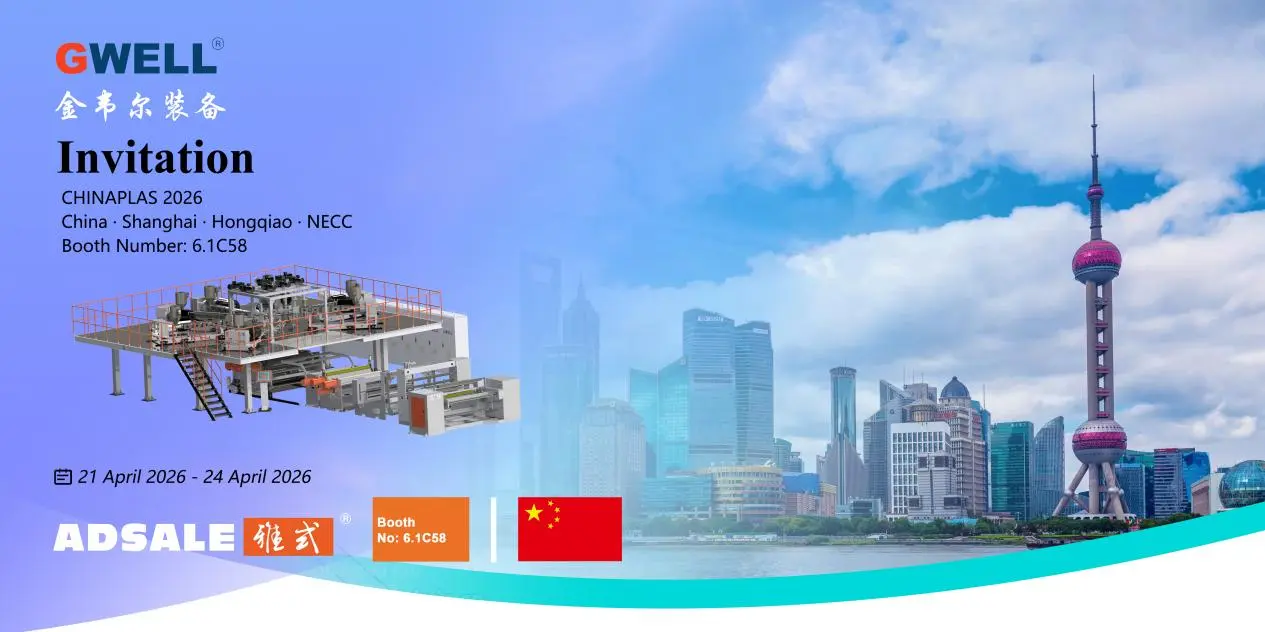
Follow Gwell's engineering achievements, product launches, and upcoming international trade exhibitions.
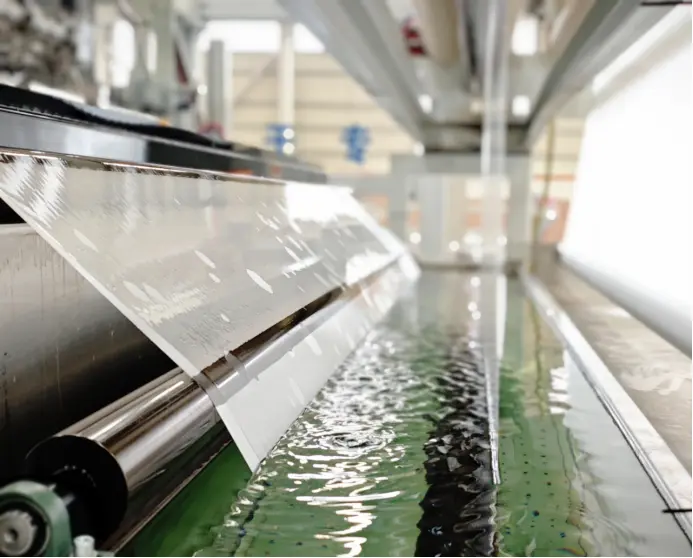
Explore our industrial-grade machinery designed for thick board extrusion, multi-layer EVOH films, and specialty composite systems.
We work with leading raw material suppliers, downstream processors, and automation brands to deliver quality and performance.


Get a custom configuration plan, detailed machinery layouts, and a comprehensive pricing quotation for your new sheet extrusion line.
Submit Request for Proposal