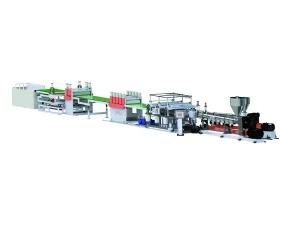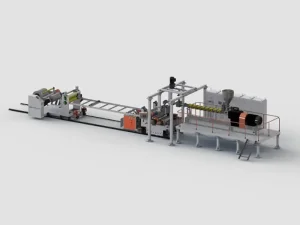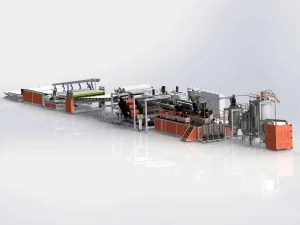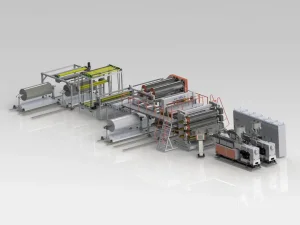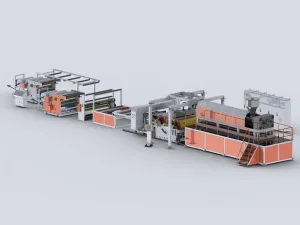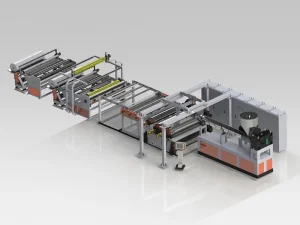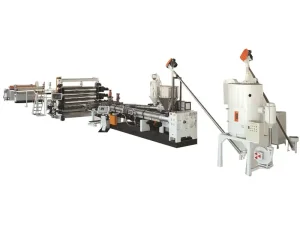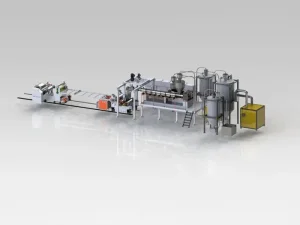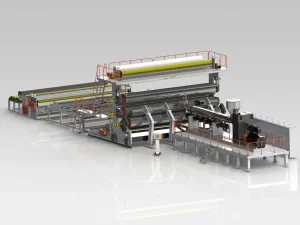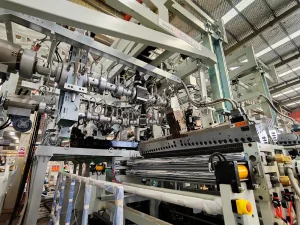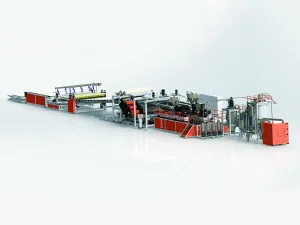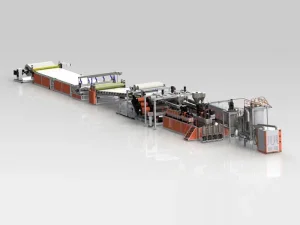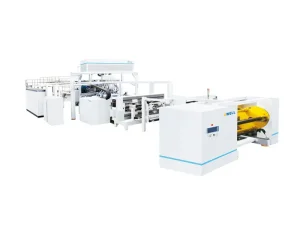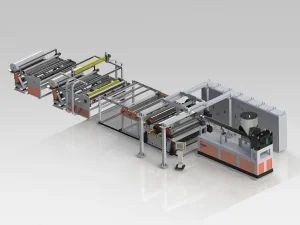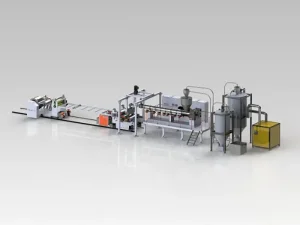
Explore GWELL's industry-proven machinery configurations engineered for ultra-high throughput and continuous processing reliability.
PMMA (Polymethyl Methacrylate), widely known as acrylic, represents one of the most optically pure, weather-resistant, and structural transparent polymers in modern materials science. Producing PMMA sheets of optical-grade excellence requires an extrusion system built on robust thermodynamic calculations, minimal shear stress profile designs, and advanced melt purification systems.
As a veteran player among global manufacturers, GWELL designs PMMA sheet extrusion lines that address issues like polymer degradation, monomer volatility, and roll deflection. Our lines feature highly optimized single-screw extruders with deep-flighted degassing sections, ensuring volatile monomer (MMA) levels are suppressed below acceptable limits, guaranteeing optical transparency and bubble-free sheets.
A closer look at how GWELL integrates high-tech sub-systems to maintain stability, maximize yield, and reduce energy consumption.
PMMA is highly hygroscopic, absorbing ambient moisture quickly. If not dried or degassed properly, water and volatile MMA monomers will cause structural voids, bubbles, and optical haze. GWELL's system incorporates custom vented single-screw extruders. The high-efficiency screw design regulates melt pressure, allowing volatile elements to escape through double-vent ports under a deep vacuum. This ensures maximum melt homogeneity before the polymer enters the die.
For sheets of various thicknesses, the flow channel within the extrusion die must deliver uniform pressure across the entire width. GWELL utilizes coat-hanger type dies engineered via fluid dynamics simulations. The internal chrome-plated, mirror-polished channel features micro-adjustable lip bolts to control thickness variations down to the micron level. This ensures minimum transverse thickness tolerance and eliminates flow-line marks on the sheet surface.
The cooling phase defines the final surface quality and mechanical stress profile of the PMMA sheet. GWELL integrates three-roller or four-roller calendering units, utilizing independent water/oil circulation loops for each roller. The rollers are hardened, ground, and mirror-finished (Ra < 0.01μm) to prevent cooling lines and stress concentration. High-accuracy rotary joints and heating/cooling systems maintain surface temperature tolerances within ±1°C.
A global high-tech enterprise dedicating to the design, engineering, and manufacturing of high-performance plastic extrusion lines.
China GWELL Machinery is a premier high-tech enterprise specializing in the manufacture of plastic extrusion lines for Film, Sheet, and Profile. Guided by our company philosophy—"Expertise creates customers' values"—we focus on engineering high-performance systems for the global market.
By integrating advanced engineering with durable mechanical components, we help processing plants worldwide optimize cost-per-ton throughput, energy efficiency, and product quality.
Why leading global enterprises choose GWELL as their strategic technical partner for plastic extrusion systems.

Collaborating with top universities and research institutes to continually develop high-tech, digitalized extrusion systems.

End-to-end global service lifecycle from layout CAD engineering to site installation, commissioning, and regular maintenance.

Three heavy-duty manufacturing bases ensure on-time delivery of multiple production lines simultaneously.

Proven reliability with hundreds of active extrusion installations running in Europe, North America, Southeast Asia, and beyond.

A workforce of over 500 specialists, including more than 100 dedicated polymer processing mechanical engineers.
GWELL machinery is certified to international quality and safety benchmarks, assuring absolute compliance and high resale value.

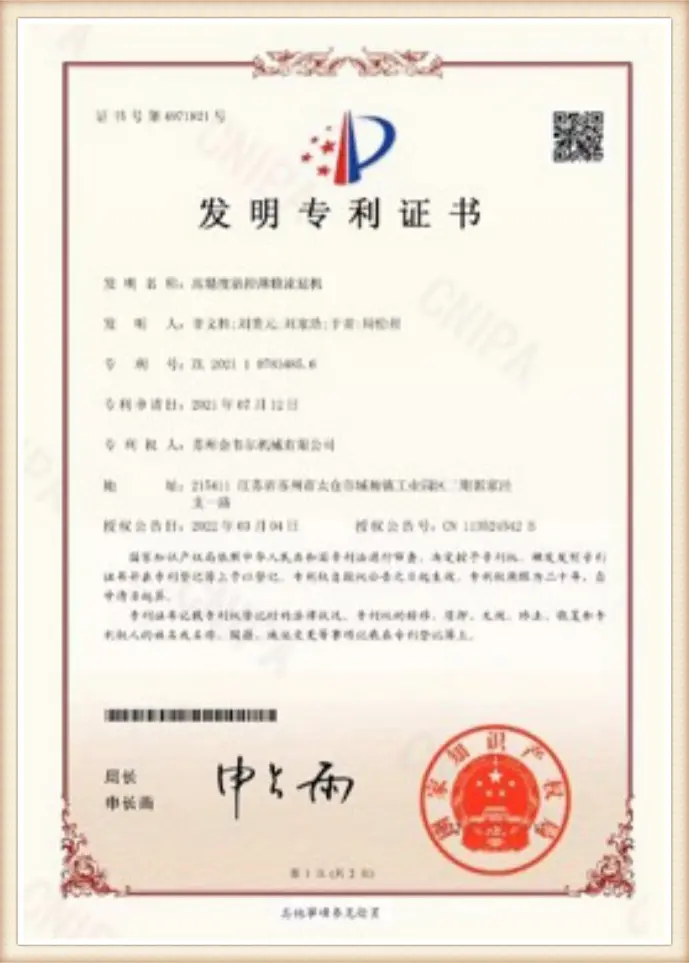
Our technologies span four core categories, each engineered to address specific application parameters and polymer requirements.
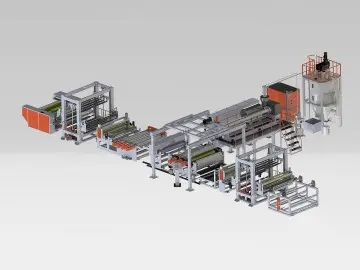
Specialized co-extrusion system for producing weatherable protective veneers for outdoor applications.
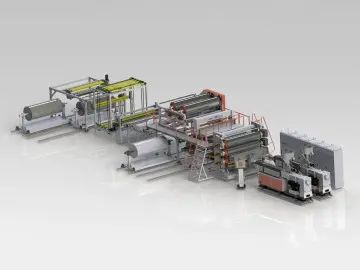
Designed for manufacturing premium TPU films used in textile lamination, medical, and packaging fields.
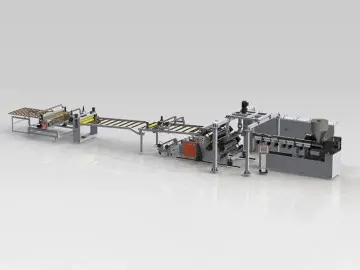
Engineered for high-temperature resins like PEEK, PFA, and PVDF, requiring specialized alloy screws.
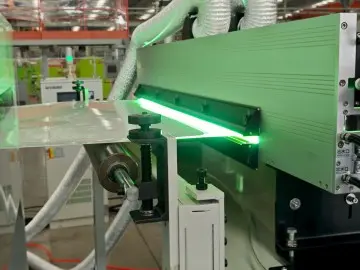
Produces high-impact, transparent sheets that combine standard PET stiffness with processing versatility.
The global market for PMMA sheets is transitioning away from standard low-cost construction boards towards value-added structural sheets. Key drivers include the automotive sector (panoramic sunroofs, rear light housings, HUD displays), electronics (LCD light guides, touch screens), and architecture (solar acoustic barriers, cleanroom partitions). These applications demand low optical distortion, negligible thickness variance, high light transmission (>92%), and UV durability.
As sheets grow wider (up to 2000mm or more) and thinner (down to 1.5mm), standard roll designs suffer from mechanical deflection, causing a variations in the sheet's cross-profile. GWELL solves this by integrating roll bending mechanisms and internally structured spiral circulation channels. These systems maintain uniform linear pressure and heat dissipation across the roll width, preventing localized stress and thickness discrepancies.
To optimize costs and properties, co-extruded structures like PMMA/ABS, PMMA/PC/PMMA, and PMMA/ASA are becoming standard. Multi-manifold die systems and feedblocks enable precise layer distribution. In automotive and appliance components, a thin PMMA layer provides high gloss and scratch resistance, while the thick ABS or PC core delivers structural strength.
Modern extrusion facilities rely on automation to minimize operator error. GWELL's PMMA sheet extrusion systems feature Siemens PLC controls and SCADA integration. Sensors monitor melt pressure, roll temperature, screw torque, and product thickness. The thickness scanner sends real-time feedback to adjusting bolts on the die lip, correcting deviations automatically.
How GWELL is innovating to meet upcoming sustainability, performance, and digital processing demands.
Environmental policies require processing plants to incorporate post-consumer and bio-sourced PMMA. GWELL is optimizing screw designs to process recycled PMMA flakes, maintaining optical clarity and structural integrity through advanced melt filtration and filtration-zone pressure controls.
For applications like backlighting panels and modern architectural glazing, GWELL is developing calendar rolls with micro-patterned surfaces. This allows optical microstructures to be embossed directly onto the PMMA sheet online, eliminating secondary machining steps and reducing costs.
Rising energy costs require high-efficiency machinery. GWELL's new extrusion drives utilize permanent magnet synchronous motors (PMSM) and electromagnetic heating coils on the extruder barrel, cutting energy consumption by up to 25% compared to standard systems.
Keep up with our latest technologies, international exhibitions, and project launches worldwide.
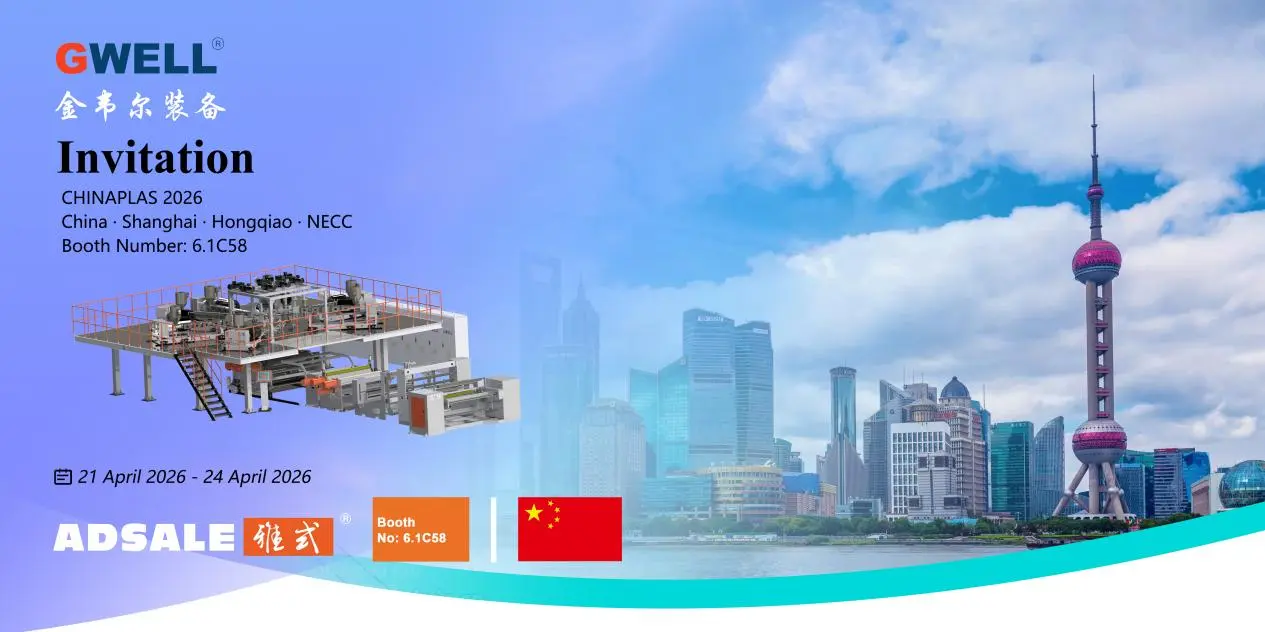
GWELL will display its latest multi-layer cast film and sheet extrusion developments at the upcoming international plastics show.
Read More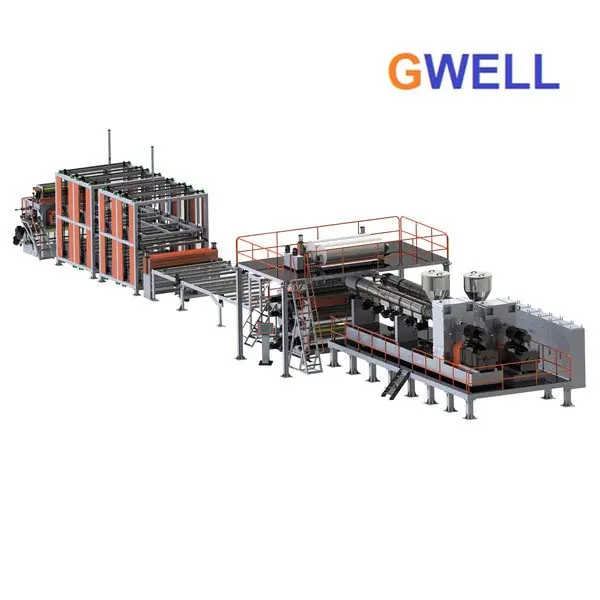
Introducing GWELL's new environmentally friendly POE synthetic leather composite extrusion system for automotive interiors.
Read More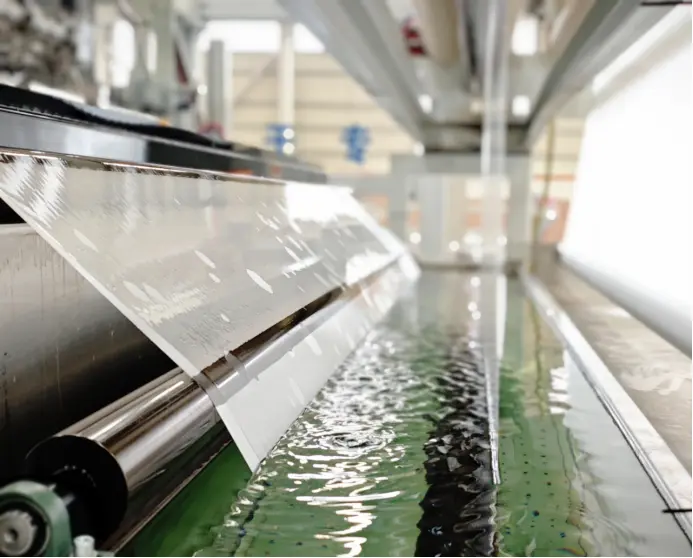
GWELL's high-precision PVB wedge-shaped film extrusion line achieves superior optical alignment for automotive HUD safety glass.
Read MoreGet answers to common technical, operational, and purchasing questions regarding PMMA extrusion lines.
Explore our advanced engineering solutions for waterproof membranes, composite sheets, and photovoltaic film applications.
Working alongside leading chemical suppliers, academic institutions, and manufacturing specialists.



GWELL's R&D engineering and precision machining capabilities are widely recognized across the polymer processing industry. Contact our technical team today to discuss project layouts, throughput specs, and custom line configurations.