
Explore our premium industrial sheet, film, and board extrusion equipment engineered for accuracy, output volume, and energy efficiency.
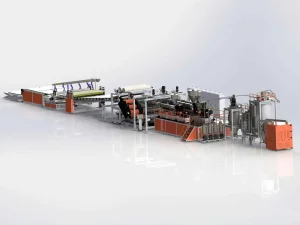
Leading-edge PVB solar encapsulation manufacturing equipment ensuring bubble-free lamination and longevity in architectural glass applications.
Learn More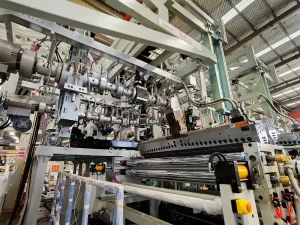
Continuous co-extrusion technology designed to produce durable, high-rigidity PP sandwich structures for logistics packaging and automotive trunks.
Learn More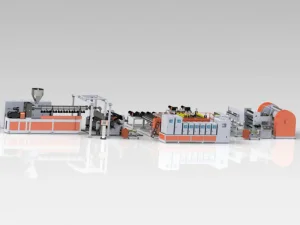
Sophisticated polymer orientation systems designed specifically to manufacture premium PPS functional membranes for hydrogen fuel cell separation.
Learn More
Optically clear decorative film machinery configured for residential and commercial surface finishes, featuring high scratch resistance properties.
Learn More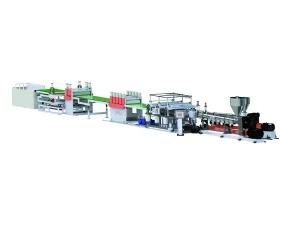
Robust heavy-duty boards extrusion systems for reusable concrete formwork panels, delivering extreme chemical resistance and structural lifespan.
Learn More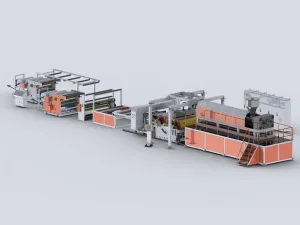
Eco-friendly synthetic leather composite line utilizing calendar-embossing units for automotive dashboards and premium upholstery fields.
Learn More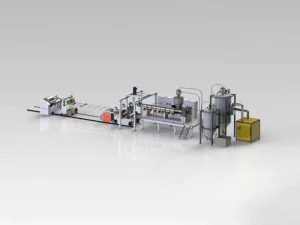
Multi-layered solar protective film casting machinery using advanced gravimetric feeding and tension controls for high-speed line operations.
Learn More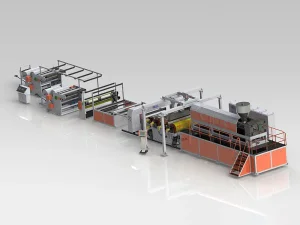
Solar-grade encapsulation film manufacturing lines providing precise thickness tolerance control (±1.5%) for photovoltaic modules.
Learn MoreAcquiring an ABS (Acrylonitrile Butadiene Styrene) sheet machine represents a strategic capital investment for global plastics packaging, automotive interior molding, and electronics casing companies. However, pricing ranges widely from $80,000 USD to upwards of $650,000 USD. Navigating this vast cost spectrum requires an understanding of core technical components and design parameters that directly influence initial factory investment and long-term operating costs.
The primary driver of the ABS sheet machine price is the configuration of the main extruder. Single-screw extruders are highly effective for direct compound processing, but advanced operations utilize co-rotating twin-screw setups. Standard configurations include screw diameters ranging from 90mm to 150mm with an L/D ratio of 33:1 or 35:1. Systems equipped with specialized degassing and venting zones prevent bubbles and moisture spots in finished sheets, reducing raw material pre-drying requirements and saving energy.
The T-die (flat die) handles the transverse distribution of the polymer melt. Premium extrusion lines integrate automated die-lip thermal bolts combined with automatic thickness measuring scanners (closed-loop beta or gamma-ray gauges). This setup maintains thickness tolerances within ±1%, preventing resin waste and stabilizing quality. The cost of a precision T-die with automatic adjustment is generally three times higher than manual die heads, but this initial investment pays off through material savings over time.
The surface finish, structural flatness, and internal stress properties of an ABS sheet depend directly on the three-roll calendering unit. Depending on application needs, rollers can be arranged vertically, horizontally, or at a 45-degree angle. High-tech systems feature independent servo motor drives for each roller, internal spiral cooling water flow channels, and mirror-finished chrome plating. These upgrades ensure precise cooling rates and high surface consistency.
Ensure your procurement team compares apples to apples when evaluating competitive manufacturer quotes:
Browse our four core technical divisions, featuring high-efficiency machinery designed for demanding industrial applications.
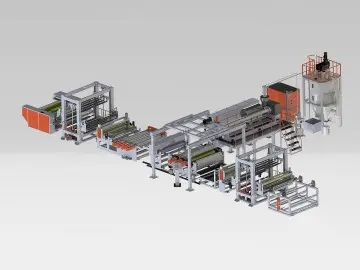
Weather-resistant exterior film solutions.
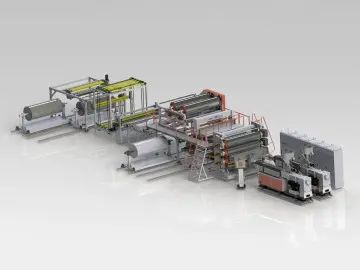
Highly flexible textile & composite bonding.
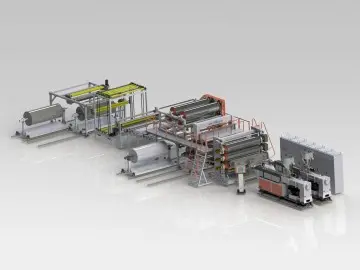
Premium medical & automotive films.
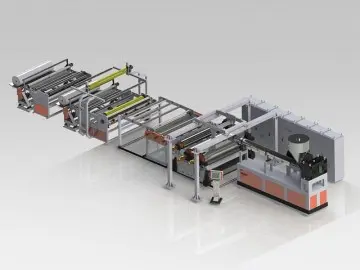
Solar backplane membrane manufacturing.
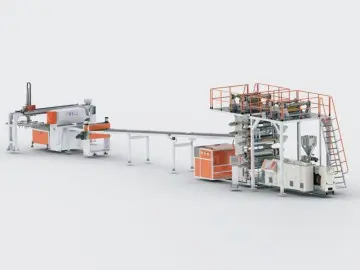
High-density structural building boards.
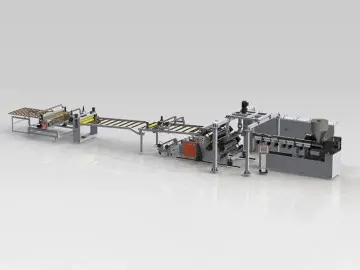
Specialty chemical engineering boards.
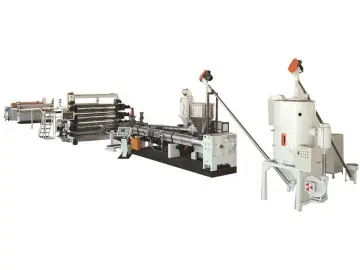
Dedicated refrigerator liner sheet systems.
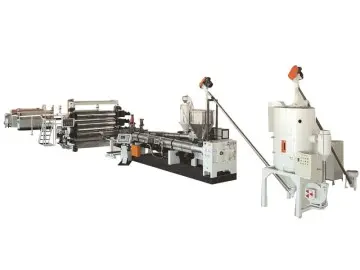
Versatile rigid thermoplastic packaging.
In the global market for polymer processing machinery, leading manufacturers in China have evolved from basic machine builders into high-end system integrators. By combining integrated supply chains with a focus on engineering precision, choosing a Chinese manufacturer offers significant strategic advantages.
Chinese extrusion machinery builders operate in highly specialized manufacturing hubs, such as Jiangsu, Shanghai, and Zhejiang. This close geographical proximity to core sub-suppliers—including heater bands, gearboxes, special alloy screw barrels, and advanced pneumatic controls—minimizes transit times and raw material logistics costs. Manufacturers pass these structural savings directly to buyers, offering high-spec lines at a lower total cost than European alternatives.
Leading Chinese factories use high-grade structural alloys, applying bimetallic coatings, nitride treatments, and carbide surface hard-facings to screws and barrels. This is essential for processing ABS compounds filled with calcium carbonate or flame retardants, preventing accelerated abrasive wear. Chinese engineers design custom screw geometries that optimize melting performance, ensure lower shear temperatures, and prevent thermal degradation of the ABS resin.
Chinese manufacturers configure their systems with widely supported global automation brands, including Siemens, Omron, ABB, Schneider, and Gefran. This ensures that maintenance teams worldwide can source replacement parts locally. Embedded IoT modules enable remote troubleshooting, real-time code updates, and monitoring of system performance from offsite locations.
State-of-the-Art Production Bases
Total Advanced Manufacturing Space
In-house Mechanical & Electrical Engineers
Annual System Manufacturing Capacity
See how co-extrusion innovations and modern system designs meet the demands of high-performance industrial applications.
Automotive manufacturers rely on multi-layer ABS/PMMA co-extruded sheets for structural interior panels, dashboards, and exterior trim. The PMMA cap layer provides high scratch resistance and UV protection, while the ABS base layer ensures impact strength and excellent thermoforming properties.
Modern refrigerators demand chemical resistance to polyurethane foaming agents. Dedicated ABS extrusion lines feature specialized liquid-degassing extruders to produce food-grade, stress-free sheets that thermoform into complex inner refrigerator liners without cracking.
ABS/PC co-extruded sheets are the standard choice for durable luggage shells. Co-extrusion machinery allows manufacturers to sandwich recycled ABS material between thin layers of virgin ABS and PC, optimizing production costs without compromising structural drop-test performance.
Purchasing agents and plant engineers should use these design specifications to draft technical RFQs (Requests for Proposals) for global machinery manufacturers:
| Engineering Parameter | Standard Configuration | Advanced High-Speed System | Impact on ABS Sheet Properties |
|---|---|---|---|
| Extruder Screw Type | Single Screw (L/D 30:1) | Co-rotating Twin-Screw (L/D 36:1) | Improves melt homogeneity and output consistency. |
| Degassing System | Single Chamber Vacuum Vent | Dual-stage High-vacuum Roots Pump System | Removes moisture and residual monomers, preventing pinholes. |
| Screen Changer | Manual slide plate | Hydraulic Non-stop Double-piston Changer | Eliminates line shutdowns during filter mesh swaps. |
| Calendering Caliper control | Manual mechanical wheel screw | Motorized Servo Positioning with Gap Sensors | Guarantees uniform thickness across the sheet. |
A major advancement in modern ABS sheet extrusion is energy recovery. Leading manufacturers use infrared heating bands that warm up twice as fast as traditional ceramic heaters while reducing radiation heat loss. In addition, water tempering systems reuse thermal energy from the calendering rolls to preheat incoming water, reducing electricity consumption in heavy-duty plants.
Gwell Machinery delivers engineering excellence to global customers through scale, research, and support.
Find answers to common technical and commercial questions about procurement, operation, and maintenance.
Discover our specialized functional lines engineered for high-performance films, architectural boards, and packaging materials.
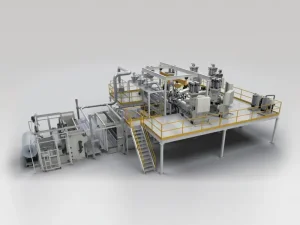
Specialized high-temperature fluoropolymer extrusion equipment designed to produce chemical-resistant and weather-proof industrial films.
Learn More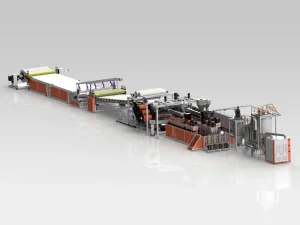
High-output co-extrusion machinery designed for optical diffuser panels and high-impact structural sheets used in advertising displays.
Learn More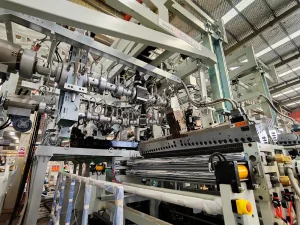
Production lines designed for lightweight structural honeycomb cores, optimized for protective packaging and automotive partitions.
Learn More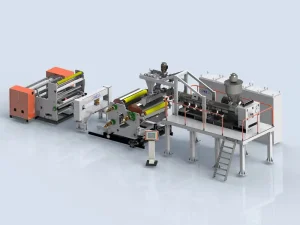
Advanced solar encapsulation film line with anti-shrink winding systems and integrated cooling drums for high-output operations.
Learn More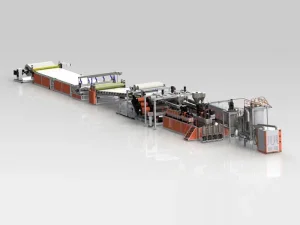
Specialized co-extrusion machinery producing multi-layer elastomeric sheets for anti-slip automotive foot pads and interior floor mats.
Learn More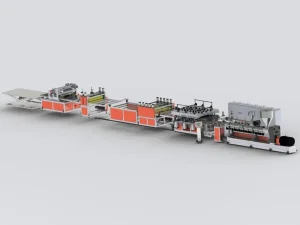
Extrusion lines configured to produce hollow lattice boards, widely used in signboards, temporary partitions, and industrial packaging boxes.
Learn More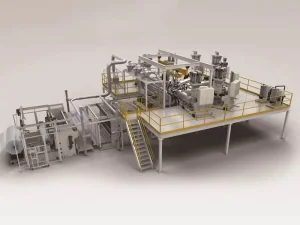
High-barrier co-extrusion packaging machinery designed to extend product shelf life in medical and food-grade packaging fields.
Learn More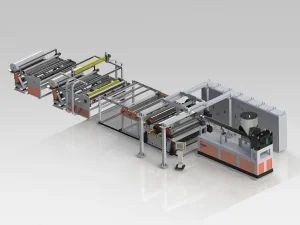
Precision PVB extrusion lines equipped with wedge-angle control systems, producing interlayer films for automotive smart displays.
Learn MoreSpeak directly with our technical sales engineers to specify your throughput, layer structure, and downstream automation requirements.