
Premium customized extrusion configurations engineered to optimize production yield, raw material efficiency, and film/board dimensional accuracy.
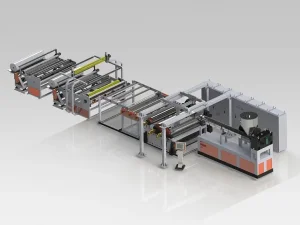
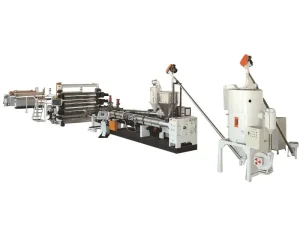
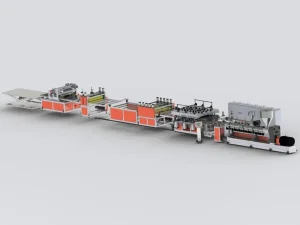
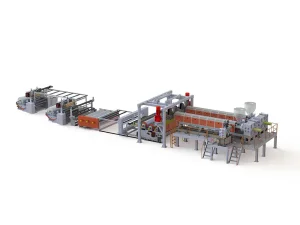
The global manufacturing ecosystem is undergoing an intensive transition toward lightweighting, structural efficiency, and high circularity. Among these developments, Polypropylene (PP) honeycomb panels have emerged as a premier engineering standard. Known for their high strength-to-weight ratio, dampening qualities, and chemical inertness, these panels are systematically replacing conventional sheet materials, including plywood, PVC foam boards, and heavy metallic plates, in diverse industrial environments.
Recent industrial data points to significant market demand driven by the logistics, packaging, building construction, and automotive sectors. Modern commercial vehicles demand materials that minimize body mass while retaining stiffness. Lightweighting directly lowers emissions in internal combustion engines and extends battery range in Electric Vehicles (EVs). Our customized PP honeycomb panel extrusion lines address these design challenges, enabling manufacturers to co-extrude robust, core-structured panels with inline multi-layer lamination.
Unlike PVC foam boards or thermoset fiberglass composites, pure PP honeycomb panels are fully recyclable, aligned with EU circular economy targets.
The hexagonal cell architecture delivers excellent compressive and shear strength, retaining structural integrity while reducing weight by up to 60% compared to monolithic plastics.
PP's natural resistance to organic solvents, moisture absorption, and mold prevents the rotting, warping, and delamination common in plywood panels.
Manufacturing a reliable PP honeycomb panel requires precise thermomechanical control during plasticization and forming. Standard machinery struggles with wall uniformity and localized adhesion stress. Our extrusion technology addresses this with a high-capacity, single-screw or co-rotating twin-screw extruder design configured to melt and homogenize PP resins with controlled thermal gradients.
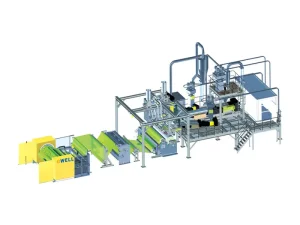
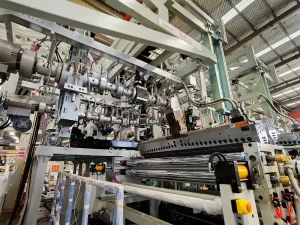
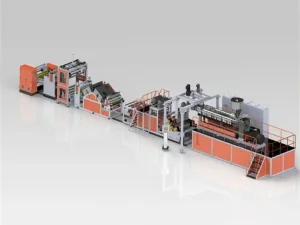
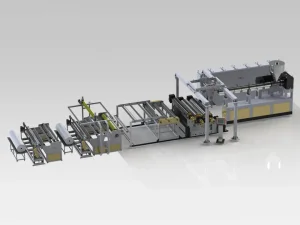
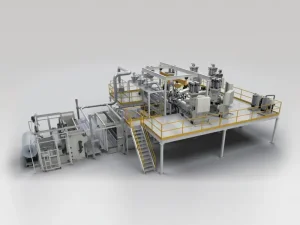
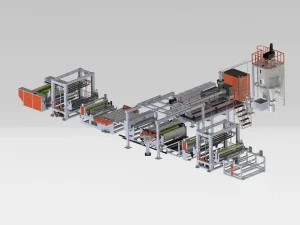
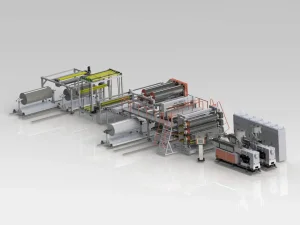
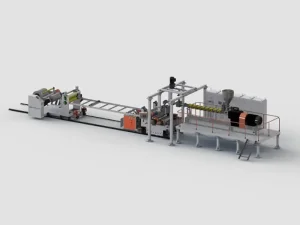
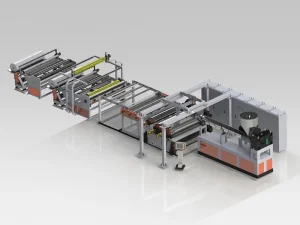
The co-extrusion system comprises a specialized feedblock, circular or flat die forming, vacuum-assisted calibrators, and inline lamination units. The raw melt is shaped into a central honeycomb core structure through custom forming dies. Simultaneously, exterior structural sheets are thermally bonded directly onto the honeycomb nodes. This heat-fusion process eliminates the need for volatile adhesive agents, producing a cohesive, monolithic composite panel with strong mechanical integrity.
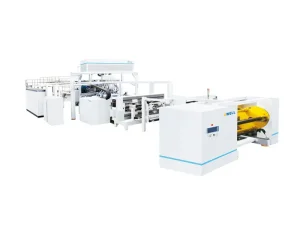
Key downstream components include high-precision double-belt laminators, dynamic cooling tables, and automated cross-cutting systems. Inline lamination supports bonding functional surface layers, such as PET non-woven fabrics, thermoset glass fiber mats (FRP), aluminum skins, and decorative films, directly onto the PP core. This flexibility lets manufacturers customize mechanical properties to meet target specifications for transport vehicle flooring, cargo protection, and architectural cladding.
Procuring a multi-million dollar plastic extrusion installation demands rigorous technical due diligence. Industrial buyers must look beyond initial acquisition costs to evaluate total cost of ownership (TCO) and long-term production stability. Operational reliability hinges on component wear resistance, power efficiency ratios, and responsive post-sales field engineering support.
When sourcing PP honeycomb panel extrusion lines, procurement directors prioritize suppliers with verified engineering experience in high-output sheet line production. Key purchasing criteria include:
China's industrial equipment manufacturing sector has evolved from simple assembly operations into a sophisticated ecosystem utilizing advanced machining and digital controls. Top-tier Chinese extrusion equipment manufacturers deliver global-standard engineering solutions backed by integrated, regional supply chains.
Operating from consolidated industrial hubs, companies like GWELL Machinery maintain direct access to specialized components, precision metallurgy, and domestic controls engineering teams. This proximity reduces sourcing times for critical assemblies like heat exchangers, gearboxes, and custom extrusion dies. Coupled with advanced CNC manufacturing and strict QA protocols, Chinese factories offer resilient equipment solutions, reliable lead times, and competitive capital efficiency.
Industrial machinery classification covering cast film, board, sheet, and solar encapsulation production technologies.
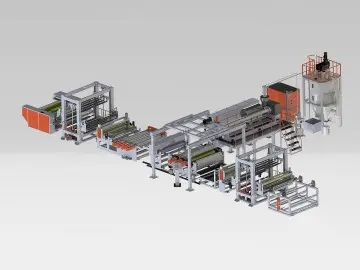
Designed for weather-resistant protective caps, combining robust polymer melt design with thermal lamination stability.
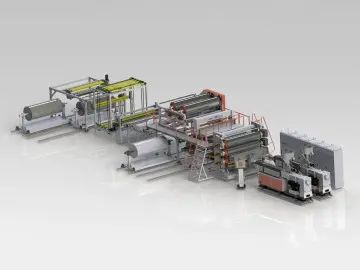
Ensures high elasticity and optical transparency, featuring optimized screw designs for heat-sensitive TPU resins.
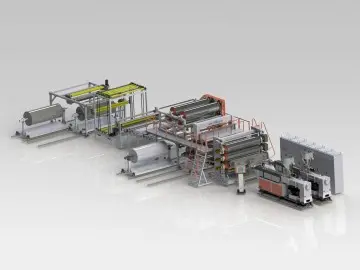
Engineered for high-speed textile and structural bonding processes with consistent thickness control.
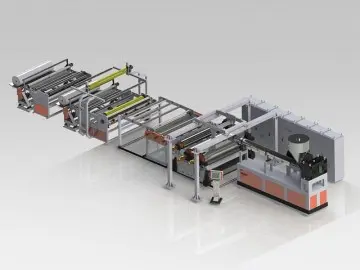
Delivers high chemical resistance and weathering properties for long-term outdoor PV module installations.
CHINA GWELL MACHINERY CO., LTD. is a high-tech manufacturing enterprise specializing in high-performance plastic extrusion lines for film, sheet, and profile applications. Guided by the philosophy that "expertise creates customer value," GWELL develops international equipment solutions tailored for modern processors.
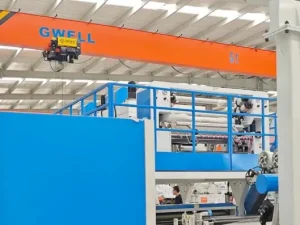
With three manufacturing bases totaling 866,000 square meters, GWELL maintains the infrastructure to design and build large-scale extrusion configurations. Supported by over 500 workers, including a dedicated R&D group of more than 100 mechanical and electrical engineers, GWELL has an annual output capacity exceeding 1,000 extrusion lines. This scale ensures reliable fabrication schedules and project execution for customers worldwide.
Our partnerships with universities and research institutes drive advanced machinery design, screw geometry design, and high-efficiency melting simulations.
We provide full lifecycle service support, including initial engineering consultation, site installation, process optimization, and immediate spare parts supply.
Our plants are situated near major shipping ports, providing reliable logistics connections to North America, South America, Europe, Southeast Asia, and the Middle East.
PP honeycomb panels are modular solutions customized to meet specific operating conditions. By altering the skin thickness, core cell diameter, cell height, and external laminates, our systems customize panel behaviors for specialized industries.
Logistics & Transport Vehicles: Utilizing panels with heavy-duty glass-fiber composite surfaces (FRP) drastically reduces the tare weight of dry-freight box trucks and cargo vans. Lower weight translates directly to reduced fuel consumption or extended battery range for logistics fleets.
Industrial Packaging Solutions: High-performance sleeve boxes, returnable dunnage, and heavy-duty folding containers demand material surfaces that withstand repeated impact. PP honeycomb panels offer the required durability, along with excellent resistance to oils, greases, and washing chemicals.
Civil Building & Infrastructure: Builders rely on PP honeycomb panels for lightweight concrete formwork and scaffolding planks. The non-stick surface allows clean release from cured concrete, and the moisture-resistant core permits multiple reuses on construction sites.
Comprehensive polymer processing lines engineered for specialty films, medical sheet materials, solar applications, and green packaging sheets.
Looking for a custom PP honeycomb panel extrusion line or technical support for material processing? Our engineering team is ready to design a solution tailored to your operational specifications.
Request Configuration & Quote