
Engineered to comply with strict European quality and precision standards for Photovoltaic modules.
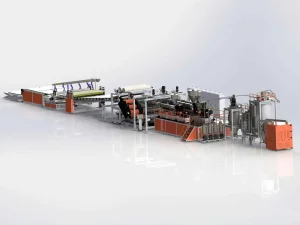
Designed for the specialized manufacturing of high-strength PVB film used in Building-Integrated Photovoltaics (BIPV). Featuring precise thickness control systems matching European building standards.
Learn Technical Specs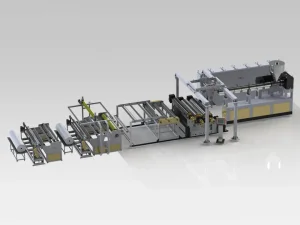
Co-extrusion solutions for EPE multi-layer structure films, combining the anti-PID features of POE and the cost efficiency of EVA for high-efficiency solar modules.
Learn Technical Specs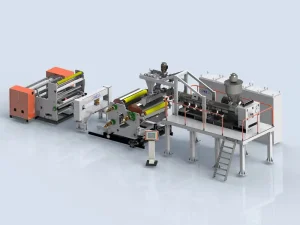
Provides high-speed extrusion with precise temperature control. Specially optimized to avoid shrinkage and pre-crosslinking during processing, ensuring optimal optical transparency.
Learn Technical Specs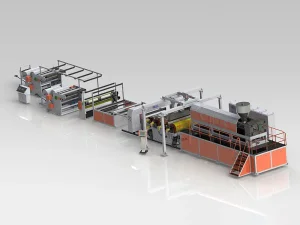
Equipped with state-of-the-art automatic dosing systems and gravimetric feeding technology to guarantee uniform composition and crosslinking performance.
Learn Technical SpecsUnderstanding the technical requirements and supply chain challenges of Germany's expanding PV sector.
Germany leads European deployment of renewable energy infrastructure under its ambitious climate neutrality target for 2045. A primary pillar of this strategy is the rapid expansion of solar photovoltaic generation capacity. However, maintaining high efficiency and ensuring long operational life spans of 25 to 30 years under varying Central European weather conditions requires high quality control of encapsulation materials. This necessity has triggered demand for premium-grade solar extrusion machinery capable of processing EVA, POE, and PVB polymers to highly precise specifications.
In recent years, German and European module producers have focused on localizing their supply chains. Dependency on imported encapsulation films creates logistical risks and potential quality inconsistencies. By establishing local extrusion capabilities within Germany and neighboring countries, solar manufacturers can guarantee direct compliance with European standards, including CE marking and TÜV Nord / TÜV Rheinland certifications. High-efficiency extrusion systems with advanced automation are crucial for keeping regional manufacturing costs competitive.
With the adoption of double-glass and N-type TOPCon modules, Polyolefin Elastomer (POE) films have become essential due to their superior water vapor transmission rate (WVTR) and anti-PID properties compared to traditional EVA.
German safety codes for structural building facades mandate the use of PVB (Polyvinyl Butyral) interlayers in glass-glass modules to ensure structural stability and impact resistance in BIPV projects.
Gwell extrusion systems integrate digital PLC control platforms, enabling remote monitoring, precision gravimetric feeding, and automatic thickness adjustment to fit modern smart factories.
Comparing the properties of critical solar materials processed on our industrial extrusion lines.
The processing of photovoltaic film is highly complex. The polymer matrices (such as EVA and POE) are thermally sensitive and require precise heating during the extrusion process. Excessive temperature will trigger premature crosslinking (gelation), rendering the film unusable. Conversely, insufficient heating leads to poor homogenization, resulting in defects like bubbles or fish-eyes. The Gwell extrusion screw design features low-shear, low-temperature melting technology to avoid these processing issues.
| Material Type | Typical Applications | Processing Temp (°C) | WVTR (Water Vapor Transmission Rate) | Critical Extrusion Challenge |
|---|---|---|---|---|
| EVA (Ethylene Vinyl Acetate) | Standard P-type silicon module encapsulation | 80 - 100 | ~30 g/m²/day | Avoiding thermal decomposition and acetic acid release. |
| POE (Polyolefin Elastomer) | N-type TOPCon, HJT, double-glass modules | 90 - 110 | <0.1 g/m²/day | Managing high viscosity and slippage on the calendar rolls. |
| PVB (Polyvinyl Butyral) | BIPV (building-integrated), automotive solar roof | 160 - 200 | Variable | High melt viscosity and moisture control in material preparation. |
| EPE (EVA-POE-EVA Co-extrusion) | High-performance bifacial panels | 85 - 105 | <1.5 g/m²/day | Ensuring inter-layer adhesion and controlling multi-manifold flow interfaces. |
| PPS (Polyphenylene Sulfide) | Alkaline hydrogen electrolysis separators | 290 - 325 | N/A | Extremely high temperature melting stability and high filler dispersion. |
How local manufacturers utilize specific extrusion configurations for various solar installations.
In metropolitan areas like Berlin, Hamburg, and Munich, municipal building codes enforce strict aesthetic and safety standards. PVB-based glass-glass solar laminates are the primary solution for facade integration. Our PVB extrusion machinery features highly accurate cooling and tension control zones to prevent visual distortion, ensuring structural integrity and compliance with German building safety standards.
Germany has pioneered the integration of solar panels on agricultural land, allowing crops to grow beneath elevated structures. The panels used in these settings are exposed to high levels of humidity, dust, and fertilizer emissions. EPE co-extruded films processed by our lines protect the solar cells from moisture-induced corrosion (corrosive soil gases) and PID, preserving energy yields over the system's life cycle.
Floating solar power stations, located on decommissioned mining lakes in regions like Lusatia, face challenges from constant moisture exposure. Standard EVA encapsulates degrade under these conditions, causing delamination. Utilizing POE encapsulation film produced on Gwell's cast film extrusion systems ensures long-term protection, preventing water ingress and keeping the panels operational.
From solar encapsulation films to battery separators and high-strength framing materials.
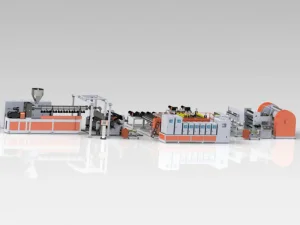
Designed for the extrusion of Polyphenylene Sulfide (PPS) separator membranes. A critical component for alkaline water electrolyzers powering Germany's hydrogen economy.
Technical Details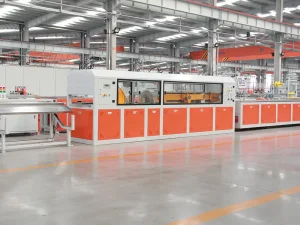
An eco-friendly alternative to aluminum frames. Our polyurethane frame extrusion lines produce corrosion-resistant and lightweight profiles for utility-scale solar installations.
Technical Details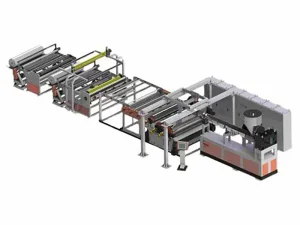
Optimized for next-generation polymer blends to produce specialized solar encapsulation backsheets with superior UV barrier properties and resistance to environmental stress cracking.
Technical Details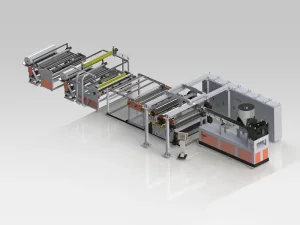
Designed for manufacturing SentryGlas Plus (SGP) interlayer films. Perfect for high-stress structural glazing and security-grade photovoltaic glass facade integrations.
Technical Details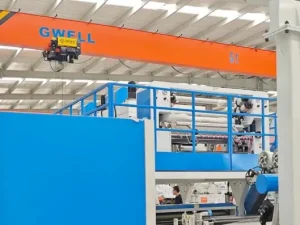
For production of high-barrier PET sheets suitable for thermoforming meal boxes, cups, and bowl covers. Designed to process post-consumer recycled flakes while maintaining food-grade standards.
Technical Details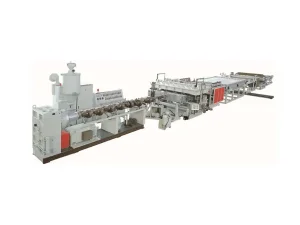
Designed to manufacture lightweight, impact-resistant PP hollow boards for packaging, construction protections, and logistics applications across European markets.
Technical Details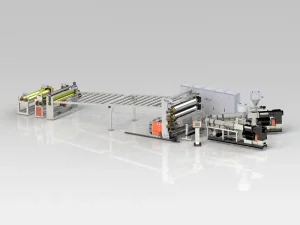
Engineered for the continuous production of hard, transparent PVC films with strict width and thickness tolerances, complying with RoHS and REACH environmental guidelines.
Technical Details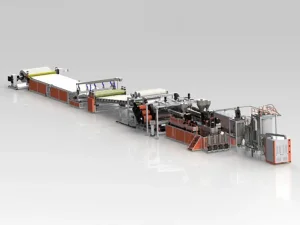
Produces optical-grade sheets used in display monitors, light guide panels, and optical lenses. Features dust-free extrusion conditions and precise cooling calendars.
Technical DetailsHow we support German operators in commissioning, energy savings, and safety validation.
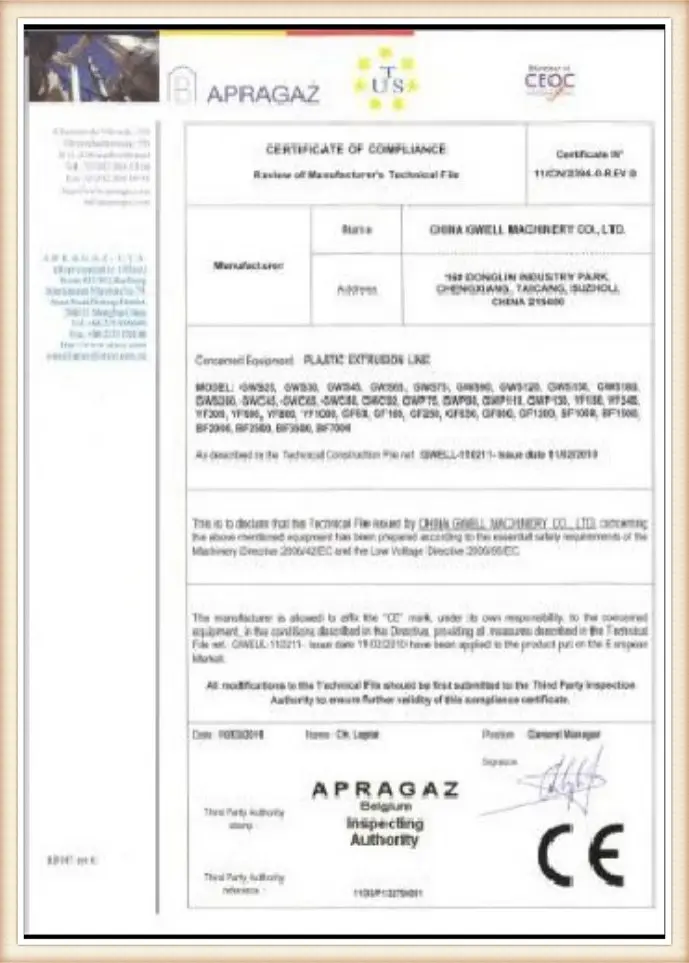
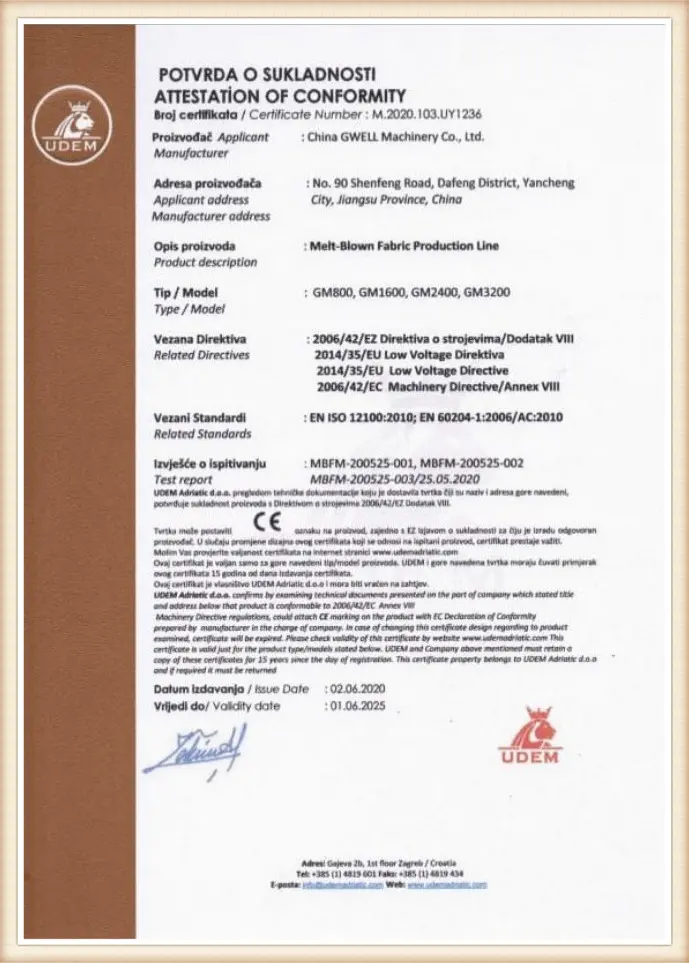
All machinery exported to Europe conforms to the European Machinery Directive (2006/42/EC). This includes double safety relays, standard-compliant emergency stop circuits, shielded low-emission electrical cabinets, and safety interlocks. By integrating European component brands such as Siemens, Rexroth, Schneider, and ABB, we ensure that local maintenance teams in Germany can source replacement parts quickly and minimize downtime.
In accordance with German energy savings programs (such as DIN EN ISO 50001), our extrusion lines utilize electromagnetic heating jackets for barrels, which consume up to 30% less energy than standard ceramic resistance bands. Closed-loop heat recovery systems on the cooling rolls optimize overall thermal efficiency, reducing operational costs and lowering the factory carbon footprint.
For installations in regions like North Rhine-Westphalia, Bavaria, and Saxony, Gwell offers a localized support workflow:

Adapting to thinner silicon wafers, perovskite tandems, and circular manufacturing models.
The solar industry continues to innovate rapidly. Photovoltaic cell manufacturers are moving toward thinner wafer architectures to save material costs. However, thinner cells are fragile and more susceptible to cracking during lamination. This places stricter demands on the encapsulation film thickness variance, which must remain within ±1.5% across the web width.
To address this requirement, Gwell is developing closed-loop thickness monitoring devices that communicate directly with the automatic die bolts on our flat-die systems. By measuring the thickness profiles in real-time, the die adjustments adapt automatically to ensure reliable product quality.
Additionally, tandem perovskite-silicon cell structures are highly sensitive to ultraviolet light and thermal stress during processing. Our future extrusion profiles focus on improving low-heat melting configurations and formulating multi-layered barriers that shield delicate tandem layers while maintaining optimal light transmission.
Essential technical insights regarding our solar extrusion installations and operations.