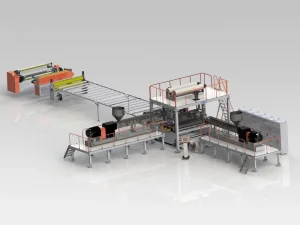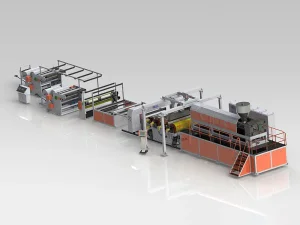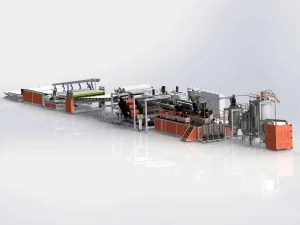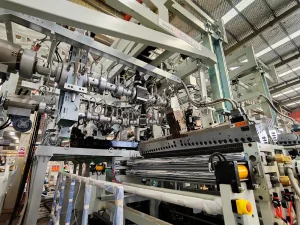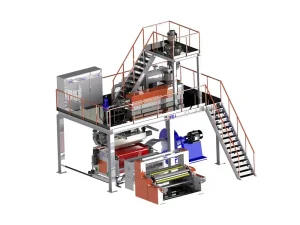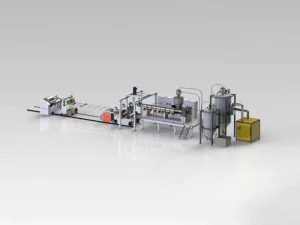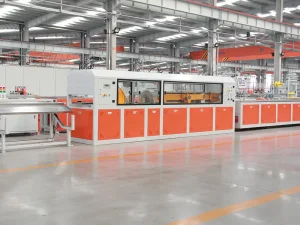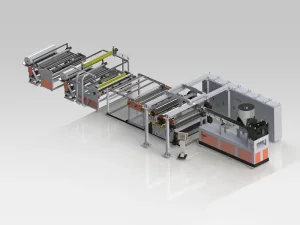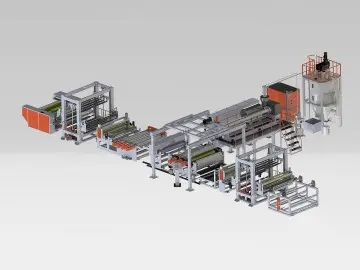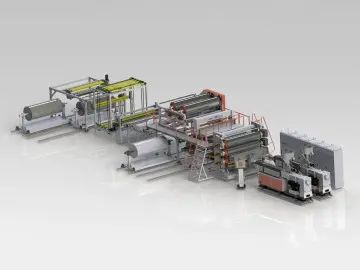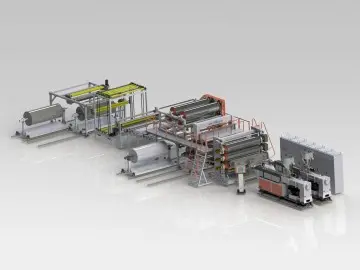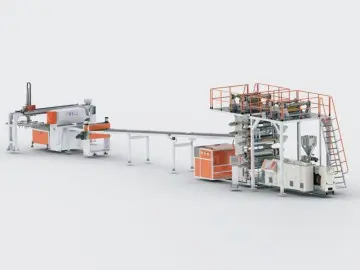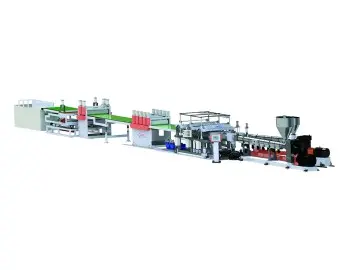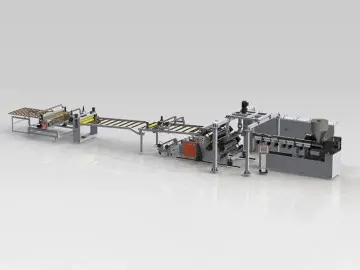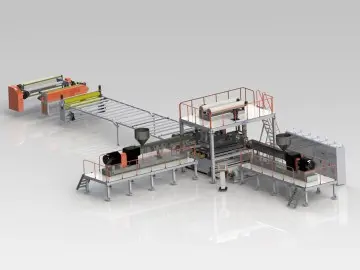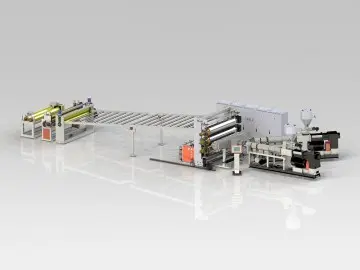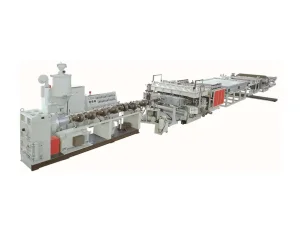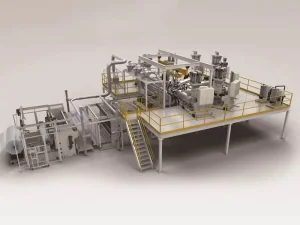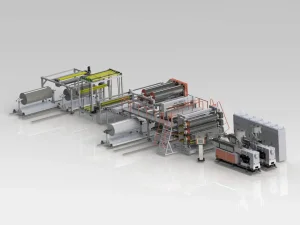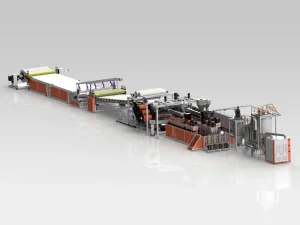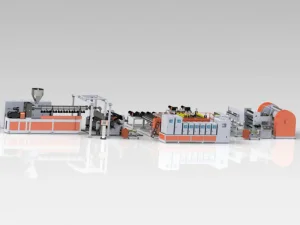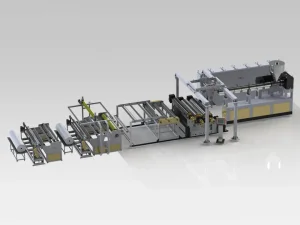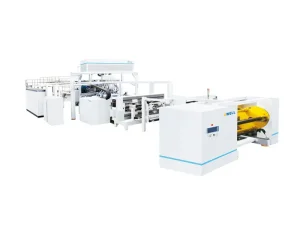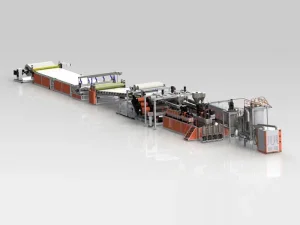
Deploying next-generation automation architectures to maximize resin output efficiency, guarantee thickness accuracy, and reduce thermal degradation across various thermoplastic formulations.
In modern industrial plastic processing, Polystyrene (PS) sheet extrusion is a critical manufacturing sector. PS sheets, including General Purpose Polystyrene (GPPS) and High Impact Polystyrene (HIPS), are widely utilized in food packaging, medical trays, electronic carriers, and building insulation. Achieving high quality and profitability in this segment relies on transitioning from traditional manual extrusion processes to fully automated co-extrusion production lines.
At the core of an automated PS sheet production line is the extruder screw design. Polystyrene is highly heat-sensitive and susceptible to degradation under excess shear or localized overheating. Advanced systems utilize customized single-screw extruders with dynamic degassing zones (L/D ratios of 30:1 or 33:1) or twin-screw extruders featuring low-shear, high-dispersion mixing elements.
Our automation systems integrate gravimetric dosing units to control formulation components in real-time, including raw virgin granules, recycled regrind, color masterbatches, and mineral additives. This continuous feedback loop ensures that the melt viscosity remains constant before entering the T-die, preventing gauge variations and material defects.
All extrusion machinery is engineered and manufactured to conform to strict international standards. This includes full European CE Mark certification for electrical and mechanical safety compliance, as well as UL/CSA certifications for North American electrical assemblies. These standards ensure plug-and-play installation and smooth approvals from local safety regulators.
For international buyers, the challenge of acquiring heavy extrusion machinery from overseas factories lies in long-term field support and localized emergency engineering. China Gwell addresses this by maintaining a decentralized technical support infrastructure capable of deploying factory-trained service engineers to destinations in Europe, North America, Southeast Asia, and South America.
Our localized support framework covers everything from the initial factory layout design and structural load assessments to electrical integration, remote diagnostics, and on-site commissioning. We guarantee round-the-clock availability of critical spare parts via localized warehousing hubs, minimizing unplanned operational downtime.
Operating out of China's premier industrial zones, Gwell leverages an integrated supply chain that covers everything from raw steel casting to high-precision machining of screws, barrels, and control cabinets.
Collaborating directly with key engineering universities and national research institutes to develop high-efficiency barrier screws and energy-saving heater bands.
Our service process handles raw material trial testing, machinery design, installation, operator training, and remote diagnostic assistance.
Three massive manufacturing complexes in Shanghai, Suzhou, and Changzhou allow us to run multiple large-scale lines concurrently and guarantee quick delivery.
Packaging companies face tight margins and fluctuating polymer prices. To remain competitive, buyers prioritize extrusion lines that offer material flexibility (such as the ability to process up to 100% recycled flake without sacrificing optical clarity) and fast roll-changing capabilities.
Single-layer PS sheets are increasingly replaced by multi-layer variants (ABA, ABC, or barrier structures like EVOH-capped layers). These designs allow manufacturers to bury low-cost recycled material in the core layer while sandwiching it between thin layers of virgin GPPS or food-grade additives. This structure provides high structural integrity and barrier properties at a lower overall material cost.
Customized PS, PP, PET, and composite sheets generated by our high-output extrusion machinery are deployed across several specialized global markets:
HIPS and PP co-extruded sheets are thermoformed into drinking cups, deli containers, yogurt cups, and produce trays. High uniformity in sheet thickness ensures uniform wall thickness during deep-draw thermoforming.
Black conductive HIPS sheets are structured with anti-static agents to form carrier tapes. These tapes protect integrated circuits, micro-chips, and sensors from electrostatic discharge during shipping.
ABS/HIPS co-extruded structures are engineered for internal refrigerator liners. The material requires strong chemical resistance to avoid cracking from exposure to foaming insulation blowing agents.
Explore our main production line types, built across our three bases to serve distinct industrial manufacturing fields.
Providing clarity on technological configurations, custom material testing, and global logistics options.
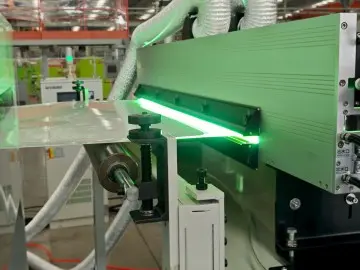
Our automated co-extrusion T-dies integrate closed-loop feedback systems using radiometric (beta-ray/gamma-ray) or ultrasonic sensors. The system dynamically adjusts thermal bolts on the die lips to control final sheet thickness within ±1% to 2% limits.
Yes. Our plastic extrusion screws are engineered with customized barrier zones and vacuum venting sections to handle the higher volatile content and irregular flow indices of recycled regrind, allowing up to 100% flake ratios depending on application requirements.
We provide comprehensive site-installation support. We send electrical and mechanical commissioning engineers to coordinate local layouts, perform test runs under loaded conditions, establish recipe parameters, and train your floor operators.
Our lines utilize infrared quartz heaters or ceramic heating bands wrapped with high-density thermal insulation blankets. Combined with variable frequency (VFD) main motors and high-efficiency gearboxes, overall power draw is reduced by 20% to 30% compared to legacy designs.
With three manufacturing bases totaling 86,600 square meters of production space, Gwell maintains a large-scale manufacturing capability. Every line is subjected to test-runs using your raw materials before containerization, ensuring high quality control standards are met.
We work in close cooperation with international shipping and logistics agencies to handle safe delivery, customs processing, and on-site rigging of heavy components.
Integrating precise polymer processing, customized flow-channel dies, and automated down-stream winding or cutting systems for functional sheet lines.
Consult our design department for screw designs, T-die flow configurations, and plant layout spacing parameters based on your target resin formulations.
Send Inquiry & Request Technical Specs