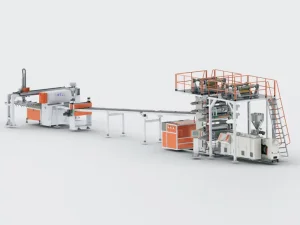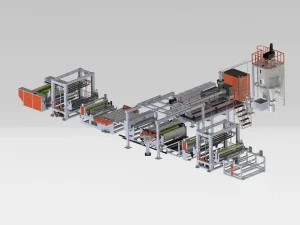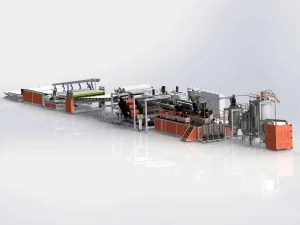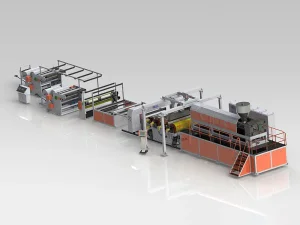
The global demand for high-performance synthetic materials, commonly referred to as leather-like or vegan leather, is expanding at an unprecedented rate. Driven by sustainability directives, circular economy targets, and stringent automotive VOC specifications, manufacturers are shifting away from traditional animal hide and early-generation PVC coatings. Modern alternatives rely on advanced thermoplastic polymers such as polyurethane (TPU), polyolefin elastomers (POE), and specialized polyethylenes.
Achieving the tactile warmth, micro-porous breathability, and high tensile strength of premium natural leather requires precise structural alignment at the molecular level. A custom extrusion line configured with a specialized vertical stretching unit (Machine Direction Orientation or MDO) provides the engineering solution. By drawing the extruded polymer sheet under precise thermal profiles, the polymer chains are oriented along the processing direction. This molecular restructuring drastically enhances the mechanical characteristics of the film, optimizing thickness distribution, tensile yield, tear resistance, and surface texture replication.
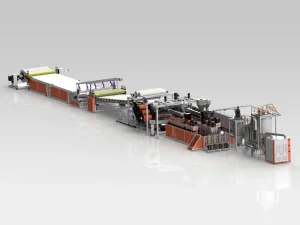
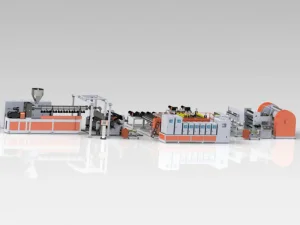
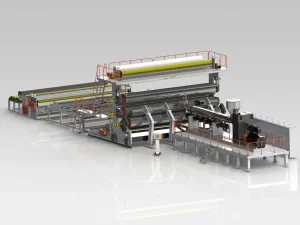
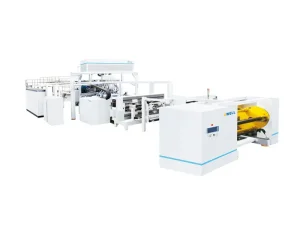
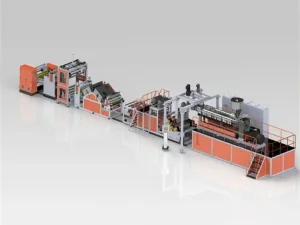
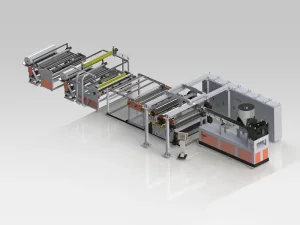
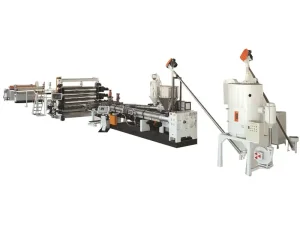
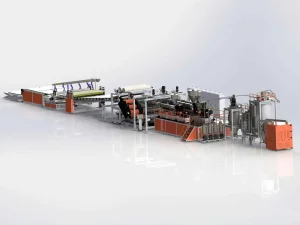
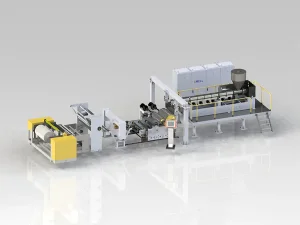
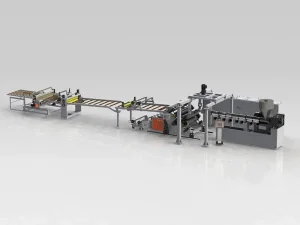
A custom vertical stretching extrusion line is comprised of several integrated sub-systems. Raw polymer resin is processed through a high-efficiency single or twin-screw extruder, coupled with a precision melt pump and T-die to ensure a uniform primary melt curtain. This sheet is cast onto a high-performance chill roll to secure a highly amorphous crystalline structure prior to orientation.
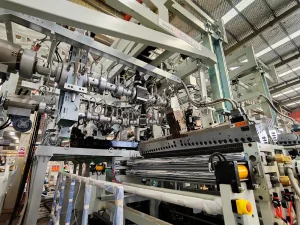
The vertical stretching (MDO) assembly consists of multiple preheating rollers, slow and fast drawing rollers, and annealing stations:
Utilizes oil-heated or electromagnetic induction rollers to bring the extruded sheet to its optimal drawing temperature, precisely between the glass transition temperature (Tg) and the melting point (Tm).
Equipped with differential speed control loops governed by highly responsive servo motors. The stretching gap is kept minimal to prevent necking and ensure cross-directional thickness stability.
Relieves internal macromolecular stresses to guarantee thermal dimensional stability, ensuring the synthetic leather substrate does not shrink during subsequent laminating or embossing runs.
| System Module | Technical Characteristics | Processing Function |
|---|---|---|
| Extruder Unit | L/D Ratio: 30:1 to 33:1, Barrier Flight Configuration | Homogeneous plasticization of high-viscosity TPU/POE resins |
| Vertical MDO Unit | Stretching Ratio: 1:1.5 to 1:6, Gap control down to 0.5 mm | Molecular alignment, tensile enhancement, and thickness down-gauging |
| Surface Treatment | Double-sided Corona treatment, customized surface profiling | Improves substrate adhesion for PU coatings and grain embossing |
| Winding System | Center-surface automatic turret winder with tension control | Maintains uniform reel tension, preventing roll deformation |
In the current global manufacturing landscape, the automotive, footwear, and apparel industries are actively phasing out traditional animal hide and early-generation PVC-coated fabrics. Regulatory frameworks like REACH in Europe and similar EPA initiatives in North America place limits on toxic plasticizers and high-VOC solvents. Consequently, polyurethane (TPU) and polyolefin elastomer (POE) synthetic materials have emerged as the leading high-grade alternatives.
A significant hurdle in the widespread adoption of thermoplastic synthetic leather is the production cost and thickness control. Standard extrusion lines without stretching elements require higher material throughput to achieve standard mechanical benchmarks, increasing cost and weight. Our custom MDO-equipped extrusion lines allow manufacturers to reduce film thickness by up to 50% while exceeding target tensile specifications. This allows material savings and satisfies lightweight targets critical to the electric vehicle (EV) sector.
GWELL Machinery Co., Ltd. presents advanced cast film lines optimized for weathering and UV stability.
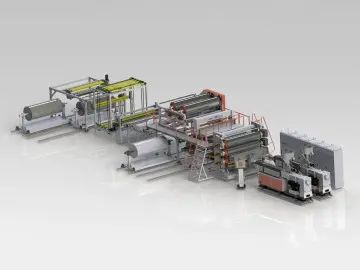
Specialized systems for thermoplastic polyurethane films laminated onto flexible fabrics.
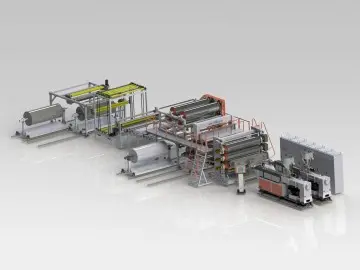
Versatile line configurations tailored for automotive protection films and medical substrates.
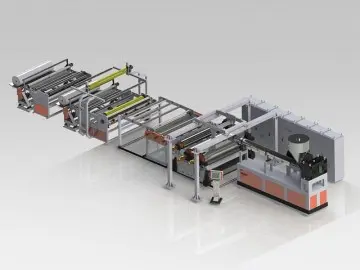
Engineered for solar backplane membranes as a reliable alternative to fluoropolymer backings.
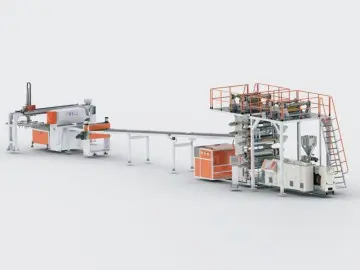
Cutting-edge technological advancement in the high-capacity production of composite building panels.
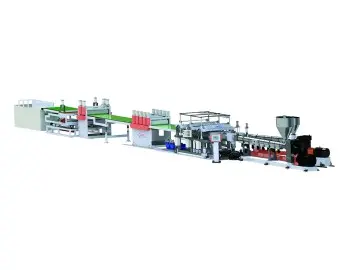
High production efficiency with automated parameters for architectural sheeting.
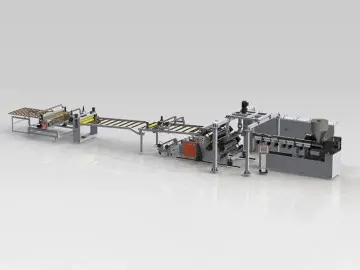
Intelligent processing equipment for high-temperature engineered thermoplastics like PEEK and PFA.
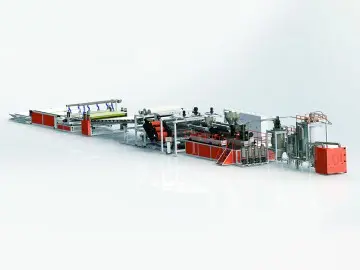
Heavy-duty extrusion setups designed for industrial packaging and environmental geomembranes.
Depending on the target geographic market, synthetic leather substrates face distinct requirements:
In North America and Europe, automotive OEMs require low-emission, non-fogging synthetic leathers for dashboard skins and door panels. TPU films stretched on our MDO lines show a significant reduction in volatile organic compound (VOC) levels due to precise, controlled heating zones.
In East Asian manufacturing hubs, the sports apparel sector requires high-elasticity, bio-based polyurethane leather. Stretched POE and TPU substrates yield micro-porous textures that optimize vapor permeability without compromising structural integrity.
Precision thickness tolerances (<1% variance) are critical for protective device covers. Our closed-loop thickness gauge control systems adjust die lip temperatures in real time to meet these tight tolerances.
China GWELL Machinery is a high-tech enterprise dedicating to the manufacture of plastic extrusion lines for Film, Sheet, and Profile. Relying on the powerful technology and equipment of the group and an innovative spirit, GWELL commits to the development of high-tech products and international markets. “Expertise creates customers’ values” has always been the company's operating philosophy.
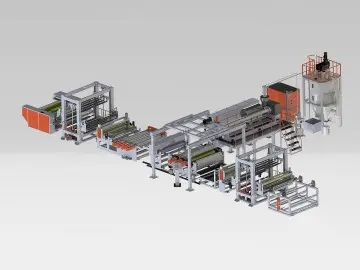
Our engineering team designs custom vertical stretching and orientation units that integrate with existing cast and sheet lines, ensuring maximum upgrade flexibility.
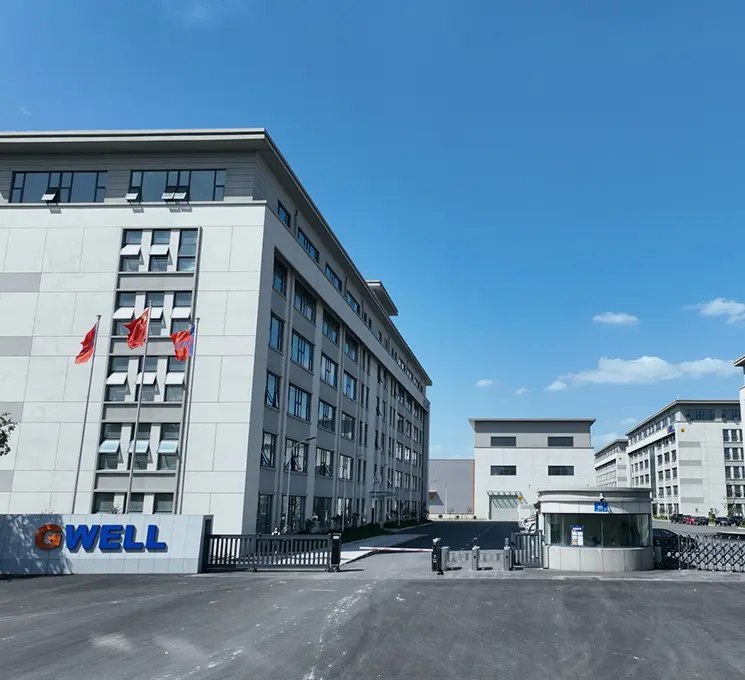

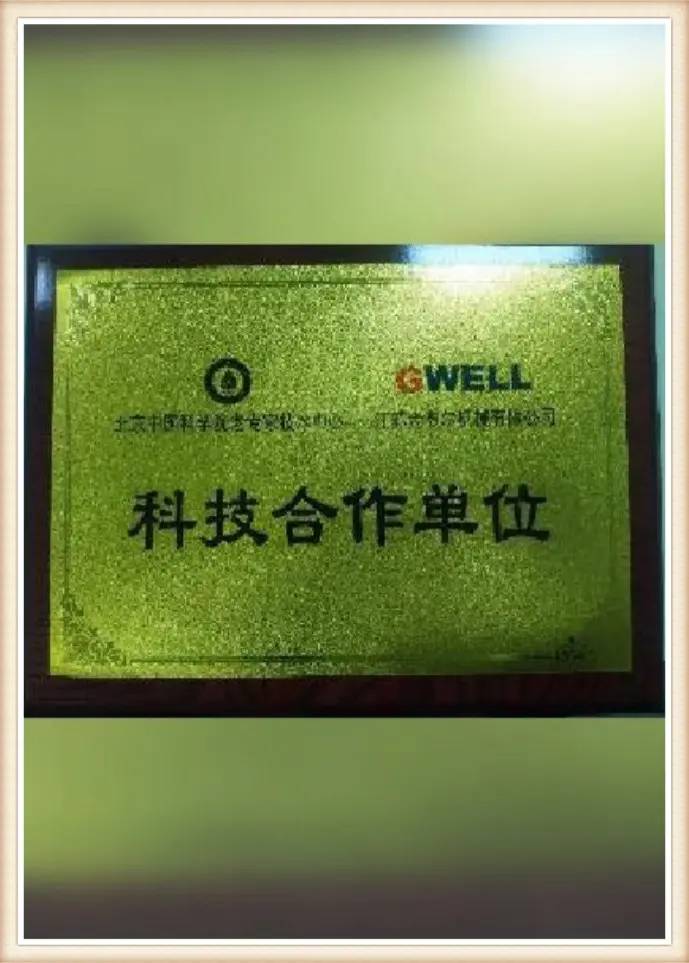
We collaborate with universities and research institutes to develop high-tech machines, ensuring advanced processing algorithms and mechanical stability.

Provide end-to-end services with high efficiency and quality, from initial material trials to localized installation and staff training.

Three major production bases with an annual capacity of over 1000 lines, ensuring short lead times and robust support.
Operating a high-speed vertical stretching extrusion line demands compliance with stringent region-specific health and safety standards. Mechanical setups shipped to the European Union are equipped with complete CE certification, integrated acoustic enclosures, and dual-loop safety interlocks. For North American customers, all electrical cabinets conform to UL and NFPA standards, with PLC panels featuring remote VPN diagnostics for real-time troubleshooting.
Furthermore, our localized service centers in Southeast Asia, Europe, and Latin America ensure that specialized field engineers are available for installation, commissioning, and preventive maintenance. This minimizes downtime and guarantees that processing parameters are optimized for local ambient conditions.
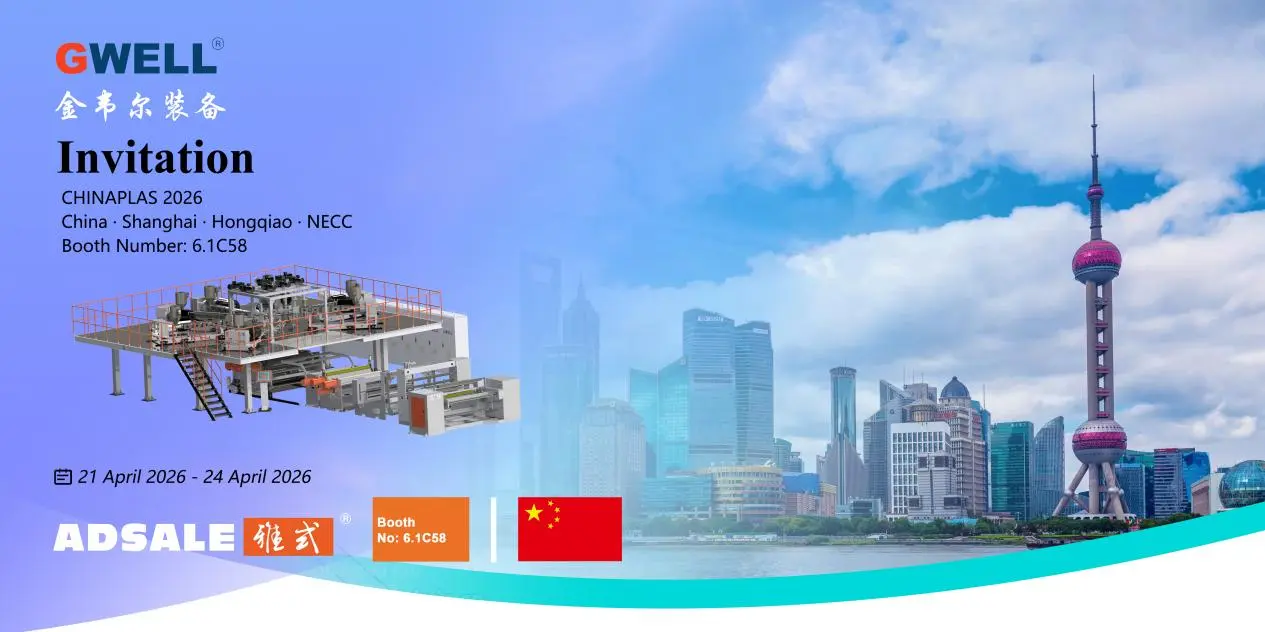
GWELL will demonstrate the latest innovations in MDO and multilayer cast film lines at the upcoming international expo.
view more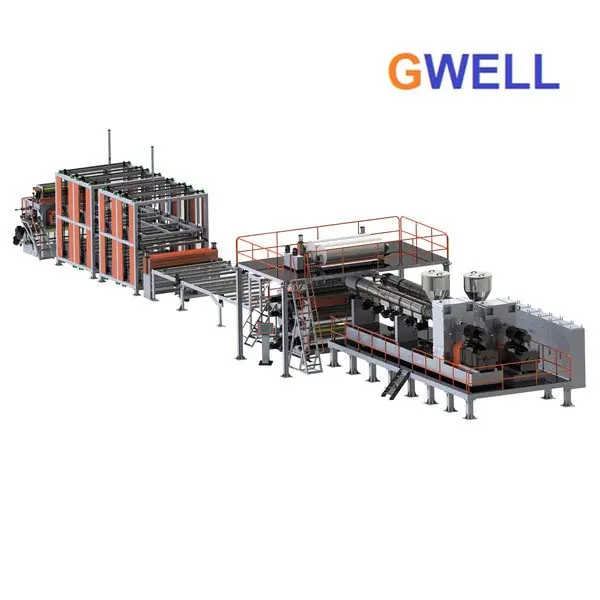
Introducing our latest high-performance POE extrusion and stretching lines optimized for VOC-free synthetic leather.
view more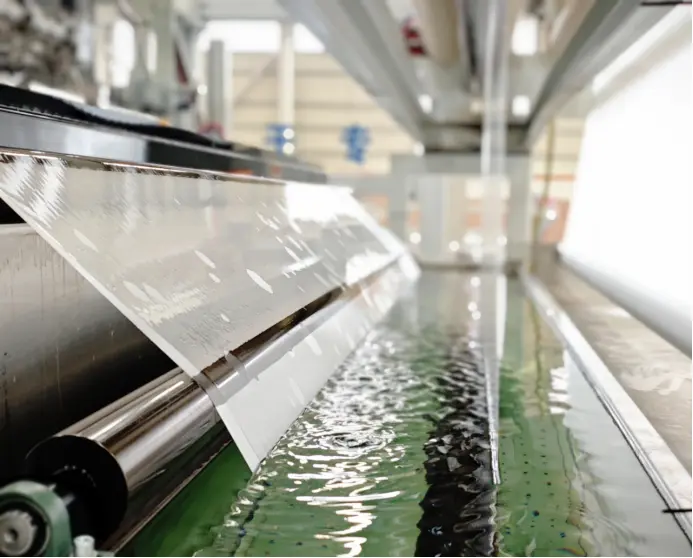
High precision, high efficiency, and high compatibility characterize our PVB wedge film extrusion solutions.
view moreWe maintain strict quality control protocols across our manufacturing bases.


The future of synthetic leather manufacturing is centered on circular economy integration and bio-based plastics. Traditional petrochemical polyurethanes are being replaced by bio-polyols derived from agricultural waste, and starch-based copolyesters. These materials present narrow thermal processing windows, which require highly precise extrusion and stretching parameters.
Our research and development roadmap focuses on closed-loop feedback systems. By integrating sensor arrays with AI-driven control models, the extrusion speed, roll temperatures, and stretching tension automatically adjust to match variations in the bio-polymer melt index. This integration reduces waste and maintains consistent material properties across large production runs.
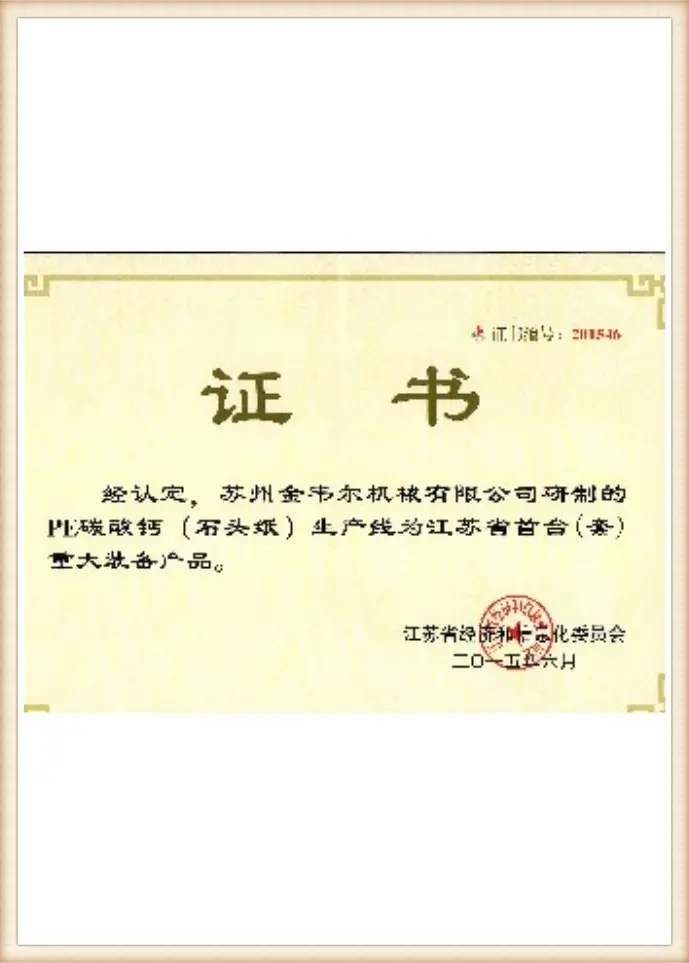
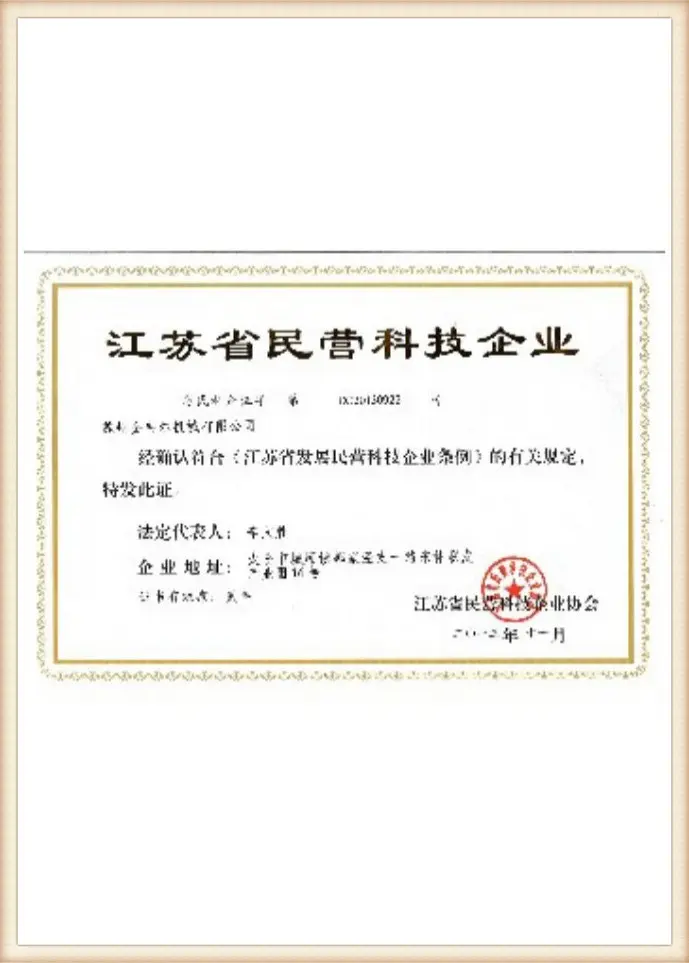
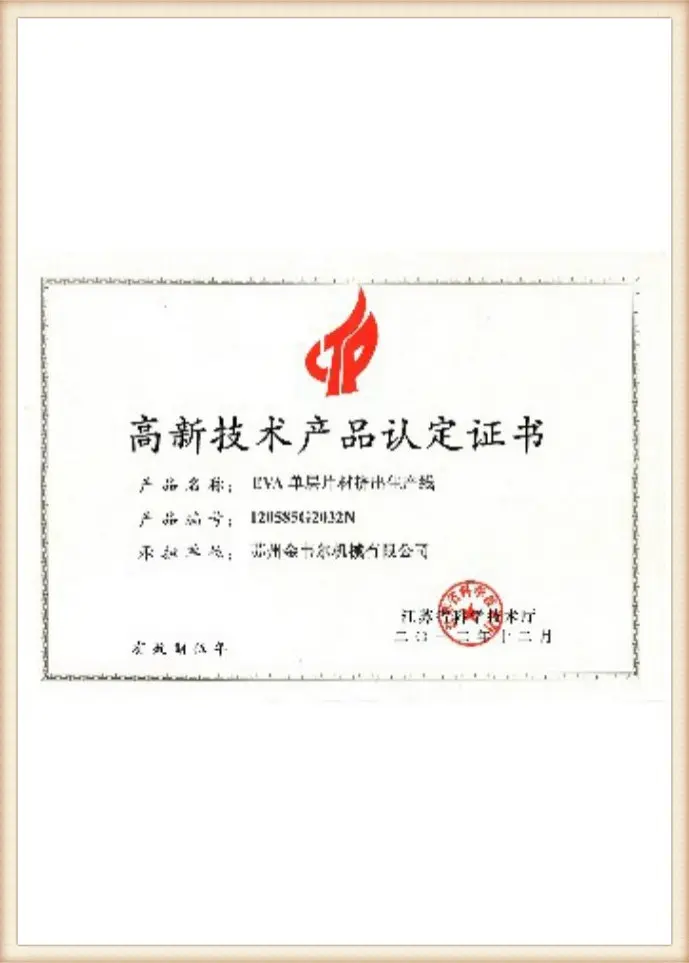
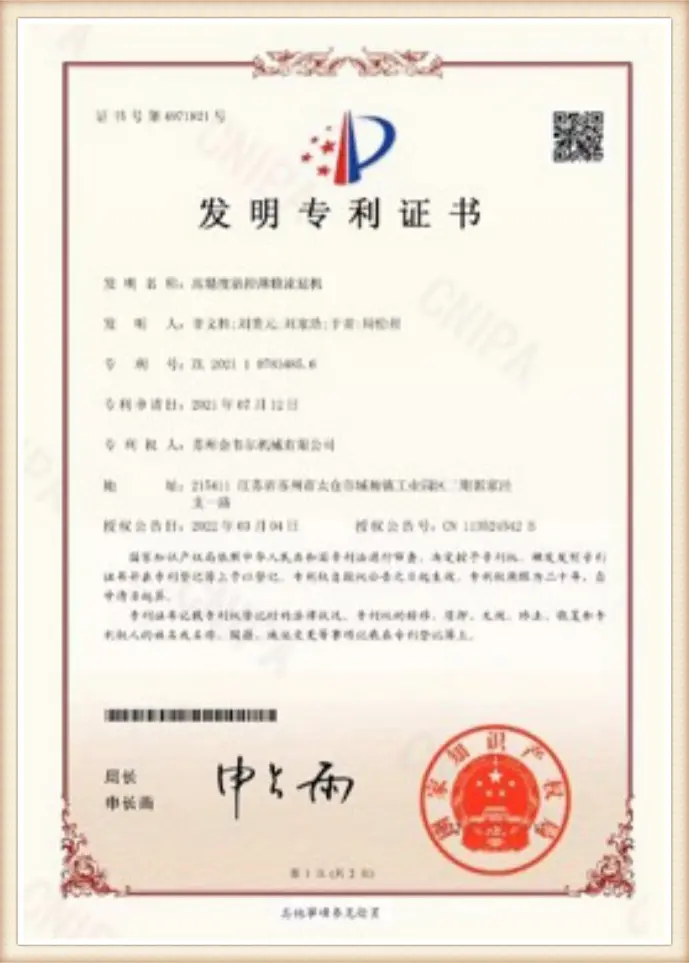
GWELL's R&D capability and precision machining technology are recognized across the industry. Contact our application engineers today for a tailored process configuration.
Send Inquiry Now